Not Sure You Need a Repair?
Before you pay for a service call, try FixDecision AI. Describe what's wrong with your appliance and get a safety-first assessment to help you decide whether to DIY or call a professional.
Article Snapshot
Average Repair Cost: $100–350
Reading Time: 7–8 minutes
Best For: Homeowners deciding whether to repair or replace a microwave
Last Updated: July 2026
2026 Guide
If your microwave has stopped working, you’re probably wondering whether it’s worth repairing or if buying a new one makes more sense.
The good news is that most microwave repairs cost between $100 and $350, making repair a cost-effective option in many situations—especially for built-in and over-the-range models.
Simple repairs, such as replacing a fuse or door switch, are usually on the lower end of the price range, while replacing a magnetron or electronic control board costs more. Before approving a repair, compare the estimate to the cost of replacing a similar microwave. A good rule of thumb is that if the repair costs less than 50% of a replacement, repairing the appliance is often the better value.
At a Glance
| Average Repair Cost | $100–350 |
| Most Common Repair | Door Switch Replacement |
| Most Expensive Repair | Magnetron Replacement |
| Typical Repair Time | 30–90 minutes |
| Usually Worth Repairing? | Yes, especially built-in and over-the-range models |
Average Microwave Repair Costs
| Repair | Typical Professional Cost |
|---|---|
| Fuse Replacement | $100–170 |
| Door Switch Replacement | $120–220 |
| Turntable Motor | $120–220 |
| Cooling Fan Motor | $150–250 |
| High-Voltage Diode | $150–250 |
| Capacitor | $150–275 |
| Electronic Control Board | $200–400 |
| Magnetron | $250–450 |
These are national averages. Actual costs vary based on your location, microwave brand, labor rates, and parts availability.
Before You Schedule a Repair
Most appliance repair companies charge a diagnostic fee of $60–100 to identify the problem. Many apply this fee toward the repair if you approve the estimate, so it’s worth asking when you schedule your appointment.
Technician Tip
A microwave that won’t heat doesn’t automatically need a new magnetron. Less expensive components, such as a door switch or high-voltage diode, can produce similar symptoms. A proper diagnosis can save you money by avoiding unnecessary part replacements.
What’s Next?
Now that you know the typical repair costs, let’s look at the most common microwave repairs, what symptoms they cause, and whether each repair is usually worth the investment.
Common Microwave Repairs: Costs, Symptoms & When They’re Worth It
Most microwave repairs fall into a handful of common categories. Understanding what has likely failed—and what it typically costs to fix—can help you decide whether a repair is worthwhile before scheduling service.
1. Fuse Replacement
Typical Cost: $100–170
A blown fuse is one of the least expensive microwave repairs. If the fuse has failed because of a temporary electrical overload, replacing it is often a quick and affordable fix.
Common Symptoms
- Microwave won’t turn on
- Blank display
- No interior light
- Completely unresponsive
Worth Repairing?
✅ Yes. This is one of the most economical microwave repairs.
2. Door Switch Replacement
Typical Cost: $120–220
Microwaves use several safety switches that prevent the appliance from operating unless the door is fully closed. These switches wear over time, especially if the door is frequently slammed.
Common Symptoms
- Microwave won’t start
- Starts then immediately stops
- Must push on the door to make it run
Worth Repairing?
✅ Almost always. Door switch replacement is relatively inexpensive and can restore years of reliable operation.
3. Turntable Motor Replacement
Typical Cost: $120–220
If the microwave heats food but the glass tray no longer rotates, the turntable motor or drive coupler may have failed.
Common Symptoms
- Plate won’t rotate
- Grinding noises
- Uneven cooking
Worth Repairing?
✅ Usually. The repair is affordable and helps restore even heating.
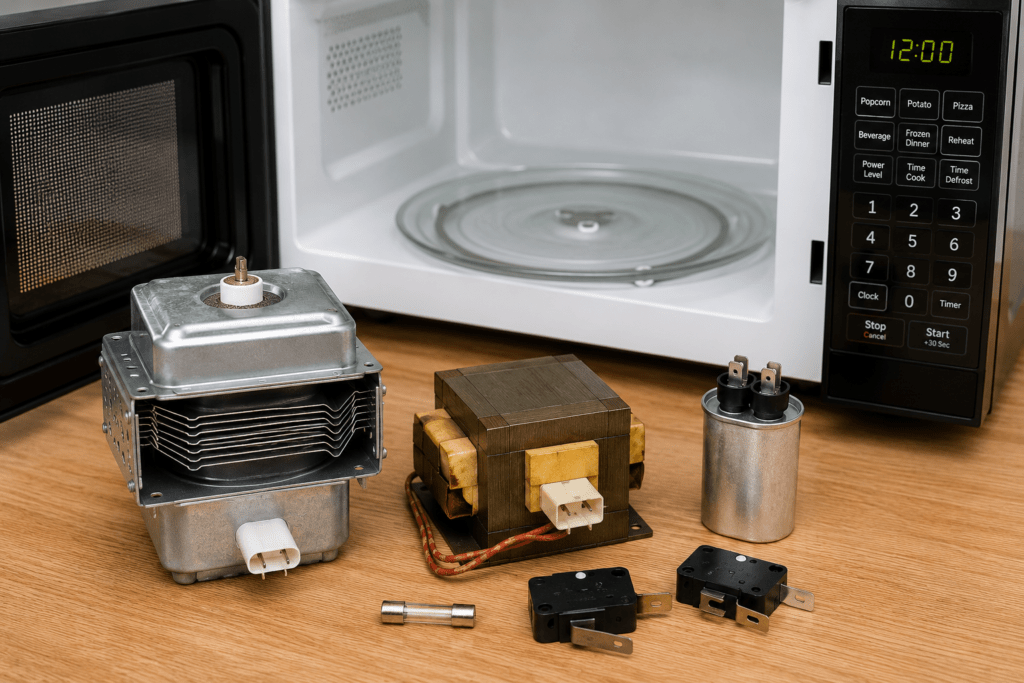
4. Magnetron Replacement
Typical Cost: $250–450
The magnetron generates the microwave energy that heats food. It’s also one of the most expensive components to replace.
Common Symptoms
- Microwave runs but doesn’t heat
- Loud humming
- Weak heating performance
Worth Repairing?
⚠️ It depends. Magnetron replacement often makes sense for built-in, over-the-range, or premium countertop microwaves. For older, inexpensive countertop models, replacement may be the better value.
Repair Costs by Microwave Type
The style of microwave you own also affects repair costs because labor requirements vary.
| Microwave Type | Typical Repair Cost |
|---|---|
| Countertop | $100–250 |
| Over-the-Range | $150–350 |
| Built-In | $175–400 |
| Microwave Drawer | $250–500 |
Built-in and microwave drawer models generally cost more to repair, but they also cost significantly more to replace. That often makes professional repair the smarter financial choice.
When Is Repair Worth It?
As a general rule:
- ✅ Repair if the microwave is less than 10 years old.
- ✅ Repair if the estimate is less than 50% of replacement cost.
- ✅ Repair premium built-in or over-the-range models whenever practical.
- ⚠️ Consider replacement for inexpensive countertop microwaves with major component failures.
Quick Decision Guide
| Situation | Recommendation |
|---|---|
| Under 5 years old | ✅ Repair |
| 5–10 years old | ✅ Usually repair |
| Over 10 years old | ⚠️ Compare repair and replacement costs |
| Built-in or Over-the-Range | ✅ Usually repair |
| Countertop under $150 | ⚠️ Replacement may be better |
Safety Reminder
Never attempt to replace a magnetron, capacitor, or other high-voltage electrical component yourself. Microwaves can store dangerous electrical energy even after they’ve been unplugged.
If you’re troubleshooting another appliance, see our Dryer Belt Replacement Cost Guide
Bottom Line
Most microwave repairs are surprisingly affordable. Repairs involving fuses, door switches, and turntable motors are usually well worth the cost. For more expensive repairs—such as a magnetron replacement—compare the estimate with the cost of a similar new microwave before making your decision.
Common Microwave Problems & Safe Troubleshooting
Many microwave problems have similar symptoms, but the underlying causes can vary. The chart below covers the most common issues, what may be causing them, and whether it’s something you can safely check yourself.
Common Microwave Problems
| Problem | Possible Cause | Typical Repair Cost | DIY? |
|---|---|---|---|
| Won’t turn on | Fuse, door switch, power supply | $100–220 | ✅ Check outlet and breaker |
| Runs but won’t heat | Magnetron, diode, capacitor | $150–450 | ❌ No |
| Turntable won’t rotate | Turntable motor, drive coupler | $120–220 | ✅ Inspect tray and roller ring |
| Sparks inside | Food buildup, damaged waveguide cover, metal object | $0–200 | ✅ Clean and inspect |
| Buttons don’t work | Membrane keypad, control board | $180–400 | ❌ No |
| Burning smell | Food residue, fan, electrical component | Varies | ⚠️ Stop using it |
| Trips the breaker | Capacitor, transformer, wiring | $150–350 | ❌ No |
| Loud humming | Magnetron, transformer, fan | $150–450 | ❌ No |
Problems You Can Safely Check Yourself
Not every microwave problem requires a service call. Before scheduling a repair, you can safely check a few basic items:
- Make sure the outlet has power.
- Reset a tripped circuit breaker.
- Clean food residue from the interior.
- Remove any metal objects or aluminum foil.
- Verify the glass tray and roller ring are seated correctly.
- Replace the charcoal filter on over-the-range models if it’s clogged.
- Test the microwave with a cup of water to confirm it’s heating properly.
These simple checks can sometimes solve the problem without spending money on a repair.
Problems That Require a Professional
Some microwave repairs involve high-voltage electrical components and should never be attempted without proper training.
Call a qualified technician if your microwave:
- Runs but doesn’t heat.
- Repeatedly trips the circuit breaker.
- Produces a burning smell.
- Sparks even after the interior has been cleaned.
- Makes loud humming or buzzing noises.
- Has a damaged control panel or display.
Safety Warning
A microwave can retain a dangerous electrical charge even after it has been unplugged. Never attempt to replace a magnetron, capacitor, transformer, or other internal electrical components yourself.
For additional microwave safety information, see the U.S. Consumer Product Safety Commission’s guidance on appliance safety.
Simple Maintenance That Can Prevent Repairs
A few minutes of routine maintenance can help extend the life of your microwave and reduce the likelihood of expensive repairs.
- Wipe the interior clean after heavy use.
- Clean grease and food splatters before they harden.
- Keep the exterior vents free of dust and debris.
- Close the microwave door gently instead of slamming it.
- Replace charcoal filters regularly on over-the-range models.
- Use only microwave-safe cookware.
Technician Tip
One of the most common causes of microwave sparking isn’t a failed part—it’s simply food residue that’s been left inside the oven. Regular cleaning can prevent unnecessary service calls.
Bottom Line
Many microwave problems have simple causes that homeowners can safely check themselves. However, symptoms involving no heat, burning smells, repeated breaker trips, or unusual electrical noises should be evaluated by a qualified appliance repair technician. Knowing the difference can save you money while keeping your home safe.
Frequently Asked Questions
Is it worth repairing a microwave?
In many cases, yes. Repairs are usually worthwhile when the microwave is less than 10 years old, the repair estimate is less than half the cost of a comparable replacement, or the appliance is a built-in or over-the-range model. Inexpensive countertop microwaves with major component failures are often better replaced.
How much does microwave repair cost?
Most professional microwave repairs cost between $100 and $350. Simple repairs, such as replacing a fuse or door switch, are usually less expensive, while replacing a magnetron or electronic control board can cost more.
What is the most expensive microwave repair?
Replacing the magnetron is typically the most expensive common repair, with costs ranging from $250 to $450. On older countertop microwaves, replacement is often a better investment. On built-in or premium models, repairing the magnetron may still make financial sense.
Why does my microwave run but not heat?
A microwave that runs but doesn’t heat may have a failed magnetron, high-voltage diode, capacitor, or door switch. Because these components produce similar symptoms, a professional diagnosis is usually the fastest way to identify the problem.
Can I repair a microwave myself?
You can safely perform basic maintenance such as cleaning the interior, replacing the glass tray or roller ring, and changing charcoal filters on over-the-range models. Repairs involving internal electrical components should always be left to qualified technicians.
How long should a microwave last?
Most household microwaves last 7 to 10 years with normal use. Premium built-in and drawer models often last longer when properly maintained.
Why is my microwave sparking?
Sparking is commonly caused by food residue, a damaged waveguide cover, metal objects, or damaged interior surfaces. Clean the microwave thoroughly and remove any metal objects. If sparking continues, stop using the appliance until it has been inspected.
Does homeowner’s insurance cover microwave repairs?
In most cases, no. Homeowner’s insurance generally covers sudden accidental damage caused by covered events, not normal wear and tear. An appliance warranty or home warranty plan may provide repair coverage.
Do appliance repair companies charge a diagnostic fee?
Yes. Most appliance repair companies charge $60 to $100 to diagnose the problem. Many apply this fee toward the repair if you choose to have the work completed.
Quick Repair Decision Guide
| Situation | Best Choice |
|---|---|
| Less than 5 years old | ✅ Repair |
| 5–10 years old | ✅ Usually repair |
| Built-in or over-the-range | ✅ Usually repair |
| Countertop under $150 | ⚠️ Compare repair cost carefully |
| Repair exceeds 50% of replacement cost | ❌ Consider replacing |
| Multiple major component failures | ❌ Usually replace |
Expert Summary
Most microwave repairs are more affordable than homeowners expect. Problems involving fuses, door switches, and turntable motors are usually inexpensive to fix and can add years to the life of the appliance. Before replacing your microwave, compare the repair estimate with the cost of a similar new model—especially if you own a built-in or over-the-range unit.
Bottom Line
Understanding the typical repair costs and the most common microwave problems helps you make a smarter repair decision. When the repair is reasonable and the microwave is otherwise in good condition, professional service is often the better value than replacement.
Final Thoughts & Get Repair Help
Final Thoughts
A microwave that stops working doesn’t automatically need to be replaced.
In many cases, a relatively inexpensive repair—such as replacing a fuse, door switch, or turntable motor—can restore your microwave to normal operation for far less than the cost of buying a new one.
Even larger repairs, such as replacing a magnetron or electronic control board, may still be worthwhile if you own a built-in, over-the-range, or premium microwave. The key is comparing the repair estimate with the replacement cost of a similar model.
By understanding the most common microwave problems, average repair costs, and when repairs make financial sense, you can make an informed decision and avoid spending more than necessary.
When to Call a Professional
Some microwave problems should always be evaluated by a qualified appliance repair technician.
Schedule professional service if your microwave:
- Won’t heat food
- Repeatedly trips the circuit breaker
- Produces a burning smell or smoke
- Sparks after the interior has been cleaned
- Makes loud humming or buzzing noises
- Has a damaged control panel or display
Because microwaves contain high-voltage electrical components, these repairs should not be attempted without the proper training and equipment.
Get Repair Help
If you’re ready to have your microwave diagnosed or repaired, we’re here to help.
Our nationwide appliance repair network connects homeowners with experienced technicians who can identify the problem, explain your repair options, and provide an estimate before any work begins.
👉 Get Repair Help
Related Appliance Repair Guides
If you found this guide helpful, you may also be interested in these popular resources:
- Dryer Belt Replacement Cost – Learn what causes dryer belts to fail, average replacement costs, and when repair is worthwhile.
- Dishwasher Repair Cost – Compare the most common dishwasher repairs and decide whether to repair or replace your unit.
- Does Home Depot Offer Appliance Repair – Find out if you can get repair services at your local store.
- Signs of Low Refrigerant in a Refrigerator – Learn how to recognize one of the most common cooling issues before it becomes a major repair.
- Do It Yourself Home Appliance Repair Guide – How to repair many common appliance problems yourself.
About US Appliance Repairs
US Appliance Repairs is dedicated to helping homeowners make informed appliance repair decisions. Our repair cost guides, troubleshooting articles, and maintenance resources are designed to help you understand common appliance problems before scheduling service.
Whether you’re comparing repair costs, researching a specific appliance problem, or looking for a qualified repair technician, our goal is to provide practical, easy-to-understand information you can trust.
Bottom Line
Most microwave repairs cost between $100 and $350, and many are well worth the investment—especially for built-in and over-the-range models. Before replacing your microwave, compare the repair estimate with the cost of a similar new unit. A professional diagnosis can often identify a simple, affordable repair that extends the life of your appliance for years.