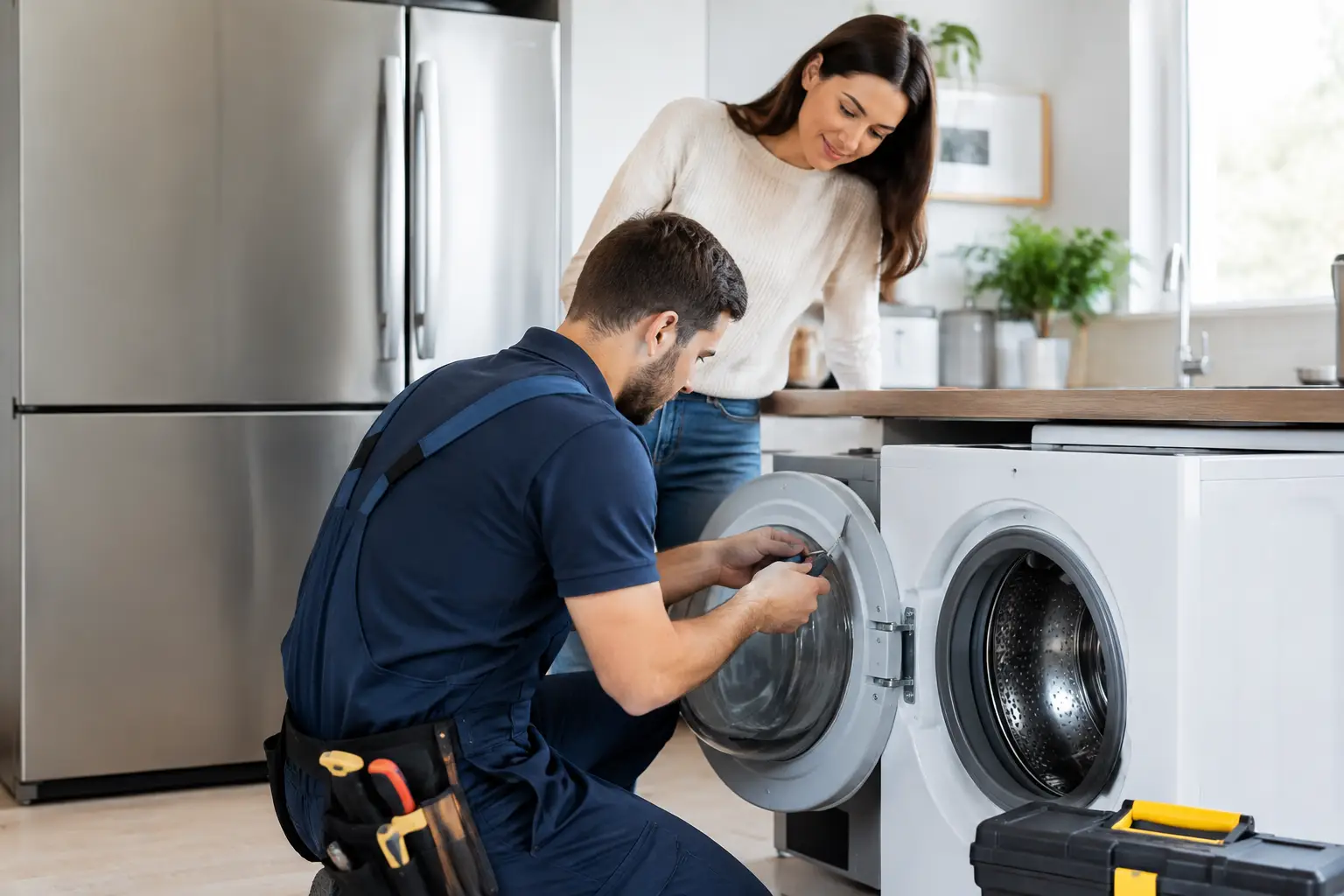
A refrigerator that is warming up, a washer that will not spin, or an oven that will not heat can throw the whole household off schedule. This appliance repair appointment guide helps you prepare before a technician arrives, so the visit is more efficient and you can make a clear decision about the repair.
Not Sure You Need a Repair?
Before you pay for a service call, try FixDecision AI. Describe what's wrong with your appliance and get a safety-first assessment to help you decide whether to DIY or call a professional.
What to Do Before You Schedule Service
Start with the basics: identify the appliance, its brand, and the problem you are seeing. The more specific you can be, the easier it is for a repair provider to match your issue with the right service call. “My dishwasher is broken” is useful, but “my dishwasher fills with water and then stops before washing” gives a technician a much better starting point.
Find the model and serial number if possible. On refrigerators, this label is commonly inside the fresh-food compartment. On washers and dryers, it may be around the door opening, under the lid, or on the back panel. Ranges, ovens, and microwaves often have the label inside the door frame or on the appliance body. A photo of the label is usually easier than writing down a long string of numbers.
Also note when the problem started, whether it is constant or intermittent, and what happened just before it appeared. A dryer that stopped heating after a power outage may point to a different issue than one that has gradually taken longer to dry clothes. Those details can save time and help prevent a repeat visit for a part that was not available on the first call.
If the appliance displays an error code, write it down exactly as shown. Do not clear the code until you have recorded it. Error codes are not a complete diagnosis, but they can help narrow the likely cause.
Appliance Repair Appointment Guide: Make the Visit Count
A repair appointment is not just a time window for someone to inspect an appliance. It is your chance to get answers about safety, cost, timing, and whether repair makes sense. Preparing the area and sharing the right information can help the technician focus on the fault instead of spending the first part of the visit moving laundry baskets, emptying a freezer, or searching for access to a shutoff valve.
Before the appointment, clear a reasonable path to the appliance. Move items off the top of a washer or dryer, remove dishes from a dishwasher if practical, and make room around the appliance when it is safe to do so. If a refrigerator needs service, protect perishable food by keeping doors closed as much as possible. For a longer outage, use coolers and ice packs or move food to another refrigerator or freezer.
Do not pull a heavy appliance away from the wall unless you can do it safely. Refrigerators, ranges, and stacked laundry units can be difficult to move, and water lines, gas lines, vents, or power cords can be damaged. Let the service professional determine what needs to be moved and how.
If there is standing water, a burning smell, visible sparking, smoke, or a suspected gas leak, do not wait for a standard appointment. Turn off power to the appliance if it is safe to do so, keep people away from the area, and contact the appropriate emergency utility or safety service when needed. A repair visit is appropriate for many failures, but active electrical or gas hazards require immediate caution.
Information a Technician Will Need
When you schedule, expect to be asked for your appliance type, brand, model number, symptoms, and address. Be ready to explain whether the appliance is under a manufacturer warranty, extended service plan, or home warranty. Coverage can affect who is authorized to perform service and whether you need prior approval before a repair begins.
It also helps to mention access conditions upfront. Tell the scheduling team if you live in a condominium with visitor rules, a building requiring a certificate of insurance, a home with gated entry, or a property where the appliance is in a tight basement, garage, or second-floor laundry room. These details may affect scheduling and help avoid delays on the day of service.
For built-in appliances, panel-ready refrigerators, wall ovens, and gas ranges, provide as much information as you can. Specialized installations may require additional time, particular parts, or a technician with experience in that appliance category.
Questions to Ask During the Appointment
Once the technician has inspected the appliance, ask for the diagnosis in plain language. You should understand what failed, why the repair is recommended, and whether there are related issues that could affect reliability. A clear explanation is especially helpful when a repair involves a control board, compressor, sealed refrigeration system, motor, or major transmission component.
Ask about the total expected cost before authorizing work. That discussion should cover the diagnostic or service-call fee, labor, parts, taxes, and any additional charges that may apply. If a part must be ordered, ask whether another visit is necessary, how long the part is expected to take, and whether the appliance can be used safely while you wait.
You may also want to ask about the provider’s workmanship warranty and the parts warranty. These are not always the same. A part may have manufacturer coverage while labor coverage follows a different policy. Get the terms in writing when possible, including what you should do if the original problem returns.
For older appliances, ask a direct question: “Would you put this money into this appliance?” A trustworthy professional should be able to explain the trade-off without pressure. The answer depends on the appliance’s age, condition, repair cost, energy use, and the price of a comparable replacement.
Repair or Replace? Use the Right Decision Factors
There is no single dollar amount that automatically means replacement is the better choice. A modest repair on a relatively new refrigerator or washer is often worthwhile, while a major repair on a very old appliance with multiple problems may not be.
Start with age. Many common appliances can provide years of useful service, but expected lifespan varies by type, model, maintenance history, and usage. A household with daily laundry loads puts more wear on a washer and dryer than a home that does a few loads each week. Similarly, a refrigerator in a hot garage may work harder than one in a climate-controlled kitchen.
Then consider the scope of the failure. Replacing a door latch, drain pump, heating element, or igniter can be a sensible repair when the rest of the appliance is in good condition. Major sealed-system refrigerator work, a failed washer transmission, or extensive electronic damage may call for a more careful cost comparison.
Replacement is not automatically easier. New appliances can require delivery coordination, installation, haul-away, electrical or plumbing adjustments, and time away from home. If the repair is reliable and reasonably priced, getting the existing appliance back up and running may be the less disruptive option.
Avoid Common Appointment Delays
The fastest repair experience usually starts before the technician arrives. A missed call, an incorrect model number, or inaccessible appliance can turn a simple diagnosis into a longer process. Keep your phone nearby during the service window and make sure someone at least 18 years old can provide access and approve work if needed.
If you have noticed unusual sounds, leaks, or error messages, take a short video or photo before the visit. Intermittent problems can disappear when the technician is present. A video of the noise, flashing display, or water leak can provide valuable evidence.
Avoid disassembling the appliance or ordering a part based only on an online guess. Similar symptoms can have very different causes. For example, a dryer that does not heat could involve the heating element, thermal fuse, venting, power supply, control system, or another component. Installing the wrong part can add cost and complicate the diagnosis.
After the Repair Is Complete
Before the technician leaves, confirm that the original issue has been tested. Ask what normal operation should look like over the next several hours or days. A refrigerator may need time to return to temperature, and a dishwasher may need a full cycle before you can confirm it drains and cleans properly.
Keep your invoice, diagnosis, and warranty information in a place you can find later. Record the repair date and the part replaced. This creates a useful service history if another issue appears or if you decide to sell the home.
If you still need help finding an independent local provider, US Appliance Repairs can help connect homeowners with repair assistance for common household appliance problems. Whichever provider you choose, clear communication and a prepared service area can make the process less stressful.
A broken appliance can feel urgent because it disrupts the routines that keep a home moving. Arrive at the appointment prepared, ask for clear answers, and give yourself permission to compare repair and replacement when the numbers warrant it. That approach protects your budget while giving you the best chance of getting the job done right the first time.