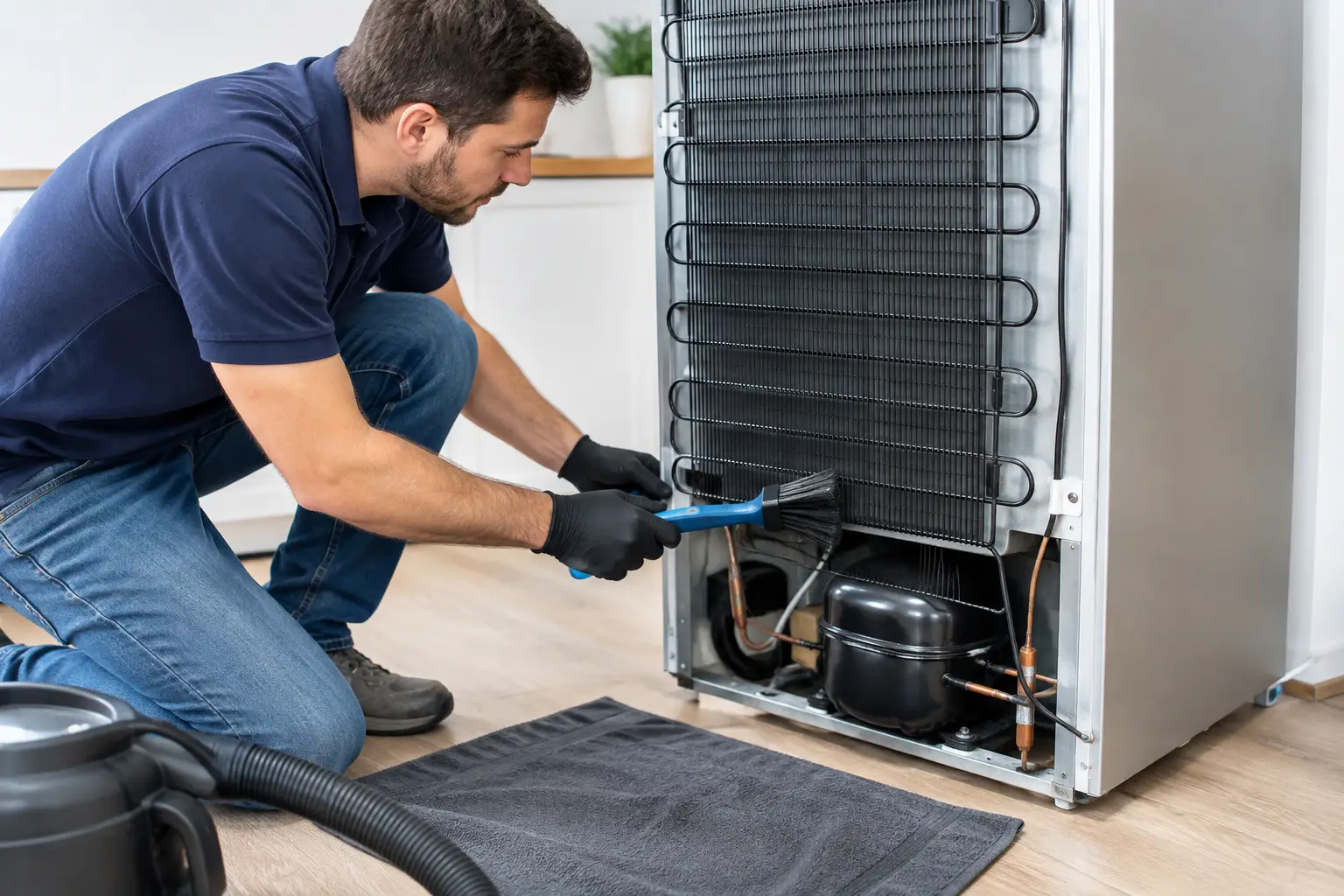
A refrigerator that seems louder than usual, runs almost nonstop, or feels warm around the cabinet may be working harder than it should. Learning to clean refrigerator condenser coils is one of the most practical maintenance tasks a homeowner can do to reduce dust buildup and help the appliance release heat properly.
The job is usually straightforward, but it is not the answer to every cooling problem. A dirty coil can contribute to high energy use and poor performance. A failed fan motor, damaged door gasket, refrigerant issue, or weak compressor needs a different solution. The goal is to clean safely, look for clues, and know when fast professional help makes more sense than further troubleshooting.
Not Sure You Need a Repair?
Before you pay for a service call, try FixDecision AI. Describe what's wrong with your appliance and get a safety-first assessment to help you decide whether to DIY or call a professional.
Why refrigerator condenser coils need attention
Your refrigerator removes heat from the food compartment and releases it through the condenser system. Condenser coils are designed to transfer that heat into the surrounding air. When pet hair, dust, grease, and lint settle over the coils, airflow drops. The refrigerator may need to run longer to maintain the set temperature.
That extra strain can show up as a warmer-than-normal refrigerator section, a hot floor area near the appliance, or a compressor that seems to cycle constantly. Cleaning the coils will not make every refrigerator silent, and some warmth around the machine is normal. Still, keeping the condenser area clear gives the appliance a better chance to operate efficiently.
Coil location varies by model. Many older refrigerators have exposed coils on the back. On many newer units, the condenser is located underneath the refrigerator or behind a lower front grille. Some designs enclose the coils so thoroughly that homeowner access is limited. Do not force open panels or remove components that are not clearly designed for routine maintenance.
How often should you clean refrigerator condenser coils?
For most homes, cleaning once or twice a year is a sensible schedule. Homes with shedding pets, heavy dust, nearby cooking grease, or a refrigerator located in a laundry room may need attention every three to six months. A quick visual check can be more useful than following a rigid calendar.
If the coils look lightly dusty and airflow around the refrigerator is good, there is no need to overdo it. On the other hand, thick gray lint, hair packed around a lower grille, or debris near the condenser fan calls for action sooner. Regular cleaning is inexpensive preventive care, especially compared with the inconvenience of spoiled food and an unexpected refrigerator breakdown.
What you need before you start
A vacuum with a narrow crevice attachment and a long, flexible refrigerator coil brush are usually enough. A flashlight helps with under-refrigerator access. You may also want a soft cloth and a screwdriver if your model’s grille uses screws.
Avoid sharp tools, high-pressure air, and excessive force. Condenser tubing and wiring can be damaged, and bending coil fins can restrict airflow. If you use a vacuum, keep the attachment close enough to collect dust without scraping the parts.
How to clean refrigerator condenser coils safely
Start by protecting the food inside. This maintenance task is normally quick, so food can remain in the refrigerator with the doors closed. If you expect to move the appliance or work for more than a few minutes, keep the door openings to a minimum.
First, unplug the refrigerator. This reduces the risk of electrical shock and keeps the condenser fan from turning while you work. If you cannot easily reach the plug, turn off power at the appropriate circuit breaker only if you are certain it controls the refrigerator.
Next, locate the coils. Pull the refrigerator carefully away from the wall if the coils are behind it. For bottom-mounted coils, remove the toe-kick grille or lower access panel according to the appliance instructions. Use a flashlight to identify dust buildup, the fan area, and any visible wiring.
Vacuum loose debris from the floor, grille, and accessible coil area. Then gently work the coil brush through and around the coils. Use slow strokes to loosen lint while following with the vacuum attachment to capture it. On a refrigerator with a condenser fan, remove buildup around the fan housing but do not push on the blades or pull at the wires.
After the accessible dust is removed, vacuum once more and reinstall the grille or panel securely. Slide the refrigerator back carefully, leaving the clearance recommended by the manufacturer. Plug it back in and listen for normal operation. The cabinet may still feel warm for a while as the system returns to its normal cycle.
Mistakes that can create a bigger problem
The most common mistake is cleaning while the refrigerator is plugged in. Even if you do not plan to touch the fan, it can start unexpectedly. Another problem is pulling the refrigerator forward too quickly and stressing the power cord, water line, or ice maker connection.
Do not soak condenser coils with water or household cleaners. Moisture near electrical components can create risks, while cleaners can leave residue that collects more dust. A dry brush and vacuum are the better approach for routine cleaning.
It also helps to manage expectations. Cleaning the coils may reduce run time when dust was the underlying issue, but it cannot repair a compressor problem, a sealed-system leak, or a malfunctioning defrost component. If the refrigerator was not cooling before you started, do not assume coil cleaning alone will bring it back up and running.
Signs the problem may be more than dirty coils
After cleaning, give the refrigerator several hours to stabilize. Watch for whether it reaches and holds a safe temperature, rather than judging performance after a few minutes. The refrigerator compartment should generally stay at or below 40 degrees Fahrenheit, while the freezer should remain near 0 degrees Fahrenheit.
Call for service if the refrigerator remains warm, the freezer is thawing, the compressor clicks repeatedly, or the unit runs continuously without reaching the selected temperature. Unusual burning smells, sparking, tripped breakers, or a hot power cord are reasons to stop using the appliance and seek help promptly.
Other warning signs include heavy frost inside the freezer, water leaking onto the floor, grinding or squealing noises near the fan, and an ice maker that stops working alongside cooling issues. These symptoms can point to parts and systems that are not safe or practical for most homeowners to diagnose alone.
When a technician is the better choice
A coil cleaning is a good do-it-yourself task when the refrigerator is cooling normally and the condenser area is easy to reach. It is less suitable when the appliance is tightly built into cabinetry, difficult to move, connected to a fragile water line, or showing active cooling failure.
A qualified appliance technician can determine whether poor cooling comes from restricted airflow or from a failed condenser fan, evaporator fan, thermostat, control board, start relay, compressor, or sealed system. That diagnosis matters because replacing the wrong part can waste money and delay the repair you actually need.
For homeowners facing a refrigerator emergency or uncertain symptoms, US Appliance Repairs can help connect them with independent local appliance repair providers. Fast access to experienced service can bring peace of mind when food safety and a major household appliance are on the line.
Keeping the condenser area free of dust is a small job with real value, but your refrigerator is telling you something when it still cannot hold temperature after basic maintenance. Trust those warning signs, protect your food, and get reliable repair help before a minor performance issue becomes a full appliance failure.