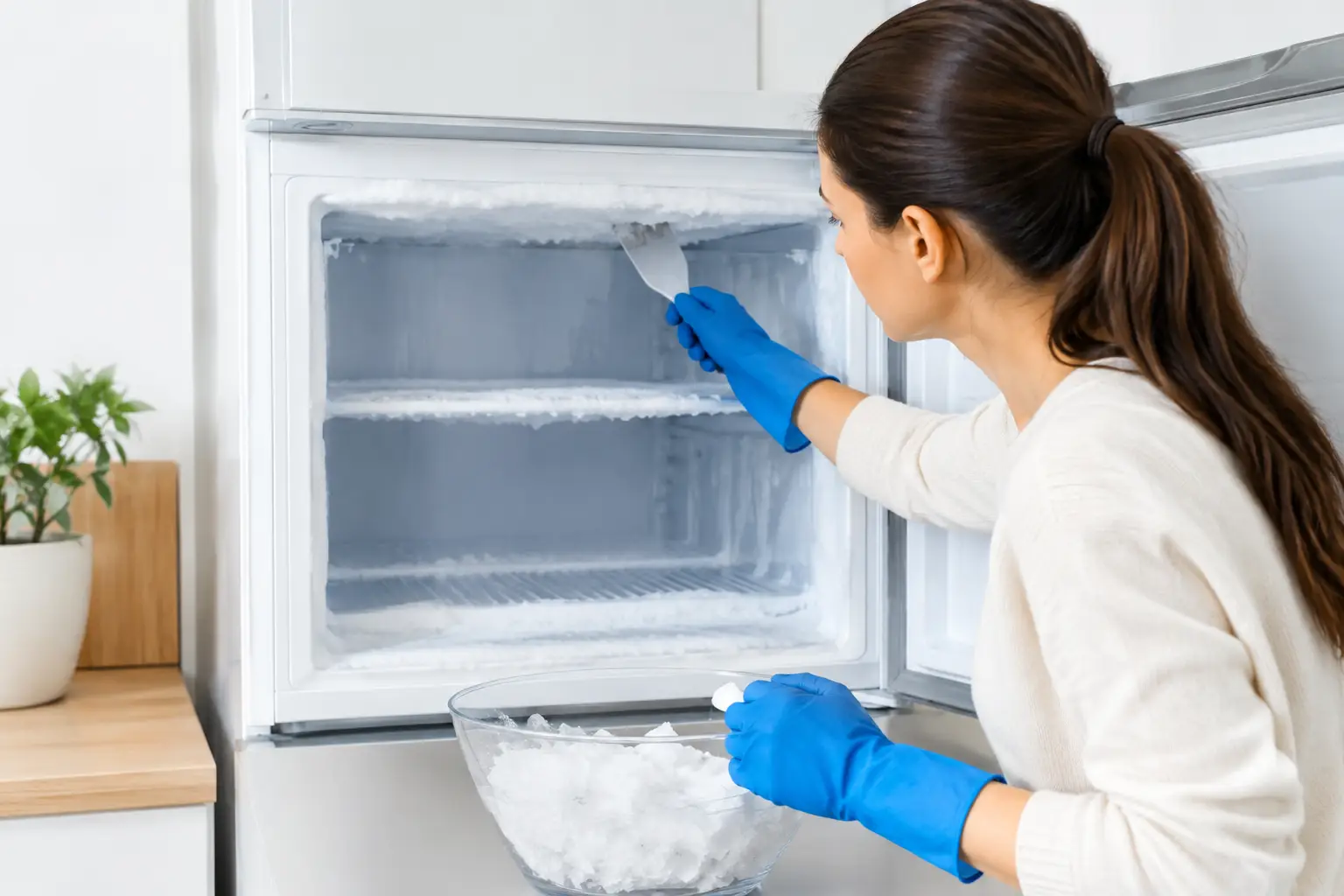
A freezer door that sticks, packages buried under snow-like frost, or ice collecting around the vents is more than an inconvenience. This freezer defrosting maintenance guide helps homeowners protect stored food, lower strain on the appliance, and recognize when a small frost problem may actually be a repair issue.
Most modern freezers are frost-free, but that does not mean they never need attention. Frost can still develop when humid air gets inside, the door seal leaks, the door is opened often, or part of the automatic defrost system stops working. A little routine care can prevent wasted space and help your freezer stay cold when your household depends on it.
Not Sure You Need a Repair?
Before you pay for a service call, try FixDecision AI. Describe what's wrong with your appliance and get a safety-first assessment to help you decide whether to DIY or call a professional.
Why Frost Buildup Should Not Be Ignored
A thin layer of frost on a freezer wall may not seem urgent. Over time, however, that layer can interfere with airflow, cover shelves and drawers, and make the compressor work harder to maintain the right temperature. When cold air cannot circulate properly, some food may soften while other areas become excessively cold.
Frost also takes up usable storage space. More importantly, it can be a warning sign. If a frost-free freezer repeatedly develops thick ice on its back interior panel, around the evaporator area, or near air vents, the appliance may have a failed door gasket, defrost heater, defrost thermostat, sensor, timer, or control board. Defrosting removes the visible ice, but it will not correct a failed component.
For everyday food protection, aim to keep the freezer at 0°F. An appliance thermometer is inexpensive and more reliable than judging by how cold the freezer feels. If the temperature is consistently above 0°F, food is thawing at the edges, or the freezer runs almost constantly, arrange service before the problem becomes a complete failure.
Freezer Defrosting Maintenance Guide: When to Defrost
The right schedule depends on the kind of freezer you own. Manual-defrost chest freezers and upright freezers should generally be defrosted when frost reaches about one-quarter inch thick. For many households, that means once or twice a year. In a humid garage, basement, or busy kitchen, it may be needed more often.
A frost-free freezer should not need regular full manual defrosting. Instead, clean it periodically and watch for abnormal ice. If you have to defrost a frost-free unit every few months to restore cooling or open a frozen-shut drawer, treat that as a temporary measure and investigate the cause.
Defrost sooner if you notice any of these situations:
- The door will not close easily because of ice.
- Frost is covering vents, baskets, or the rear inside wall.
- Ice cream is soft, frozen vegetables are clumped together, or food has excessive freezer burn.
- Water is appearing on the floor or inside the refrigerator section of a refrigerator-freezer.
- The freezer becomes quiet and warm after a long period of heavy frost.
How to Defrost a Freezer Safely
Plan the job for a time when you can keep the freezer door open for several hours. A light frost layer may melt quickly, while heavy ice can take much longer. Never chip at ice with a knife, screwdriver, ice pick, or other sharp object. Puncturing an interior liner or refrigerant line can turn a maintenance task into a costly replacement decision.
Prepare Food and the Area
Start by moving frozen food to another freezer if possible. If that is not available, pack items tightly into insulated coolers with ice or frozen gel packs. Keep the coolers closed and place them in the coolest available indoor location. Labeling or grouping food as you move it makes restocking easier later.
Unplug the freezer or switch it off according to the owner’s manual. Remove shelves, baskets, and ice trays if they can come out safely. Place old towels around the base of the appliance and set shallow pans inside if the freezer design allows. Meltwater can travel farther than expected, especially from an upright freezer.
Let the Ice Melt Naturally
Leave the door open and allow room-temperature air to loosen the frost. To speed the process safely, place bowls or pans of hot water inside the freezer and close the door for 10 to 15 minutes at a time. Replace the water as it cools. You can also use a fan to move room air toward the open freezer.
A hair dryer is not the best choice. It introduces electricity near water, can damage plastic liners, and may overheat components if held in one area. If you use any powered device near the freezer, keep cords and connections well away from meltwater.
As ice softens, remove only pieces that lift away easily with a plastic scraper or soft cloth. Do not force chunks from the walls. Wipe up water throughout the process so it does not seep under flooring or create a slipping hazard.
Clean Before Restarting
Once all visible frost is gone, wash the interior with warm water and a small amount of mild dish soap. Wipe it again with a clean damp cloth, then dry every surface thoroughly. Moisture left behind becomes the first layer of new frost.
Clean the door gasket with the same mild solution, paying attention to folds and corners where crumbs or sticky spills can prevent a tight seal. Dry the gasket completely. If the removable shelves and bins were washed, make sure they are also dry before returning them to the freezer.
Plug the freezer back in, close the door, and allow it to return to 0°F before restocking food. Depending on the model and room temperature, this can take several hours. If food remained solidly frozen in coolers, return it as soon as the freezer is cold enough. If it has thawed, evaluate it carefully and follow food-safety guidance rather than refreezing questionable items.
Maintenance Habits That Slow Frost Growth
Defrosting works best when paired with a few simple habits. First, close the door firmly every time. A door left slightly open for even a short period allows warm, moist air inside, where it freezes onto surfaces. Avoid standing with the door open while deciding what to make for dinner.
Second, check the door gasket every few months. Look for tears, flattened sections, cracks, or areas that pull away from the frame. A simple paper test can help: close the door on a sheet of paper and gently pull it. If the paper slides out with almost no resistance in several places, the gasket may not be sealing well.
Keep food packaged tightly in freezer-safe containers or bags. Exposed food releases moisture and is more likely to develop freezer burn. Do not overpack the freezer so tightly that air cannot move through its vents. At the same time, a reasonably full freezer holds its temperature better than an almost empty one. Frozen water containers can fill unused space without blocking airflow.
For refrigerator-freezer combinations, clean condenser coils when accessible and as recommended by the manufacturer. Dust-coated coils can make the system work harder, although they are not usually the direct cause of interior frost. Make sure the appliance has proper clearance for ventilation and is level enough for the doors to close correctly.
When Defrosting Is Not Enough
A one-time frost issue after a power outage, a door left ajar, or a humid summer day may be resolved by careful defrosting. Repeated frost is different. If the ice returns within days or weeks, the freezer needs more than maintenance.
Watch especially for a solid frost pattern across the rear panel of a frost-free freezer. Behind that panel are components that must periodically warm the evaporator coils just enough to clear accumulated frost. When the defrost system fails, ice eventually blocks airflow and cooling performance drops. Homeowners may first notice that the refrigerator compartment is warming while the freezer appears overly frosted.
A worn gasket can also create ongoing frost, and replacing it may be a practical repair. Electrical defrost components and control problems require diagnosis because several parts can create similar symptoms. Replacing parts without testing can add expense without restoring reliable cooling.
Call for qualified appliance repair help if the freezer cannot hold 0°F, has repeated heavy frost after a complete defrost, leaks water, makes unusual clicking or grinding sounds, or has a damaged door seal. A certified technician can identify whether the issue is a repairable defrost-system problem, an airflow restriction, or a larger cooling-system concern.
A clean, dry freezer with a tight door seal gives you more storage space and fewer surprises when you need dinner ingredients in a hurry. If frost keeps coming back, getting the right diagnosis early is often the simplest path to protecting your food, your appliance, and your peace of mind.