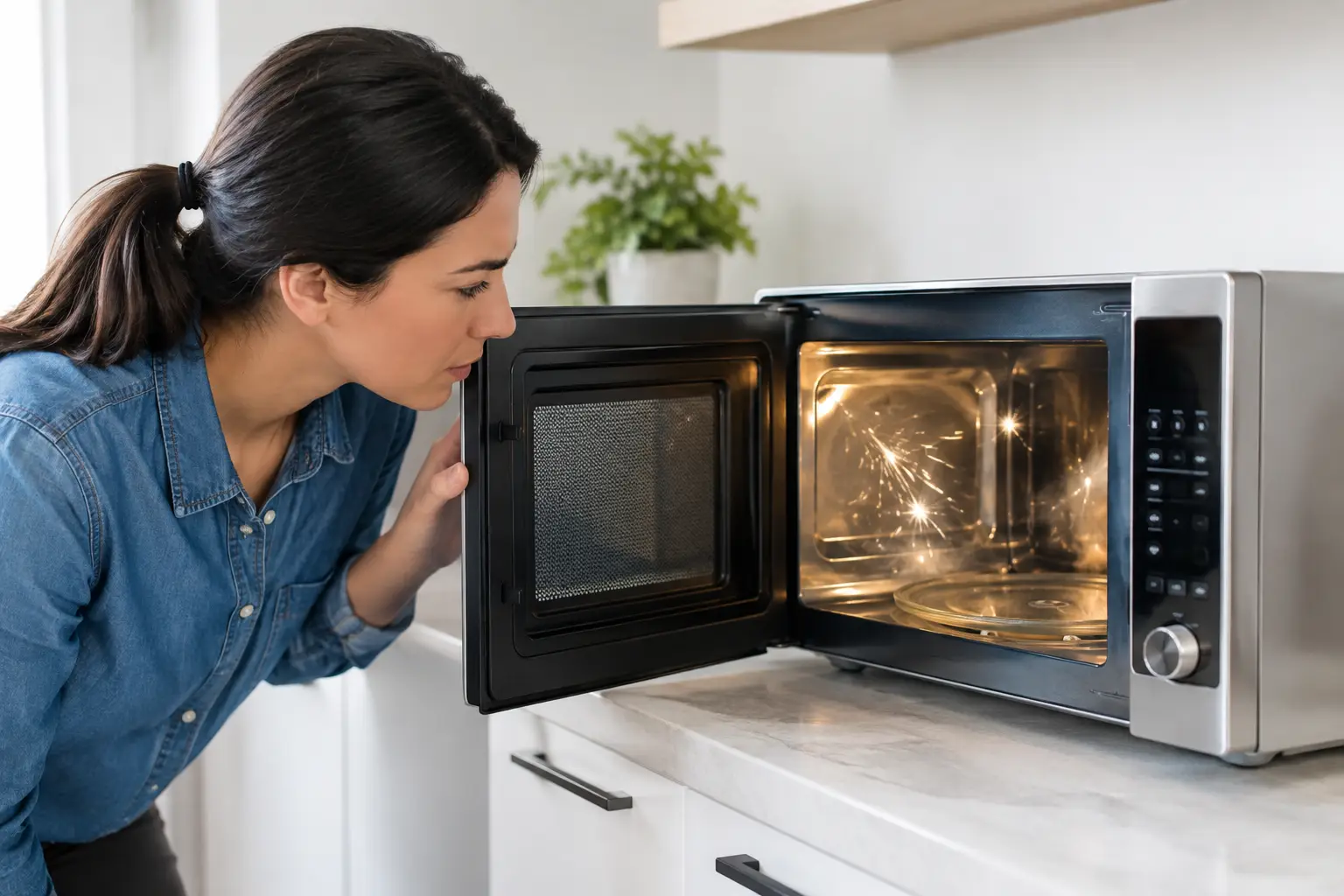
A microwave that suddenly flashes, pops, or throws visible sparks can turn a quick dinner into a real household worry. Knowing how to troubleshoot microwave sparking starts with one rule: stop the microwave immediately. Press Stop, unplug it if you can do so safely, and do not run another test until you know what caused the arcing.
A single spark does not always mean the microwave is beyond repair. Food debris, damaged interior coatings, or an overlooked twist tie are common culprits. But microwaves also contain high-voltage components that can remain dangerous even after the unit is unplugged. The right approach is to handle the simple, visible checks yourself and leave internal electrical repairs to a qualified appliance technician.
Not Sure You Need a Repair?
Before you pay for a service call, try FixDecision AI. Describe what's wrong with your appliance and get a safety-first assessment to help you decide whether to DIY or call a professional.
What to Do the Moment Your Microwave Sparks
If sparks appear while the microwave is running, press Stop or Cancel. Leave the door closed if there is flame inside the cavity. Closing the door limits oxygen and may help contain a small fire. Do not open the door until the sparking or flame has stopped.
Once it is safe, unplug the microwave. If you cannot safely reach the plug, turn off the circuit at the breaker. A microwave that continues to spark, emits smoke, has a burning odor, or trips the breaker should not be used again until it has been inspected.
Never run the microwave empty to see whether the problem is gone. Microwaves need food or liquid inside to absorb energy. Running an empty appliance can damage the magnetron, which is the component that creates the heat.
How to Troubleshoot Microwave Sparking: Start With the Easy Causes
After the microwave has cooled and is unplugged, remove the turntable, roller ring, and any food. Use a bright light to inspect the cooking cavity, door area, and accessories. Most homeowner checks are visual and do not require removing the outer cabinet.
Look for metal and metallic trim
The most familiar cause of arcing is metal in the microwave. Check for a forgotten fork, spoon, aluminum foil, metal takeout container, bread-bag tie, or plate with a metallic rim. Even small pieces of foil can spark when they sit near the oven wall or become crumpled.
Not every metal item behaves the same way. Some microwave-safe food packages include carefully designed metallic sections, such as a browning sleeve. Use only those items exactly as the package directs. When in doubt, transfer food to plain microwave-safe glass or ceramic.
Clean burned-on food and grease
Splattered grease and carbonized food can create a path for electrical arcing, especially along the ceiling, side walls, and around the turntable area. Wipe the interior with a soft cloth, warm water, and mild dish soap. Avoid abrasive pads and harsh cleaners that could scratch the protective coating.
Pay attention to dark, crusted spots and food debris around the waveguide cover. After cleaning, let the interior dry fully before deciding whether to test the appliance. If the cavity coating is chipped, blistered, or burned through, do not keep using the microwave just because it looks cleaner.
Inspect the waveguide cover
Many microwaves have a small rectangular or square panel inside the cooking cavity, often on a side wall. This is the waveguide cover, sometimes called a mica cover. It protects the opening that directs microwave energy into the oven.
A cover that is greasy, scorched, cracked, or has a hole can cause sparking. Light surface residue may come off with gentle cleaning, but a visibly damaged cover needs replacement. The part itself may be inexpensive, yet the correct fit and the condition behind it matter. If the area behind the cover looks charred or damaged, schedule service instead of replacing the cover and hoping for the best.
Check the rack, turntable, and interior coating
Some convection or combination microwaves include a metal rack designed for specific cooking modes. Using that rack in the wrong mode, placing it incorrectly, or operating it when the manual does not allow it can cause arcing. Remove it while troubleshooting unless the manufacturer specifically says it belongs in the microwave mode you are using.
Inspect the glass turntable and roller ring for food buildup or damage. Also look closely at the painted interior walls. Small scratches may not be urgent, but peeling paint, exposed metal, rust, or burn marks are not normal. Those conditions can worsen quickly with continued use.
What the Sparking Pattern Can Tell You
Where and when the sparks happen can help narrow down the cause. Sparks around a dish or package usually point to metal or a damaged container. Sparks from one fixed spot on the wall often point to food buildup, interior-coating damage, or a failing waveguide cover.
If arcing begins immediately after the microwave starts, with nothing metal inside and a clean cavity, an internal component may be failing. A loud buzzing sound, unusual humming, burning smell, reduced heating, or intermittent operation adds to that concern. These symptoms can involve the magnetron, high-voltage diode, transformer, capacitor, or wiring. None are safe DIY repairs.
Sparking near the door, latch, control panel, or outlet is another reason to stop using the appliance. The issue may involve the door alignment, door switches, wiring, or electrical supply. Do not try to bend the door, bypass a switch, or operate a microwave with a door that does not close firmly.
When a Safe Test Makes Sense
A cautious test is reasonable only after you have removed all metal, cleaned the cavity, confirmed there is no visible interior damage, and checked that the waveguide cover is intact. Put a microwave-safe glass cup with about one cup of water in the center of the turntable. Heat it for a short period while staying nearby and watching through the door.
Stop the test at once if you see flashes, hear popping, smell burning, or notice smoke. If the water heats normally and there is no arcing, the original problem was likely a foreign object or residue. Still, monitor the microwave for the next few uses. Recurring sparks are a repair issue, not something to ignore.
Do not test a microwave that has a cracked door, damaged latch, exposed metal, deep interior burns, a melted waveguide cover, or an electrical burning odor. These are situations where a technician should evaluate the unit before it goes back into service.
Repairs Homeowners Should Not Attempt
It can be tempting to remove the microwave cabinet and look for a loose wire or burned part. That is not a safe repair project. A microwave’s high-voltage capacitor can hold a dangerous electrical charge even when the appliance has been unplugged. Incorrect handling can cause severe injury.
Leave these repairs to a trained appliance professional: magnetron replacement, capacitor or diode work, transformer repair, door-switch service, internal wiring repairs, and any diagnosis that requires opening the cabinet. A technician can also determine whether the cavity damage makes repair unsafe or whether replacement is the better value.
For an over-the-range microwave, installation condition also matters. A loose mounting bracket, poor ventilation, or damaged power connection can complicate a repair. Getting the appliance checked correctly the first time protects both your kitchen and your peace of mind.
Repair or Replace a Sparking Microwave?
The answer depends on the microwave’s age, type, condition, and the failed part. A newer built-in or over-the-range model may be worth repairing for a damaged waveguide cover, door switch, turntable issue, or other serviceable problem. Replacing a built-in unit can involve cabinet fit, venting, mounting, and electrical considerations beyond the purchase price.
A basic countertop microwave with major internal damage may make less financial sense to repair, particularly if it is older and the magnetron or high-voltage system has failed. Visible rust or repeated cavity arcing can also push the decision toward replacement because the cooking cavity itself may no longer be reliable.
Before authorizing work, ask for the diagnosis, the parts involved, and the full repair estimate. A clear comparison between repair cost and replacement cost helps you make a practical decision without guessing. US Appliance Repairs can help homeowners connect with local appliance repair providers when a microwave needs professional attention.
Preventing Future Microwave Arcing
A few habits can prevent many sparking calls. Cover food to reduce splatters, clean spills before they bake onto the cavity, and inspect containers before heating. Use microwave-safe glass, ceramic, or labeled plastic, and keep foil, utensils, twist ties, and decorative metallic dinnerware out of the appliance.
Treat new popping sounds or small flashes as an early warning, not a minor annoyance. Stopping use early and getting the right repair help can keep a manageable microwave problem from becoming a damaged appliance, a kitchen disruption, or a safety concern.