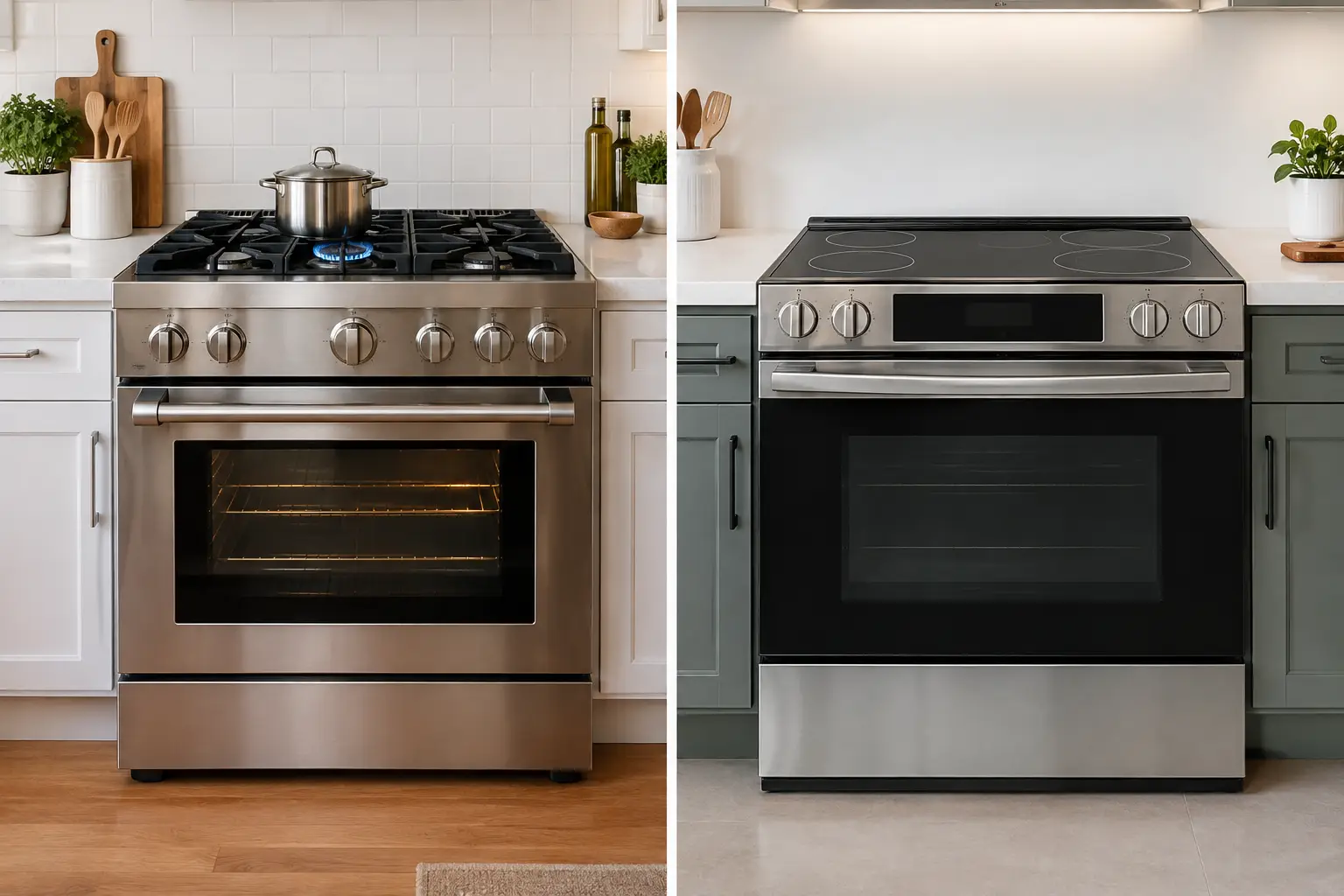
A kitchen remodel is not the only time this decision matters. If your current oven heats unevenly, takes forever to preheat, smells like gas, or has stopped working altogether, the gas versus electric oven question can affect your repair bill, replacement options, and daily cooking routine. The better choice is not automatically the newest model or the one a neighbor prefers. It is the one that fits your utility setup, cooking habits, budget, and comfort level with maintenance.
For many homeowners, an oven failure creates pressure to decide fast. A qualified appliance technician can help identify whether a repair makes sense before you commit to changing fuel types or replacing an otherwise repairable appliance.
Not Sure You Need a Repair?
Before you pay for a service call, try FixDecision AI. Describe what's wrong with your appliance and get a safety-first assessment to help you decide whether to DIY or call a professional.
Gas Versus Electric Oven: The Core Difference
A gas oven creates heat by burning natural gas or propane. An electric oven uses heating elements powered by a 240-volt electrical circuit. Both can bake, roast, broil, and handle everyday meals well, but they deliver heat differently.
Gas ovens tend to heat up quickly and add more moisture to the oven cavity. That can be useful for roasting meats, casseroles, and baked dishes where a slightly humid environment helps prevent drying. Electric ovens generally provide steadier, drier heat, which many home bakers prefer for cookies, cakes, pies, and breads.
The difference is real, but it should not be overstated. A properly operating oven, accurate temperature control, good cookware, and recipe technique often matter more than fuel type. A quality gas oven can bake excellent desserts, and an electric oven can produce a well-browned roast.
Cooking Performance and Temperature Control
Electric ovens are often favored for temperature consistency. Their heating elements cycle on and off to maintain the selected temperature, and many models distribute heat evenly with a convection fan. That stability can be helpful when a recipe depends on reliable heat over a long baking time.
Gas ovens can have more temperature fluctuation because the burner cycles to maintain heat. Some also have hot spots, particularly near the bottom of the oven. This does not mean something is wrong. Still, if one side of a sheet pan browns faster than the other or the oven burns food on the bottom, the issue may be an airflow problem, a damaged burner, a faulty temperature sensor, or a calibration issue worth checking.
Broiling is another area where preferences differ. Electric broilers can produce intense, even top heat. Gas broilers can be effective as well, but performance depends heavily on the range design. If broiling is a major part of your cooking, compare the specific models rather than relying on the fuel source alone.
Convection Changes the Conversation
Convection ovens use a fan to circulate hot air. Whether the oven is gas or electric, convection can improve browning and reduce cooking time for many foods. It is especially useful for roasting vegetables, baking multiple trays of cookies, and cooking large meals.
Not every convection system performs the same. A true convection oven adds a heating element around the fan, while a standard fan-assisted design relies mainly on the oven’s existing heat source. Either can be useful, but homeowners should focus on practical features and reliability, not just labels.
Installation Costs Can Decide the Winner
The lowest-priced appliance is not always the lowest-cost choice. If your kitchen already has a working gas line, replacing a gas oven or gas range is usually more straightforward. If your home is set up for electric cooking with the correct 240-volt outlet, an electric replacement may be the easier path.
Switching from electric to gas may require a licensed professional to install or extend a gas line, confirm adequate gas capacity, and handle proper shutoff access. Depending on local requirements, permits and inspections may also be necessary. Switching from gas to electric may require a new dedicated circuit, outlet, or electrical panel work.
These upgrades can add significantly to the project cost. Before choosing a new appliance, confirm what your kitchen can support. Measure the appliance opening, check the available fuel connection, and review the electrical requirements listed for the model you are considering.
Energy Use and Monthly Operating Cost
Utility rates vary widely across the United States, so there is no universal answer on which oven costs less to run. Natural gas is often less expensive than electricity in some areas, while electric rates may be more favorable elsewhere. Your local utility prices and how often you use the oven matter more than national averages.
Electric ovens can be efficient because much of the heat stays inside the oven cavity. Gas ovens can lose some heat through ventilation, though modern models have improved. For most households, the monthly difference from oven use alone is modest compared with heating, cooling, water heating, and laundry appliances.
If operating cost is a priority, look beyond fuel type. Good door seals, reliable temperature controls, convection settings, and avoiding unnecessary preheating can help reduce wasted energy in either style of oven.
Safety Considerations for Each Type
Gas and electric ovens are safe when installed correctly and maintained properly. They do have different warning signs that homeowners should take seriously.
With a gas oven, a noticeable gas odor, delayed ignition, repeated clicking, yellow or uneven flames, or a burner that will not light calls for prompt attention. Leave the area if you smell a strong gas odor, avoid operating electrical switches or creating sparks, and contact your gas utility or emergency services as appropriate. Do not try to repair a gas leak yourself.
Electric ovens do not create combustion gases, but they have their own risks. A burning smell that does not clear after normal first-use residue, sparking, a tripping breaker, a glowing element that stays on, or a damaged power cord can point to an electrical fault. Turn the oven off and arrange professional service rather than continuing to use it.
For either type, keep the oven door gasket clean and intact, avoid lining the bottom with foil unless the manufacturer permits it, and make sure the appliance is properly installed and stable. A range that tips forward is a serious hazard, which is why the anti-tip bracket matters.
Repair Needs: What Usually Goes Wrong?
Many oven problems are repairable, regardless of whether the appliance uses gas or electricity. Electric oven failures often involve a burned-out bake or broil element, a faulty temperature sensor, a failed control board, a damaged door gasket, or wiring problems. A common symptom is an oven that turns on but does not heat, heats only from one side, or takes far too long to reach temperature.
Gas oven repairs often involve igniters, gas valves, burner assemblies, temperature sensors, or electronic controls. An oven that clicks but will not ignite, takes several attempts to light, or produces weak heat may have an igniter issue. Because gas components require careful diagnosis, this is not a repair to put off.
Age matters when deciding whether to repair or replace. A single failed part in an oven that is otherwise in good condition is often worth fixing. If an older unit has repeated failures, extensive corrosion, unavailable parts, or a major control-board problem, replacement can be the more reliable long-term move. A technician can help pinpoint the fault and give you information to make the decision with less guesswork.
Which Oven Is Right for Your Household?
Choose a gas oven if your home already has safe, convenient gas service and you like responsive heat, quick preheating, or the slightly moister cooking environment gas can provide. It can also be a practical choice when changing to electric would require expensive electrical upgrades.
Choose an electric oven if consistent baking results are high on your list, your kitchen already has a suitable 240-volt connection, or you prefer to avoid combustion-related components. Electric models can be especially appealing for households that bake often and want precise, stable oven heat.
There is also a middle path: a dual-fuel range. These appliances commonly pair a gas cooktop with an electric oven, giving cooks the feel of gas burners and the baking consistency of electric heat. They can be an excellent fit, but installation requirements and purchase price may be higher.
When an oven begins acting up, do not assume replacement is your only option. An accurate diagnosis can reveal a manageable repair, protect your household from a developing safety issue, and help you choose the next step with confidence. Whether your kitchen runs on gas or electricity, getting the appliance back up and running safely is what brings real peace of mind.