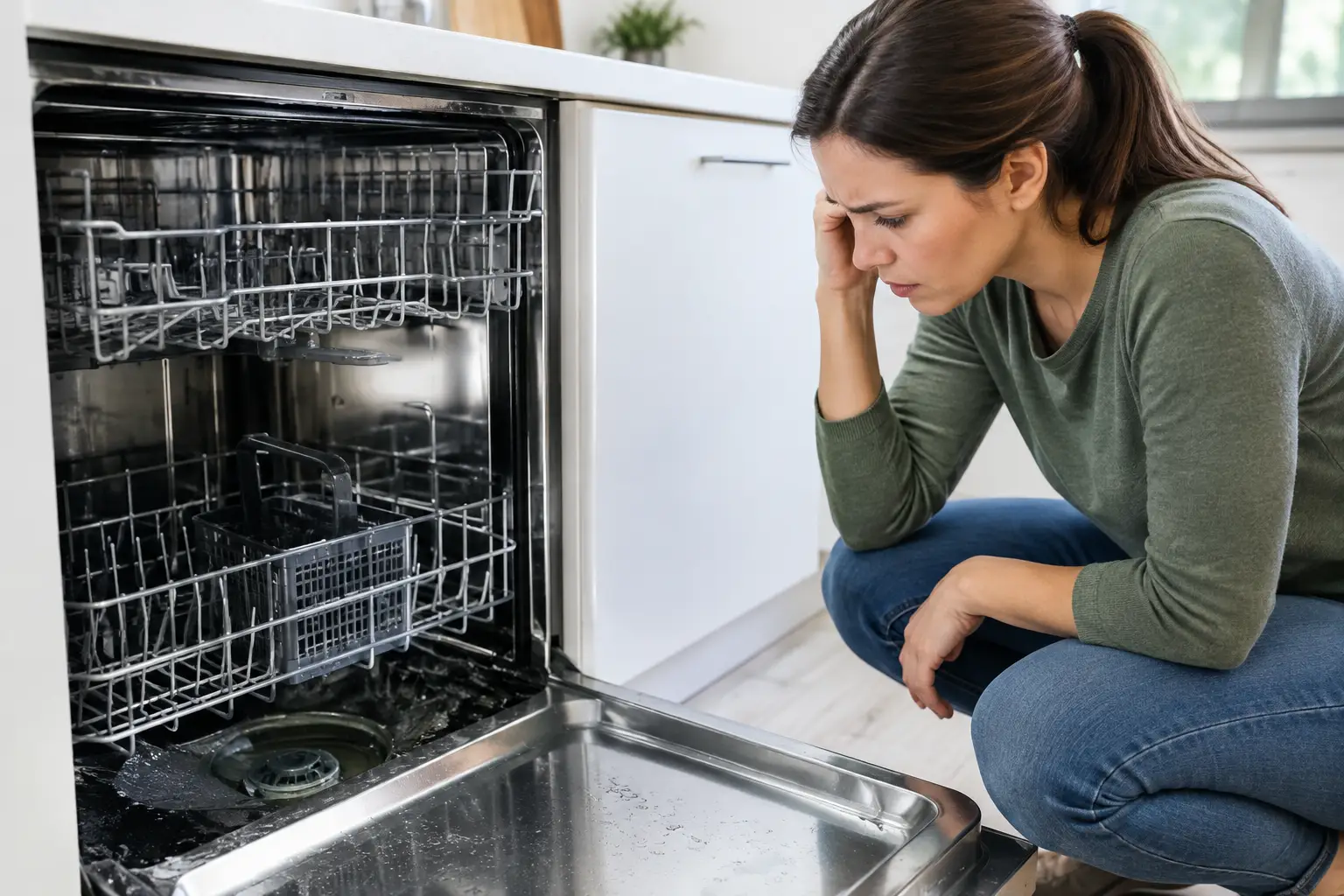
A cycle ends, the dishes are clean, and there is still a shallow pool of dirty water sitting in the bottom of the tub. If your dishwasher not draining but no clog is the problem, the cause may be hidden below the filter or outside the dishwasher altogether. A clear filter does not rule out a failed drain pump, a stuck check valve, a blocked garbage-disposal connection, or an electrical control issue.
The good news is that a dishwasher that will not drain is often repairable. Start with a few safe checks, then know when the symptom calls for a qualified appliance technician. That approach can prevent water damage, protect the machine, and get dinner cleanup back on schedule.
Not Sure You Need a Repair?
Before you pay for a service call, try FixDecision AI. Describe what's wrong with your appliance and get a safety-first assessment to help you decide whether to DIY or call a professional.
Why a dishwasher can hold water with no visible clog
Dishwashers drain through a short but important system: water leaves the sump at the bottom of the tub, passes through the drain pump and drain hose, then enters the kitchen sink drain or garbage disposal. Any part of that path can fail even when the filter and visible drain opening look clean.
A dishwasher should retain only a small amount of water under its filter area to keep pump seals from drying out. Water covering the bottom of the tub after a cycle, however, is not normal. If the water is cloudy, smells bad, or rises high enough to reach the door, stop using the dishwasher until the issue is identified.
The drain pump may be running weakly or not at all
The drain pump is the most common hidden cause. It uses a small motor and impeller to push water out of the dishwasher. Food particles, broken glass, labels, or a damaged impeller can prevent it from moving water properly. In other cases, the pump motor has simply failed.
Listen during the drain portion of a cycle. A normal pump produces a steady humming or rushing-water sound. A loud grinding noise can indicate debris in the pump. A faint hum with no water movement may mean the impeller is jammed. Complete silence can point to a failed pump, wiring problem, door-latch issue, or faulty control board.
The check valve can stick shut
Many dishwasher models use a check valve or flapper near the pump outlet. Its job is to keep dirty sink water from flowing back into the dishwasher. Grease and debris can make that valve stick, preventing water from leaving the tub even though there is no obvious clog in the filter.
This is a small component, but reaching it may require removing lower panels or parts beneath the dishwasher. For most homeowners, this is a better task for a service professional than a trial-and-error repair.
The drain hose may have a hidden restriction or bad routing
A drain hose can look fine from the outside while grease buildup or debris narrows the inside of the hose. The hose can also kink behind the dishwasher when the appliance is pushed back into place. A kink restricts drainage and can eventually strain the pump.
Routing matters, too. The hose should rise beneath the countertop in a high loop before connecting to the sink drain or disposal. Without that loop, wastewater can flow backward into the dishwasher. Some local plumbing setups use an air gap instead. If the dishwasher was recently installed, moved, or replaced, incorrect drain-hose routing is especially worth checking.
A new garbage disposal may still have its drain plug installed
If the dishwasher connects to a garbage disposal and the disposal was installed recently, check whether the dishwasher knockout plug was removed. This small plastic plug blocks the dishwasher inlet until it is punched out during installation.
When the plug remains in place, the dishwasher cannot drain into the disposal at all. The dishwasher itself may be working normally, which makes this issue easy to miss. A plumber, installer, or appliance technician can correct it quickly.
Safe checks to make before scheduling dishwasher repair
Turn off power to the dishwasher at the breaker before putting your hands near the filter or sump. If there is a large amount of standing water, remove it with a cup, sponge, or wet/dry vacuum. Avoid starting repeated cycles with a full tub. That can worsen an overflow or damage a struggling pump.
First, remove and rinse the filter according to the owner’s manual. Look below it for debris, but do not force or pry at anything in the sump. Small shards of glass and sharp bone fragments are common, so wear gloves.
Next, run the kitchen sink. If the sink itself drains slowly or backs up, the problem may be in the household drain line rather than in the dishwasher. Clear that plumbing issue first. Also run the garbage disposal, if you have one, with cold water for a few seconds. Food buildup inside the disposal can block the dishwasher connection.
Then inspect the accessible portion of the drain hose under the sink. Look for a sharp bend, a crushed section, or a loose connection. If you find a loose hose connection, place a towel beneath it before tightening anything. Do not disconnect a hose unless you are prepared for trapped water to spill out.
Finally, try a cancel/drain command. The wording varies by brand, but many machines drain when you press and hold Start, Cancel, or Drain for several seconds. If the dishwasher drains during this command but not at the end of a normal cycle, the issue may involve the control system, a sensor, or how the cycle is progressing.
When a dishwasher not draining but no clog needs a technician
Call for professional help if the dishwasher makes grinding sounds, trips the breaker, leaks, produces a burning smell, or still holds water after the basic checks. These signs can involve electrical components, a seized pump, or a failed control board. Continuing to run the machine is not worth the risk of a kitchen leak or a more expensive repair.
A technician can test whether the drain pump receives the correct voltage, inspect the impeller and check valve, verify the hose routing, and determine whether the control board is sending the drain command. This matters because several failures can create the same symptom. Replacing a pump when the actual issue is a blocked disposal inlet or damaged wiring wastes time and money.
Typical drain-related repair costs vary by dishwasher model, local labor rates, and the failed part. Cleaning a restricted hose or correcting a disposal connection is usually less expensive than replacing a pump or electronic control. Before approving service, ask for the diagnosis, parts-and-labor estimate, and whether the repair includes a warranty from the independent provider.
For fast help finding local appliance service, US Appliance Repairs can connect homeowners with independent repair providers who can diagnose the problem and help get the dishwasher back up and running.
Prevent another drainage problem
Good dishwasher habits reduce the chance of drain failures, though they cannot prevent every mechanical breakdown. Scrape heavy food from plates, remove produce stickers and twist ties before loading, and clean the filter regularly. You do not need to pre-rinse every dish, but hard debris does not belong in the pump area.
Run the garbage disposal before starting the dishwasher if both appliances share a drain connection. Once a month, inspect the filter and wipe away grease buildup. Use detergent designed for automatic dishwashers, and follow the product amount recommended for your water conditions. Excess suds can interfere with normal washing and draining.
A dishwasher that leaves water behind is sending a useful warning before the problem becomes a messy kitchen emergency. Address it early, use only the checks you can perform safely, and let a qualified technician handle hidden pump, electrical, and plumbing faults so the repair is done right the first time.