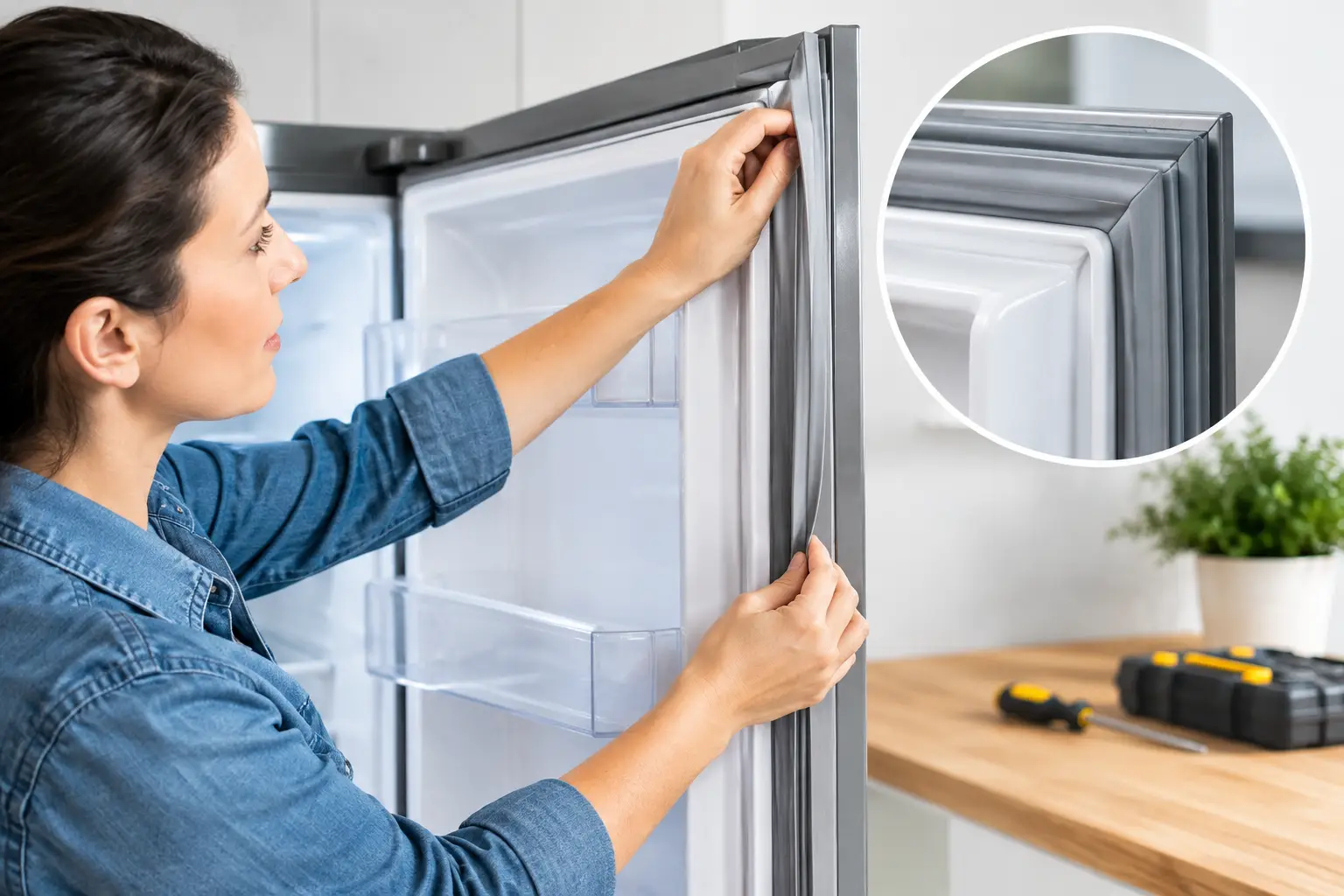
A refrigerator that seems to run constantly, has moisture around the door, or leaves food less cold than usual may have a simple but costly problem: a failing refrigerator door gasket. This flexible rubber seal is easy to overlook, yet it keeps cold air inside where it belongs. When it no longer seals properly, your refrigerator has to work harder, your utility bill can rise, and perishable food may not stay at a safe temperature.
Before assuming the compressor or thermostat has failed, take a close look at the gasket. Some seal problems respond to basic cleaning and adjustment. Others need a replacement part and an experienced appliance technician to make sure the door closes squarely and the refrigerator is back up and running.
Not Sure You Need a Repair?
Before you pay for a service call, try FixDecision AI. Describe what's wrong with your appliance and get a safety-first assessment to help you decide whether to DIY or call a professional.
What a Refrigerator Door Gasket Does
The gasket is the rubber or vinyl strip that runs around the edge of the refrigerator or freezer door. Small magnets inside the strip pull the door tightly against the cabinet frame, creating an airtight seal. That seal prevents warm, humid kitchen air from entering the compartment.
When the door closes but the gasket has gaps, cold air escapes and warm air enters. The refrigerator then cycles longer to recover its set temperature. In a freezer, that moisture can quickly become frost or ice buildup. In the fresh-food section, it can lead to condensation, warm spots, and food that spoils sooner than expected.
A bad seal is not always the only cause of cooling trouble. Dirty condenser coils, a damaged door hinge, a failing evaporator fan, or an overloaded refrigerator can create similar symptoms. Still, the gasket is one of the most practical places to start because it is visible and easy to inspect.
Signs Your Door Seal May Be Failing
A refrigerator door gasket rarely fails all at once. More often, it becomes stiff, flattened, greasy, torn, or loose over time. The most obvious sign is a section of the door that does not sit flush against the refrigerator cabinet.
You may also notice that the refrigerator motor runs more frequently than normal, especially after the door has been closed for several minutes. Moisture or small droplets around the door frame are another warning sign. If the freezer has repeated frost buildup near the door opening, warm air is likely getting through somewhere.
Pay attention to food storage, too. Milk, meat, leftovers, and other perishable items should be kept at 40°F or below in the refrigerator. If a weak gasket is allowing temperatures to rise, food safety can become a concern before the appliance appears completely broken.
Try the dollar-bill test
Close the refrigerator door on a dollar bill or a thin piece of paper, then gently pull it out. You should feel steady resistance. Repeat the test at several points around the door, including the corners.
If the bill slides out with little resistance in one area, the gasket may not be sealing there. This test is useful, but it is not a complete diagnosis. A misaligned door can cause the same result even when the gasket itself is in good condition.
Check for Dirt, Damage, and Door Alignment
Start by opening the door and examining the full length of the gasket. Look for cracks, tears, hardened areas, loose corners, or sections that are flattened and no longer spring back into shape. Also look at the cabinet surface where the gasket makes contact. Crumbs, dried spills, grease, and sticky residue can break the seal.
Clean the gasket and mating surface with warm water, mild dish soap, and a soft cloth. Avoid abrasive scrubbers, bleach, and harsh solvents, which can damage the material or leave it dry and brittle. Use a soft toothbrush for dirt caught in the folds, then dry the area completely.
If the gasket looks wrinkled or slightly misshapen but is not torn, wipe it with a warm, damp cloth and close the door for a while. Gentle warmth can sometimes help flexible material settle back into position. Do not use high heat or an open flame. Excessive heat can permanently deform the gasket or damage nearby plastic parts.
Next, step back and check whether the door appears level. A sagging door may leave a gap at the top or bottom corner. Loose hinges, worn hinge components, an improperly leveled refrigerator, or overloaded door bins can prevent a good seal. Removing heavy items from the door and making sure the appliance is level may help, but hinge adjustments vary by model. Forcing an adjustment can make the problem worse.
When Cleaning Is Enough and When Replacement Is Needed
Cleaning can solve the problem when the gasket is dirty, sticky, or blocked by food debris. It may also improve a minor gap caused by residue on the cabinet frame. After cleaning, repeat the dollar-bill test and watch for moisture or frost over the next day or two.
Replacement is usually the better answer when the refrigerator door gasket is cracked, torn, permanently flattened, pulling away from the door, or no longer magnetic. A gasket that looks intact can still fail if it has become rigid with age. If it will not conform to the cabinet after cleaning and normal use, it is unlikely to improve on its own.
The correct replacement must match the refrigerator’s model number, not just the door’s general size. Similar-looking gaskets can have different corner shapes, mounting tracks, magnet strength, and thickness. Installing the wrong part can leave the same air leak in place and waste both time and money.
On many models, gasket replacement involves loosening a retaining strip or screws around the inner door liner, positioning the new seal correctly, and tightening everything evenly. It sounds straightforward, but an unevenly installed gasket can buckle or leave gaps. Older refrigerators may also have brittle door liners, hidden fasteners, or hinge issues that complicate the job.
What Refrigerator Gasket Repair May Cost
The cost of refrigerator gasket repair depends on the appliance brand, the door size, the part design, local labor rates, and whether another issue is found during the visit. A basic gasket replacement is often far less expensive than repairs involving cooling-system components, electronic controls, or a compressor.
For homeowners deciding whether to repair or replace, consider the refrigerator’s age and overall condition. Replacing a worn gasket on a refrigerator that otherwise cools well can be a sensible maintenance repair. If the unit also has recurring temperature problems, loud operation, water leaks, or multiple failing parts, it may be worth asking a technician for an honest repair-versus-replacement recommendation.
A service visit is particularly worthwhile if the door is sagging, the gasket has been replaced but still will not seal, or the refrigerator is warm despite a door that appears closed. Those symptoms can point to a hinge, alignment, fan, defrost, or cooling problem rather than the seal alone.
Prevent Gasket Problems From Coming Back
A little routine care can extend the life of a door gasket. Wipe spills from the seal promptly, especially sugary liquids and greasy food residue. Do not slam the door, and avoid packing door shelves so heavily that the door sags or rebounds after closing.
Check that containers and drawers are fully pushed in before closing the door. A single package sticking out can bend the gasket over time or leave the door slightly open for hours. Keeping the refrigerator reasonably level also helps the door close as designed.
If the gasket has failed and you need dependable local repair help, US Appliance Repairs can help connect homeowners with independent appliance repair providers. A qualified technician can confirm whether the seal is the real issue, install the right replacement part, and help protect your refrigerator’s cooling performance.
A refrigerator door should close with a firm, even seal, not require a second push or a daily check. Addressing a weak gasket early can spare you from frost, spoiled groceries, and a refrigerator that works overtime just to stay cold.