
Average Repair Cost: $200–600
Typical Diagnostic Fee: $75–125
Most Common Repair: Ice Maker or Thermostat
Most Expensive Repair: Compressor or Sealed System
Repair Time: 1–3 Hours
Usually Worth Repairing? Yes, if under 10 years old
Reading Time: 6 minutes
Last Updated: July 18 2026
Not Sure You Need a Repair?
Before you pay for a service call, try FixDecision AI. Describe what's wrong with your appliance and get a safety-first assessment to help you decide whether to DIY or call a professional.

Introduction
A broken refrigerator is one of the most urgent appliance problems homeowners face. Whether your refrigerator isn’t cooling, is leaking water, or is making unusual noises, knowing the expected repair cost can help you decide whether repairing or replacing the appliance is the smarter investment.
Most refrigerator repairs cost between $200 and $600, although simple repairs can cost less and major sealed system repairs may exceed $1,000.
If you’re comparing repair costs for other household appliances, see our Microwave Repair Cost Guide or Dryer Repair Cost Guide.
Average Refrigerator Repair Costs
| Repair | Average Cost |
| Diagnostic Fee | $75–125 |
| Thermostat | $150–300 |
| Ice Maker | $150–350 |
| Evaporator Fan Motor | $175–350 |
| Condenser Fan Motor | $175–325 |
| Defrost Heater | $175–350 |
| Water Inlet Valve | $175–300 |
| Door Gasket | $150–300 |
| Compressor | $700–1,200 |
| Sealed System Repair | $800–1,500+ |
Refrigerator Repair Costs by Problem
- Refrigerator Not Cooling
- Refrigerator Leaking Water
- Ice Maker Not Working
- Loud Noises
- Frost Buildup
Repair Costs by Refrigerator Type
- Top Freezer
- Bottom Freezer
- French Door
- Side-by-Side
- Built-In
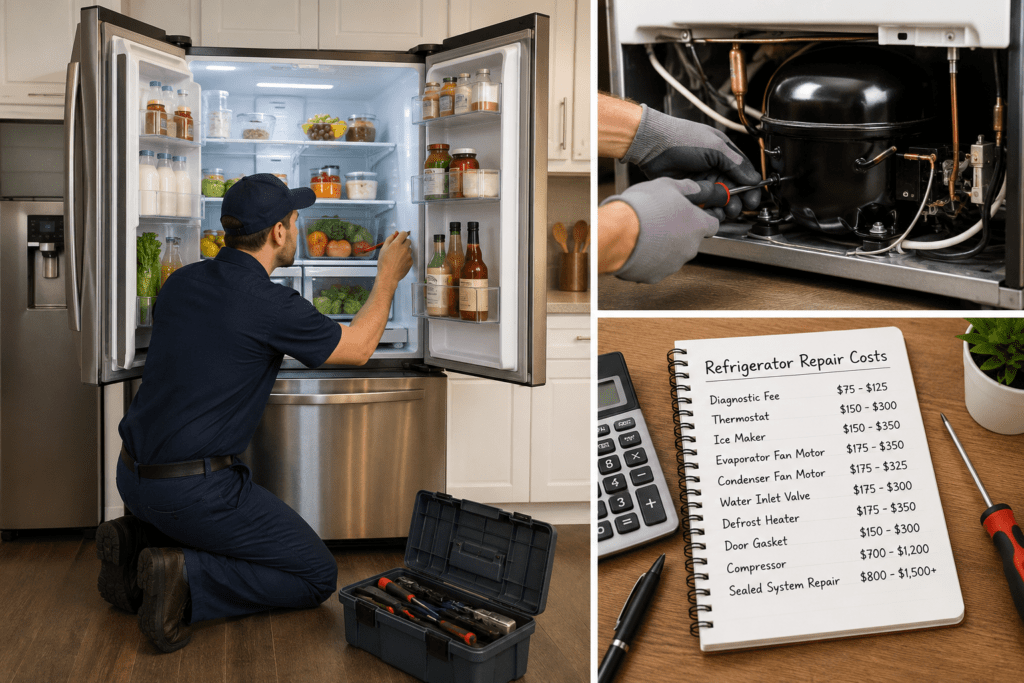
Common Refrigerator Problems
The most common refrigerator repairs include:
- Refrigerator not cooling
- Water leaking inside or underneath
- Ice maker not working
- Excessive frost buildup
- Loud buzzing or clicking noises
- Freezer cold but refrigerator war
- Door not sealing properly
Many of these problems can be repaired without replacing the refrigerator.
If your refrigerator isn’t cooling properly, a refrigerant leak could be the cause. Learn the warning signs in our Signs of Low Refrigerant in a Refrigerator guide.
Is It Worth Repairing a Refrigerator?
In many cases, yes.
Repairing is usually worthwhile when:
- The refrigerator is less than 10 years old.
- The repair costs less than half the price of a replacement.
- The appliance has otherwise been reliable.
- The problem involves a replaceable component rather than the sealed refrigeration system.
Replacing may be the better choice when:
- The compressor has failed.
- The sealed system requires extensive repairs.
- The refrigerator is over 12–15 years old.
- Multiple expensive repairs have already been completed.
Before Calling for Service
Before scheduling a repair, check a few simple items:
- Verify the outlet has power.
- Make sure the temperature controls haven’t been changed.
- Clean dirty condenser coils.
- Inspect the door gaskets for damage.
- Confirm the vents inside the refrigerator aren’t blocked by food.
These quick checks may solve simple cooling problems without a service call.
If these simple checks don’t solve the problem, the issue may involve a more expensive component such as the compressor. Learn how to tell if your refrigerator compressor is locked up before deciding whether a replacement is necessary..
Frequently Asked Questions
How much does refrigerator repair usually cost?
Most homeowners pay between $200 and $600, depending on the failed component.
Is replacing a compressor worth it?
Usually only if the refrigerator is relatively new and otherwise in excellent condition.
What is the most expensive refrigerator repair?
Compressor and sealed system repairs are typically the most expensive, often exceeding $1,000.
How long should a refrigerator last?
Most quality refrigerators last 10 to 15 years with regular maintenance.
What Affects Refrigerator Repair Costs
Several factors determine the final repair bill. The age of the refrigerator, brand, availability of replacement parts, labor rates, emergency service, and the complexity of the repair all play a role. Premium brands such as Sub-Zero, Thermador, and built-in models often cost more to repair because parts are more expensive and technicians require specialized knowledge. Refrigerators with smart electronics, dual evaporators, or multiple compressors also take longer to diagnose and repair. If the appliance is still covered by a manufacturer’s warranty or an extended service plan, your out-of-pocket cost may be significantly lower.
Signs Your Refrigerator Needs Professional Repair
Small problems often become major repairs if ignored. Contact a qualified technician if your refrigerator runs constantly, food spoils quickly, the freezer stays cold while the refrigerator warms up, you hear repeated clicking or grinding noises, water pools beneath the unit, or the compressor becomes unusually hot. These symptoms can indicate failing fans, thermostats, start relays, sealed-system problems, or electronic controls. Prompt repairs can often prevent additional component failures.
Common Parts That Fail
Thermostats regulate temperature and may fail after years of use. Evaporator and condenser fan motors wear over time and reduce airflow, causing poor cooling. Defrost heaters prevent frost accumulation and are a common failure on older units. Door gaskets lose flexibility and allow warm air to enter, making the refrigerator work harder. Ice makers and water inlet valves frequently require replacement because of mineral buildup or mechanical wear. Compressors generally last many years but represent one of the most expensive repairs when they fail.
Should You Repair or Replace?
A useful guideline is the 50 percent rule. If the repair costs less than half the price of replacing the refrigerator and the appliance is still within its expected lifespan, repairing it usually makes financial sense. For example, spending $300 to repair an eight-year-old refrigerator valued at $1,400 is generally a good investment. However, spending $1,200 to replace the compressor on a 14-year-old refrigerator may not be practical when a new, more energy-efficient model can be purchased for a similar amount.
Energy Efficiency Considerations
Newer refrigerators use considerably less electricity than models built fifteen or twenty years ago. While energy savings alone rarely justify replacing a relatively new refrigerator, they can influence the decision for older appliances requiring major repairs. If your current refrigerator has already needed multiple repairs, replacing it with an ENERGY STAR certified model may reduce both utility costs and future maintenance expenses.
Preventive Maintenance Checklist
- Clean condenser coils every six months.
• Keep the refrigerator temperature between 37°F and 40°F.
• Keep the freezer at 0°F.
• Replace water filters as recommended.
• Inspect door gaskets for cracks or gaps.
• Leave space around the refrigerator for ventilation.
• Avoid blocking interior air vents with food.
• Listen for unusual noises and address them early. - Routine maintenance extends appliance life and reduces the likelihood of costly repairs.
The U.S. Department of Energy recommends proper refrigerator temperature settings and routine maintenance to improve efficiency and extend appliance life.
When to Call for Emergency Service
If your refrigerator has completely stopped cooling, emits a burning smell, repeatedly trips the circuit breaker, leaks large amounts of water, or stores medications or other temperature-sensitive items, arrange service as soon as possible. Waiting can increase food loss and may allow a relatively small problem to become a much more expensive repair.
Looking for professional help? Visit our Appliance Repair Locations page to find repair assistance near you.
Final Thoughts
Most refrigerator repairs are significantly less expensive than purchasing a new refrigerator. Understanding the expected repair costs and the age of your appliance can help you make a smart financial decision.
If your refrigerator is newer and the repair is relatively minor, repairing it is often the best value.
Need Help With Your Appliance?
Get a guided diagnosis before scheduling a repair.
Or call 1-833-422-6740 for professional repair.