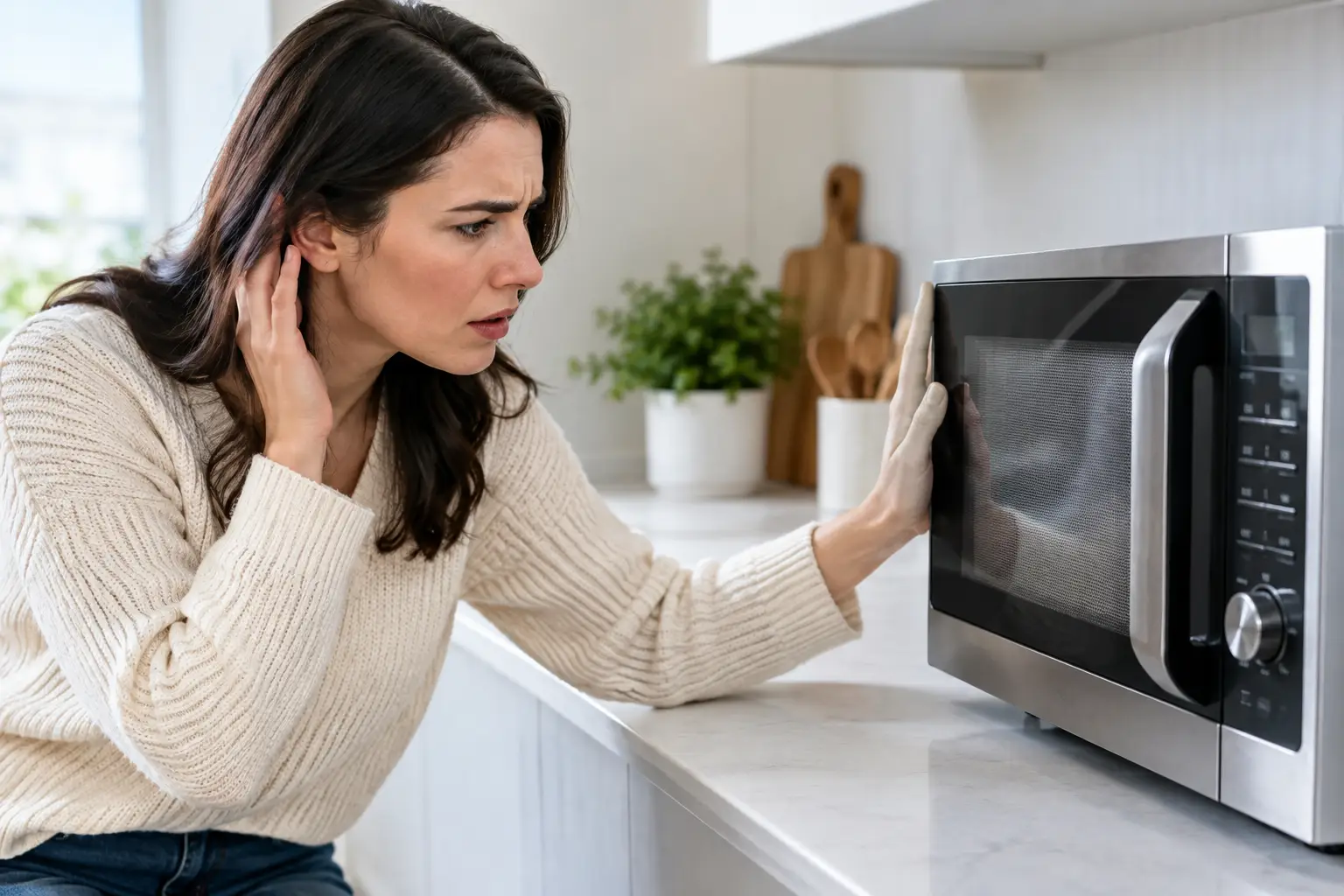
A microwave that suddenly starts buzzing, popping, or grinding can turn a quick dinner into a household repair concern. Microwave noise troubleshooting begins with identifying when the sound occurs, what it sounds like, and whether the appliance still heats food safely. Some sounds are normal. Others can point to a worn part or an electrical problem that deserves fast professional attention.
Not Sure You Need a Repair?
Before you pay for a service call, try FixDecision AI. Describe what's wrong with your appliance and get a safety-first assessment to help you decide whether to DIY or call a professional.
Microwave Noise Troubleshooting Starts With Safety
Microwaves contain high-voltage components that can retain a dangerous electrical charge even after the unit is unplugged. Do not remove the outer cabinet, attempt to discharge internal parts, or test wiring inside the appliance yourself. A microwave is not like a toaster or coffee maker where a homeowner should investigate internal connections.
You can safely unplug the microwave, inspect the inside cooking cavity, clean visible food residue, and check the turntable area. If you smell burning, see smoke, notice arcing or sparks, or hear a loud electrical buzzing, stop using the microwave immediately. Leave it unplugged until a qualified appliance repair technician can evaluate it.
The details matter. A hum that occurs only while heating points in a different direction than a scraping noise that starts when the turntable rotates. Knowing the difference can help you explain the issue clearly and avoid paying for the wrong repair.
Sounds That Are Usually Normal
A low, steady hum while the microwave is running is common. The cooling fan, transformer, and other operating components make noise while the unit produces heat. You may also hear the fan continue running briefly after the cooking cycle ends. That is often designed to cool internal parts.
A soft clicking sound can also be normal as relays switch on and off. The turntable motor may make a faint rotating sound, especially in older models. These noises generally do not require service if the microwave heats evenly, runs normally, and the sound has not grown noticeably louder.
The key is change. A familiar operating hum is one thing. A new hum that is louder, harsher, or accompanied by poor heating is worth investigating.
What a Loud Buzzing or Humming Noise Can Mean
A loud buzz while the microwave is heating is one of the more common reasons homeowners seek microwave noise troubleshooting. It may be caused by a failing magnetron, high-voltage diode, capacitor, transformer, or cooling fan. These components work together to create and manage the energy that heats food.
If the microwave makes a loud buzzing sound but no longer heats, the magnetron or another high-voltage part may be failing. This is not a safe do-it-yourself repair. A technician can determine whether the repair is practical based on the microwave’s age, model, condition, and the cost of replacement parts.
Sometimes the issue is less serious. A dirty or obstructed cooling fan can become noisy, particularly if grease and dust have collected around the vent area. Since access often requires cabinet removal, it is still best to have a professional inspect the unit rather than opening it yourself.
Popping, Crackling, or Sparking Sounds
Popping or crackling inside the cooking cavity should never be ignored. It can happen when food splatters and grease buildup become carbonized, creating a path for electrical arcing. Metal items, foil with sharp edges, twist ties, and dishes with metallic trim can cause the same problem.
First, unplug the microwave and allow it to cool. Remove any food or cookware, then inspect the cavity for burned spots, stuck-on residue, chipped interior coating, or a damaged waveguide cover. The waveguide cover is usually a small, flat panel on one interior wall. It protects a channel that directs microwave energy into the cooking area.
If the cover looks greasy, stained, burnt, cracked, or damaged, do not keep running the microwave. Cleaning may solve a minor residue issue, but a burned or deteriorated cover may need replacement. Repeated arcing can damage internal components and the cavity itself.
Never use the microwave empty to test whether the sound is gone. Running it without food or a microwave-safe load can damage the magnetron.
Grinding, Scraping, or Rattling During a Cycle
Grinding or scraping often comes from the turntable system. Remove the glass tray and roller ring, then clean both pieces and the floor beneath them. Dried food, a misplaced roller ring, or a cracked tray can create a surprising amount of noise.
With the microwave unplugged, make sure the tray sits level on the drive coupler in the center. If the tray wobbles, drags, or makes noise only while rotating, the roller ring, coupler, or turntable motor could be worn. These repairs are generally more straightforward than high-voltage repairs, but model-specific parts and proper installation still matter.
A loose rattling sound may also come from a fan blade, mounting bracket, or vent cover. Over-the-range microwaves can pick up grease and debris from cooking, so fan-related noise is more likely in units installed above a range. If the exhaust fan is the only source of the noise, a technician can isolate whether the problem is the fan motor, blade, or housing.
Why a Microwave May Be Loud and Not Heating
A microwave that runs loudly without heating food is a clear service call. Try one safe check first: place a microwave-safe cup of water inside and heat it for one minute. If the water remains cool or barely warms while the appliance hums loudly, unplug the unit afterward.
Do not repeat the test multiple times. Continued operation can make a component failure worse. A technician may find a problem with the door switches, magnetron, diode, capacitor, transformer, or control system. Door switches are especially important because the microwave must recognize that the door is fully closed before it can operate safely.
Repair versus replacement depends on the diagnosis. Replacing a turntable part or switch can make sense even on an older microwave. A major high-voltage repair may be harder to justify for a basic countertop model, while a built-in or over-the-range microwave may be worth repairing because replacement involves installation costs and matching existing cabinetry or ventilation.
Safe Checks Before You Schedule Service
Before arranging repair, clean the interior with a soft cloth and mild cleaner, making sure no food debris remains around the turntable or waveguide cover. Check that the microwave is plugged securely into its outlet and that no vents are blocked. Do not use extension cords or power strips for a microwave unless the manufacturer specifically allows it.
Pay attention to the timing of the sound. Does it happen when the turntable moves, when the exhaust fan runs, only during heating, or immediately after the door closes? Also note whether the microwave still heats, whether the display works, and whether you see sparks or smell burning. These details give a repair provider a better starting point.
If the microwave is making a loud new noise but still heats, it may be tempting to wait. That can be reasonable for a faint turntable rattle you have already traced to a dirty roller ring. It is not a good choice for electrical buzzing, repeated popping, burning smells, or noise paired with inconsistent heating.
When to Call a Microwave Repair Professional
Call for qualified service promptly if the microwave sparks, smokes, trips a breaker, has a burning odor, fails to heat, or makes a loud buzzing or grinding sound. These symptoms can involve parts that require specialized testing and safe handling.
For homeowners who need help locating an independent local provider, US Appliance Repairs can help connect you with appliance repair professionals for a fast evaluation. Ask for an estimate that separates the diagnostic fee, parts, labor, and any installation work if replacement becomes the better option.
A microwave should make meal prep easier, not leave you wondering whether it is safe to use. Once a new or concerning noise appears, stop guessing, protect your household, and get the appliance checked so you can get back to a reliable kitchen routine.