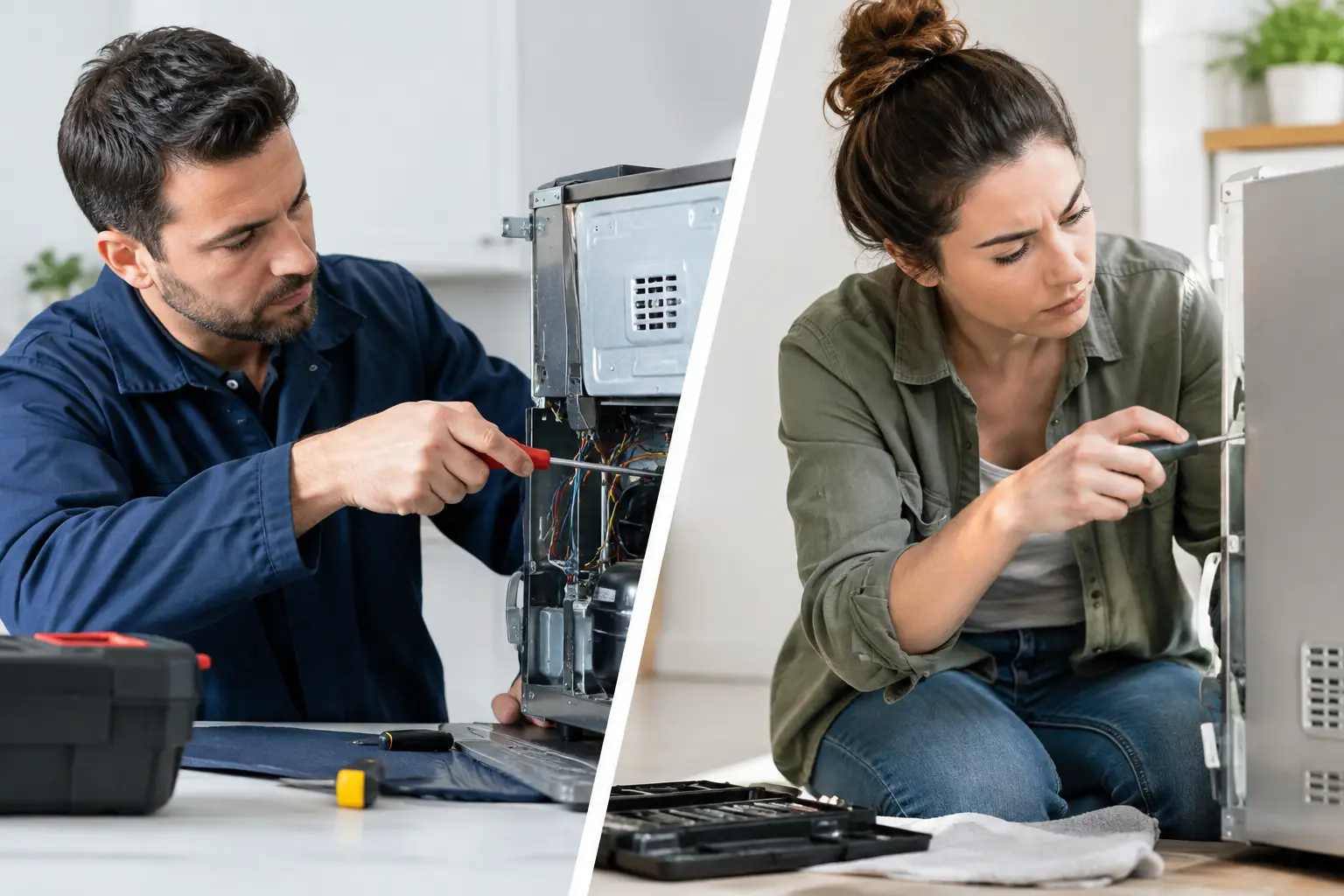
A refrigerator that is warming up, a dryer that suddenly will not heat, or a dishwasher leaving standing water can turn a normal day into a stressful one. The repair technician versus DIY decision is not about proving how handy you are. It is about restoring an essential appliance safely, controlling costs, and avoiding a small problem that becomes a much larger repair.
Some appliance issues have simple homeowner fixes. Others involve live electricity, gas connections, high-voltage components, water damage, or sealed cooling systems. Knowing the difference can save time, protect your home, and give you more confidence about the next step.
Not Sure You Need a Repair?
Before you pay for a service call, try FixDecision AI. Describe what's wrong with your appliance and get a safety-first assessment to help you decide whether to DIY or call a professional.
Start With Safety, Not the Repair Bill
DIY can look like the cheaper choice because there is no service call or labor charge. But the real cost depends on what happens next. A $20 part installed incorrectly can damage a control board, cause a leak, void remaining warranty coverage, or leave the appliance unsafe to operate.
Before touching an appliance, ask three questions: Is there a risk of electric shock, fire, gas exposure, water damage, or refrigerant release? Do I know the failed part based on evidence, not a guess? And can I complete the work without bypassing safety features or dismantling major components?
If the answer to any of those questions is no, calling a qualified appliance repair professional is usually the more economical decision. A technician can diagnose the cause, verify the correct replacement part, and check for related failures that may not be obvious from the original symptom.
When DIY Makes Sense
There are useful maintenance tasks and basic checks that most homeowners can handle. These steps may solve the problem outright or give a repair provider clearer information when service is needed.
First, check the basics. Confirm the appliance is plugged in, inspect the circuit breaker, and reset a tripped GFCI outlet if one serves the appliance. For a dishwasher or washing machine, make sure a water supply valve was not accidentally turned off. For an oven or range, check whether a control lock or delayed-start setting is active.
Cleaning is another sensible DIY category. A clogged dishwasher filter can reduce cleaning performance and contribute to drainage problems. A dirty refrigerator door gasket can prevent a proper seal. Lint buildup around a dryer filter can restrict airflow. Manufacturer-approved cleaning and routine maintenance help appliances run more reliably, especially when done before a failure occurs.
Homeowners can also look for visible issues without opening electrical panels or sealed compartments. Check for a kinked drain hose behind a washer, food packaging preventing a refrigerator door from closing, or an overloaded dryer that cannot tumble effectively. If a reset, cleaning task, or obvious adjustment fixes the issue, you have avoided an unnecessary repair visit.
DIY should stop when the appliance needs disassembly beyond the owner-accessible areas, the diagnosis is uncertain, or the same problem comes back. Repeatedly resetting a breaker, clearing an error code, or restarting an appliance does not correct the underlying cause.
Repair Technician Versus DIY: Problems That Need a Pro
Some repairs are poor candidates for online tutorials, even when the instructions appear straightforward. Appliance systems are connected. A symptom that looks like one bad part may be caused by wiring, a sensor, a motor, a control board, or an installation issue.
Call for professional help when you notice any of the following:
- A burning smell, sparks, smoke, repeated breaker trips, or a damaged power cord
- A gas smell near a range, oven, or gas dryer
- Water leaking from the appliance or pooling near electrical connections
- A refrigerator or freezer that cannot hold a safe temperature
- A dryer that overheats, has poor airflow, or takes multiple cycles to dry clothes
- A microwave that is not heating, has a damaged door, or requires internal access
Microwaves deserve special caution. Even when unplugged, internal components can retain a dangerous electrical charge. Gas appliances also require a higher level of care because an improper repair can create a fire or carbon monoxide hazard. Refrigerators and freezers use sealed refrigeration systems that require specialized tools and training to diagnose and repair correctly.
A certified technician brings more than replacement parts. Extensive repair experience helps them distinguish between a failed component and a symptom caused by another fault. That diagnostic work matters, particularly on modern appliances with electronic controls and error codes that can point to several possible problems.
The Hidden Cost of Guessing at Parts
Many DIY repairs go wrong before the first screw is removed. A homeowner searches the symptom, finds a likely part, and orders it. The part arrives, gets installed, and the appliance still does not work.
For example, a dryer that will not heat may have a failed heating element, but it may also have a blown thermal fuse caused by restricted venting, a bad thermostat, a wiring issue, or a power supply problem. Replacing only the heating element may not restore heat and could leave the original airflow problem unresolved.
The same is true for a refrigerator that is warm. The issue could involve dirty coils, a failed fan, a defrost fault, a control issue, a door seal, or the sealed system. Replacing parts one at a time is rarely a good strategy when food is at risk and the appliance needs to be back up and running quickly.
Professional diagnosis is especially valuable when the appliance is newer, still under a manufacturer or extended warranty, or expensive to replace. Keep your model number, purchase date, error codes, and a clear description of the problem available. Those details help make the service process faster and more accurate.
Consider the Age and Value of the Appliance
Calling a repair technician does not automatically mean repairing the appliance is the right answer. Sometimes replacement is the better long-term choice. The decision depends on the appliance’s age, condition, repair estimate, efficiency, and whether the repair addresses a one-time failure or a pattern of breakdowns.
A relatively new washer with a failed drain pump may be well worth repairing. An older refrigerator with repeated cooling problems and a costly sealed-system diagnosis may require a more careful repair-versus-replacement conversation. There is no universal percentage rule that fits every appliance, because the expected remaining life and replacement cost vary widely by model and household needs.
Ask the provider for a clear explanation of the diagnosis, the parts involved, and whether other worn components could affect reliability. Good information gives you control over the decision instead of leaving you to choose based on urgency alone.
How to Prepare for a Service Visit
A little preparation can reduce delays and help the technician focus on the actual repair. Write down when the problem started, what the appliance does or does not do, and whether there were unusual sounds, odors, leaks, or error messages. Take photos of visible damage or display codes if they disappear after a reset.
Clear a path to the appliance and remove dishes, laundry, or food as practical. If a refrigerator is losing temperature, move perishable food to a cooler or another working refrigerator while you arrange fast help. Do not keep opening the door to check whether it has started cooling again.
For homeowners who need help locating local independent appliance repair providers, US Appliance Repairs can help simplify the search. The platform connects consumers with repair assistance, but homeowners should still ask about diagnosis fees, parts availability, scheduling, and any workmanship coverage offered directly by the service provider.
Choose the Fix That Protects Your Home
DIY maintenance is a smart part of appliance ownership. Cleaning filters, checking power, keeping vents clear, and watching for early warning signs can prevent frustration and extend the life of equipment. But a repair is not a bargain if it creates a safety risk, damages a major component, or leaves your household without a working appliance for longer.
When the issue involves heat, electricity, gas, water, cooling, or an uncertain diagnosis, getting experienced repair help offers real peace of mind. The best choice is the one that gets the appliance working reliably again while protecting your home, your budget, and your time.