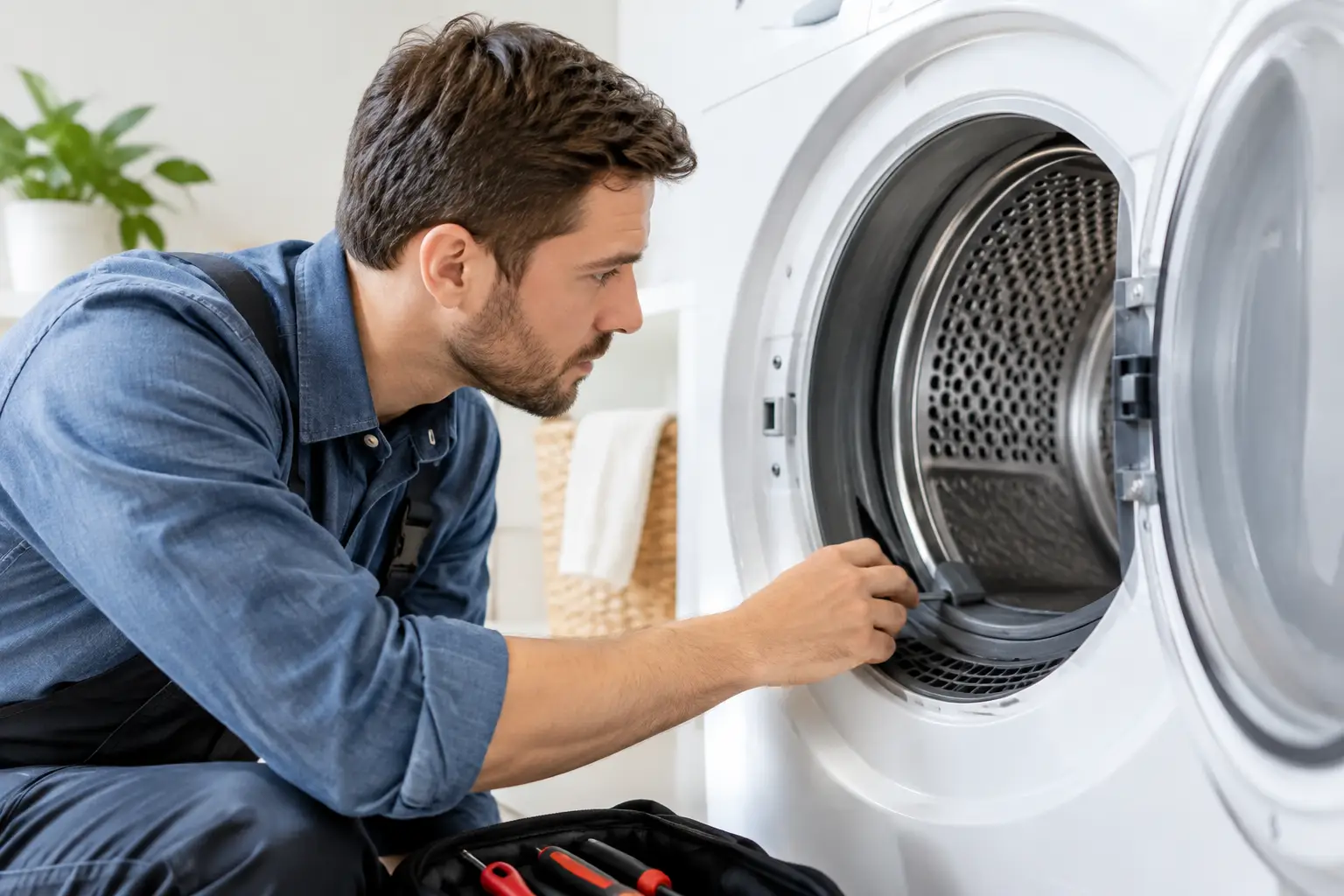
That high-pitched squeak might start halfway through a load of towels, then become impossible to ignore. If you are searching for how to stop dryer squeaking, the answer is usually not to spray lubricant through an opening and hope for the best. A squeaking dryer commonly points to a worn moving part, and catching it early can prevent a larger breakdown, damaged clothing, or a dryer that suddenly will not turn.
A dryer is one of the hardest-working appliances in the house. Its drum, belt, rollers, and motor all operate under heat and friction. Some noises are minor, but a repeated squeak, chirp, scrape, or thump deserves attention. Start with a few safe checks, then decide whether the repair is within your comfort level or better handled by a qualified appliance technician.
Not Sure You Need a Repair?
Before you pay for a service call, try FixDecision AI. Describe what's wrong with your appliance and get a safety-first assessment to help you decide whether to DIY or call a professional.
What Causes a Dryer to Squeak?
The exact sound matters. A brief squeak when the dryer starts may have a different cause than a steady squeal that gets louder as the drum spins. In many cases, the noise comes from parts that support or drive the drum.
Dryer drum rollers are a frequent culprit. These small wheels support the drum as it rotates. When their bearings wear down, the rollers can squeak, rumble, or create a repeating thump. A worn idler pulley can make a sharper squeal because it keeps tension on the dryer belt. The belt itself may also be cracked, glazed, stretched, or slipping.
Other possible causes include a worn drum bearing, damaged drum glides, a loose blower wheel, or an object caught between the drum and the dryer housing. A coin, bra wire, zipper pull, or small item left in a pocket can create an irritating sound that is relatively simple to remove. The challenge is that several dryer problems can sound alike without an inspection.
How to Stop Dryer Squeaking Safely
Before inspecting anything beyond the drum, unplug the dryer. If you have a gas dryer, shut off the gas supply as an added precaution. Do not run the appliance with panels removed, and do not reach into the cabinet while it is connected to power.
Check the drum for loose items first
Open the dryer door and slowly turn the drum by hand. Listen for scraping, clicking, or a squeak at one point in the rotation. Look along the front and rear edges of the drum for a trapped object. Check pockets in the clothing you just dried, too. Finding a loose coin or metal object is the best-case scenario and may solve the noise without a repair.
While the drum is empty, inspect it for excessive wobble. A drum that feels loose, hangs lower than usual, or rubs against the cabinet may have worn rollers, glides, or a rear bearing. Avoid using the dryer until it is checked. Continued rubbing can wear through parts that would otherwise be repairable.
Clean lint and confirm the dryer is level
A lint-clogged dryer usually will not directly cause squeaking, but restricted airflow makes the machine run hotter and longer. Extra heat can accelerate wear on belts, pulleys, and bearings. Clean the lint screen after every load and remove visible lint around the screen housing.
Also make sure the dryer sits firmly on all four feet. Press gently on the top corners. If it rocks, adjust the leveling feet according to the owner’s manual. An unlevel dryer can vibrate, making normal mechanical noise sound worse. It will not fix a failing roller or bearing, but it can reduce unnecessary strain and rattling.
Listen for the pattern of the sound
A consistent squeak once per drum revolution often suggests a roller, glide, or bearing issue. A fast, sharp squeal may point to the idler pulley or belt. A scraping or metallic sound can mean the drum is rubbing, an object is trapped, or a blower wheel is loose.
Notice whether the noise changes with a heavier load. A problem that is much louder with wet towels may involve worn drum support components. If the dryer squeaks even when empty, the cause is more likely inside the drive system. This information can help a repair professional diagnose the issue faster and provide a clearer estimate.
Parts That Usually Need Repair or Replacement
For homeowners with appliance repair experience, access to the internal components typically requires removing the front, top, or rear panel, depending on the dryer model. The belt must often be released before the drum can be lifted out. That is why this repair can be more involved than the small replacement parts suggest.
The most common repairs include replacing drum rollers, the idler pulley, the dryer belt, drum glides, or the rear drum bearing. These parts often wear at a similar pace. On an older dryer, a technician may recommend replacing the rollers, belt, and pulley together if more than one component shows wear. Doing so can reduce the chance of paying for a second disassembly soon after the first repair.
Lubrication is not always the right answer. Many modern dryer rollers and pulleys use sealed bearings and are designed to be replaced rather than oiled. Using the wrong lubricant can attract lint, create a fire risk, or cause the belt to slip. Never apply oil, grease, or spray lubricant to the belt, drum surface, or any electrical component.
When a Squeaking Dryer Needs Professional Help
Call for service if the squeak is loud, persistent, or joined by burning smells, poor drying performance, drum wobble, or a dryer that stops turning. Shut the dryer off immediately if you smell burning rubber or electrical odor. A slipping belt, failing motor, seized roller, or airflow problem can become more expensive and potentially unsafe when ignored.
Professional help is also the sensible choice when the dryer must be disassembled, especially for gas models. A qualified technician can inspect the belt path, rollers, pulley, motor, drum bearing, blower wheel, heating system, and venting in one visit. That broader inspection matters because a noisy dryer may have more than one worn part.
Repair costs depend on the dryer brand, age, model, needed parts, and local labor rates. Replacing a belt or pulley is often less costly than repairing a motor or major bearing assembly. If your dryer is relatively new, otherwise dries well, and has no major rust or control problems, fixing the squeak is usually worthwhile. If it is near the end of its expected life and needs multiple costly parts, compare the repair estimate with replacement options before deciding.
Prevent the Squeak From Coming Back
Small maintenance habits can extend the life of dryer moving parts. Avoid consistently overloading the drum, which puts extra weight on rollers, bearings, and the belt. Clean the lint screen every load and have the full vent path cleaned when lint buildup, long drying times, or restricted airflow are concerns.
Check pockets before laundry goes in. Coins, screws, hair accessories, and metal hardware can work their way into gaps around the drum. Keep the dryer level and address unusual noises early instead of turning up the television and waiting for the problem to get worse.
A squeaking dryer is frustrating, but it does not automatically mean the appliance is finished. A quick inspection may reveal a trapped object or simple leveling issue. When the sound points to worn internal parts, prompt repair can restore quiet, reliable drying and give you peace of mind that the job was done right the first time.