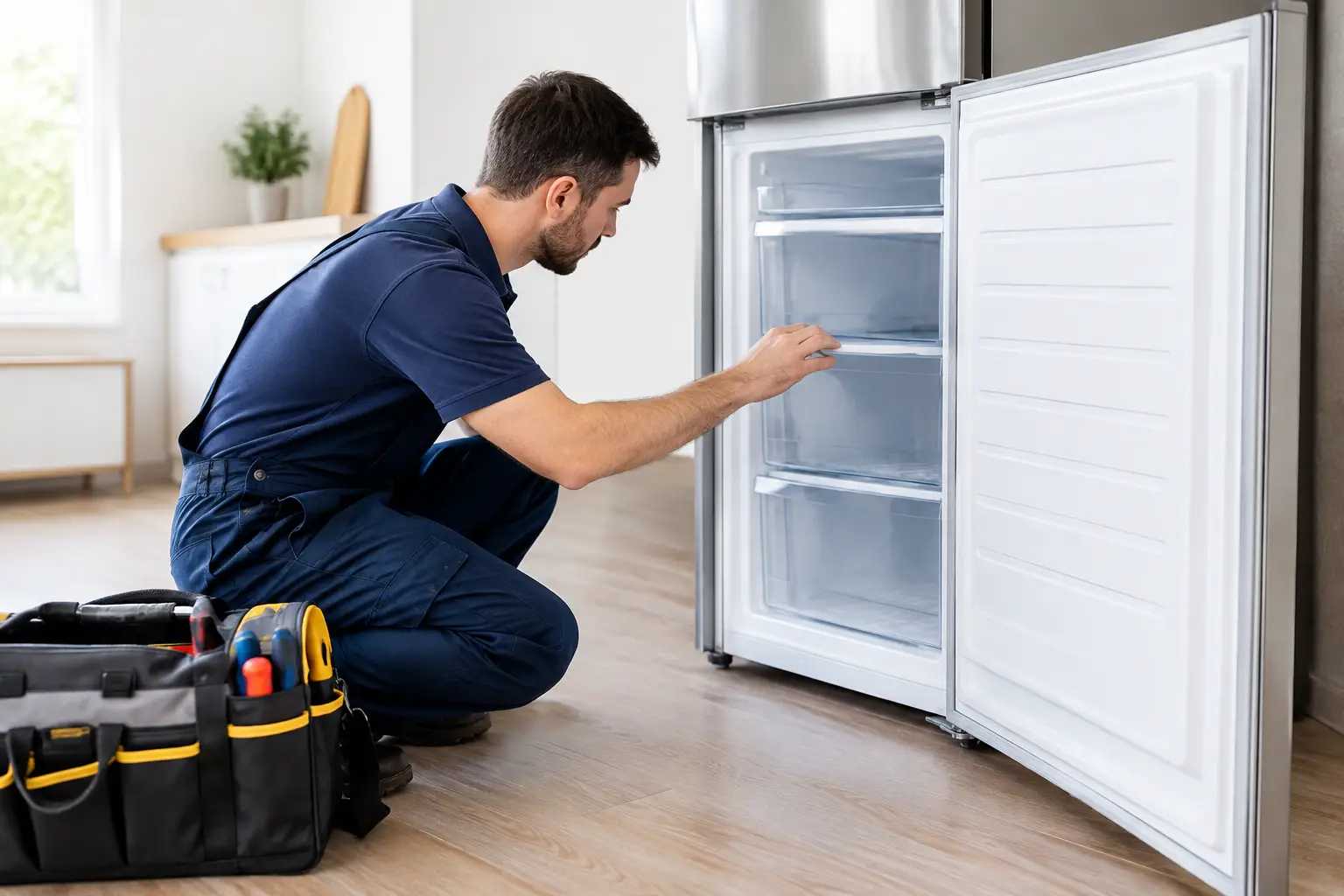
A freezer that is warm, dripping, or making a new grinding sound can turn into a costly problem quickly. Frozen food begins thawing, water can reach the floor, and a small mechanical failure may become a larger repair if it is ignored. The right freezer repair response starts with protecting your food, checking a few safe basics, and recognizing when a qualified technician should take over.
Not Sure You Need a Repair?
Before you pay for a service call, try FixDecision AI. Describe what's wrong with your appliance and get a safety-first assessment to help you decide whether to DIY or call a professional.
Start With Food Safety and the Obvious Checks
If the freezer has stopped holding temperature, keep the door closed as much as possible. A fully stocked unopened freezer can usually hold a safe temperature for about 48 hours, while a half-full freezer may hold temperature for around 24 hours. Adding bagged ice or moving food to another working freezer can buy time, but do not rely on food that has fully thawed and warmed for an unknown period.
Before assuming a major part has failed, check whether the appliance has power. Confirm that the plug is secure and the breaker has not tripped. Look at the temperature control as well. It is surprisingly common for a dial or digital setting to be changed accidentally during cleaning or while loading groceries.
Next, inspect the door seal. A torn, warped, or dirty gasket can let warm, humid kitchen air into the freezer. That forces the system to run longer, creates frost, and may leave food soft around the edges. Wipe the gasket clean and close the door on a sheet of paper. If the paper slides out easily in several spots, the seal may no longer be gripping properly.
Also check the clearance around the appliance. A packed freezer can restrict interior airflow, while a refrigerator-freezer pushed tightly against a wall may not have enough room to release heat. Keep vents clear and avoid placing hot leftovers directly inside. Those simple corrections will not fix every problem, but they can prevent an unnecessary service call.
Common Freezer Problems and What They Mean
Freezers depend on a coordinated system of fans, sensors, controls, coils, and sealed refrigerant components. The symptom you see often narrows down the possible cause, although only testing can confirm the failed part.
The freezer runs but is not cold enough
When the freezer is running constantly but food is soft, the issue may be dirty condenser coils, poor airflow, a weak evaporator fan, a faulty temperature sensor, or a defrost failure. Condenser coils release heat from the system. When they are coated in dust and pet hair, the appliance works harder and can lose cooling performance.
You can carefully vacuum accessible coils after unplugging the unit. If cooling does not improve, or if you see a heavy sheet of frost on the rear interior panel, stop there and schedule professional freezer repair. Frost buildup can point to a failed defrost heater, thermostat, sensor, or control board. Repeatedly chipping at ice with a knife or sharp tool can puncture a coil and turn a manageable repair into a major expense.
Frost is taking over the freezer
Some frost is normal in a manual-defrost chest freezer. Thick ice on the walls, food packages, or rear panel is not normal for most frost-free models. The usual causes are a door that is not sealing, frequent door opening, a damaged gasket, or a defrost-system problem.
A complete manual defrost can temporarily restore airflow, but it is not a permanent fix if the frost quickly returns. That pattern is useful information for the technician because it strongly suggests that part of the automatic defrost system needs attention.
The freezer is leaking water
Water on the floor often comes from ice melting after a cooling issue, but it can also come from a clogged defrost drain. During normal defrost cycles, water should travel through a drain opening to a pan below the appliance. When the drain freezes or clogs, water can back up into the freezer or spill onto the floor.
Do not ignore a leak near electrical connections or a slippery walkway. Unplug the appliance before cleaning pooled water, then arrange service if the leak returns. A technician can clear the drain and inspect the components that may be causing excess frost or thawing.
Clicking, buzzing, or grinding noises
A light hum and occasional fan noise are normal. A repeated click followed by silence can indicate a compressor-start problem. Grinding or squealing may come from a failing fan motor, while loud buzzing can result from ice contacting a fan blade.
Noise alone does not always mean the freezer is about to fail. But noise combined with warming temperatures, frequent cycling, or a hot exterior should be treated as an urgent service issue. The longer a struggling compressor runs, the more likely you are to lose food and face a more involved repair.
When to Call for Freezer Repair Right Away
Homeowners can safely handle basic cleaning, temperature-setting checks, and door-gasket inspection. Electrical testing, sealed-system work, refrigerant handling, and component replacement are different matters. Those jobs require proper tools, diagnosis, and experience.
Call for professional help promptly if the freezer is warm despite having power, the compressor is unusually hot, there is a burning odor, the unit repeatedly trips a breaker, or water is leaking onto the floor. You should also call when the freezer is cooling unevenly, frost returns shortly after defrosting, or the appliance makes persistent new noises.
A certified technician can test the fan motors, defrost circuit, thermistors, control board, start relay, and compressor performance instead of replacing parts based on guesswork. That matters because several failures can produce the same symptom. For example, a warm freezer may be caused by airflow, controls, frost buildup, or a sealed-system issue, and the repair cost varies significantly among them.
What Does Freezer Repair Usually Cost?
The final price depends on the freezer style, brand, age, part availability, labor rates, and the actual failed component. Straightforward work such as cleaning a blocked drain, replacing a door gasket, or addressing a minor airflow issue is often less expensive than compressor or refrigerant-system work.
A service visit commonly includes a diagnostic charge, which may be applied toward the repair when you approve the work. Ask for a clear estimate that separates the service fee, parts, labor, and any return visit required to complete the job. If a part must be ordered, ask how to protect food and whether it is safe to keep the appliance running in the meantime.
Repair is usually worth considering when the freezer is relatively new, the cabinet and door are in good condition, and the repair is a practical share of replacement cost. A failed fan, relay, gasket, sensor, or defrost component can often be a sensible repair. A major compressor or sealed-system problem in an older unit may change that decision.
There is no single age cutoff that fits every household. A high-quality built-in or specialty freezer may justify a larger repair than a basic standalone model. Energy use, matching kitchen appliances, warranty coverage, and the cost of lost food also belong in the decision.
Prevent Future Breakdowns With Basic Care
A few routine habits can reduce strain on your freezer. Vacuum accessible condenser coils periodically, especially if you have pets. Keep the door gasket clean, make sure the freezer is level enough for the door to close correctly, and avoid overpacking vents. Let hot food cool before freezing it, and do not leave the door open while organizing groceries.
For a chest freezer, check the lid seal and defrost before ice becomes thick enough to reduce storage space. For upright and refrigerator-freezer models, pay attention to new frost patterns and changes in sound. Early action is often less disruptive than waiting until the freezer stops cooling altogether.
When you need dependable local help, US Appliance Repairs can help connect homeowners with independent repair providers for freezer problems ranging from poor cooling to leaks and defrost failures. Ask questions, review the estimate, and choose a repair path that gives your household the best chance of getting back up and running without unnecessary stress.
A freezer problem rarely improves by waiting. Protect the food you can, avoid risky do-it-yourself repairs, and get a clear diagnosis before a small warning sign becomes a kitchen emergency.