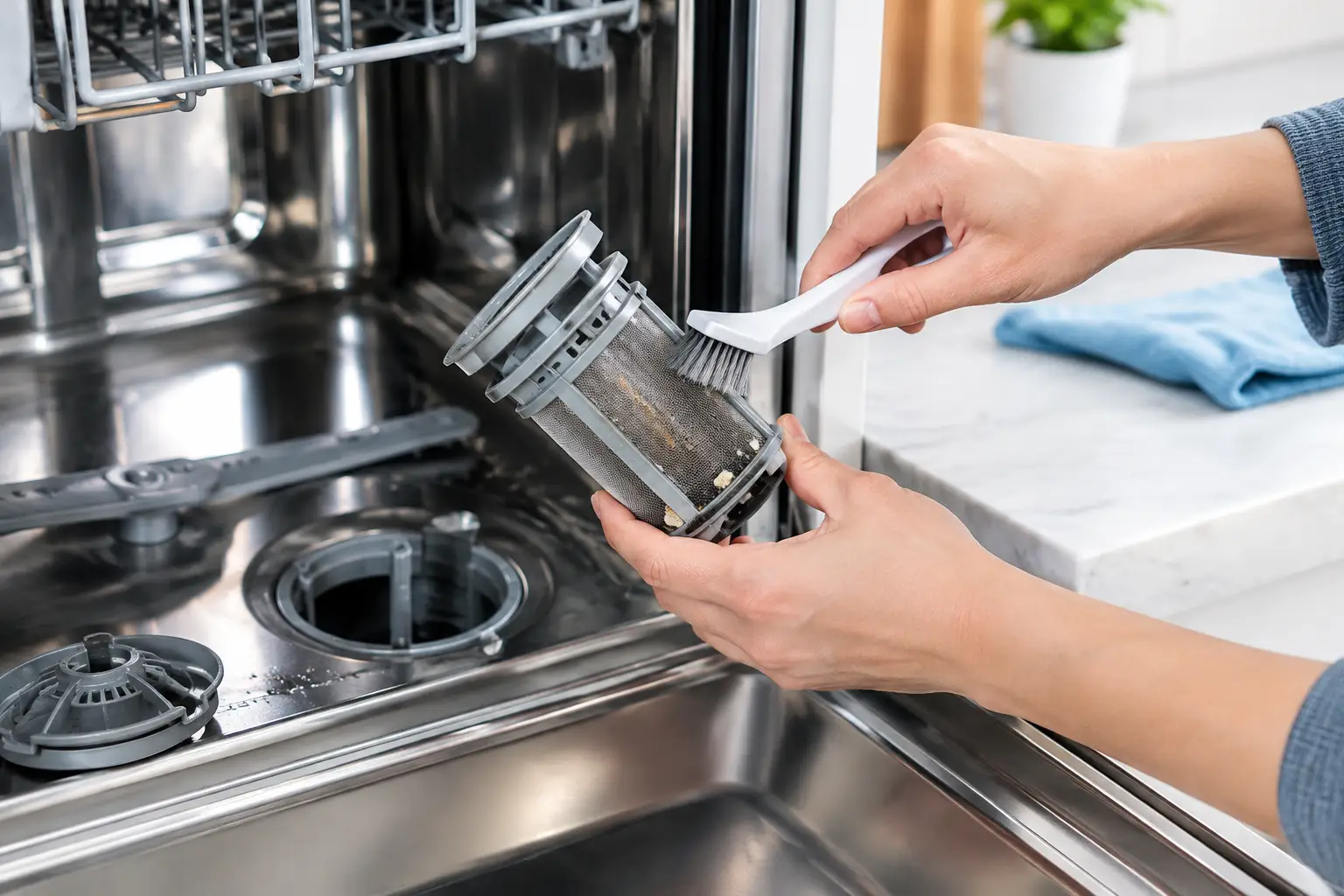
A dishwasher that leaves standing water at the bottom, smells sour after a cycle, or comes out with bits of food stuck to glasses often has one simple problem: a dirty filter. Learning how to clean a clogged dishwasher filter can restore normal drainage and washing performance before a minor maintenance issue turns into a stressful breakdown.
The filter is designed to catch food particles, grease, broken glass, and other debris before they reach the drain pump. That protects the dishwasher, but it also means the filter needs attention. For many households, a quick cleaning every month or two is enough. Homes that run the dishwasher daily, rinse dishes lightly, or have hard water may need to clean it more often.
Not Sure You Need a Repair?
Before you pay for a service call, try FixDecision AI. Describe what's wrong with your appliance and get a safety-first assessment to help you decide whether to DIY or call a professional.
What a Clogged Dishwasher Filter Looks Like
Not every dishwasher drains or washes poorly because of its filter. A blocked drain hose, failing drain pump, faulty door switch, or worn spray arm can cause similar symptoms. Still, the filter is the best place to start because it is accessible and costs nothing to inspect.
A clogged filter commonly causes water to pool beneath the bottom rack after a wash cycle. You may also notice a gritty residue on dishes, unpleasant odors when you open the door, or a dishwasher that seems louder than usual as it struggles to move water through debris. In some cases, the dishwasher may stop mid-cycle or display a drain-related error code.
If you find shards of glass, a large amount of food waste, or thick grease in the filter area, wear gloves and work carefully. Glass can settle below the filter where it is difficult to see.
How to Clean a Clogged Dishwasher Filter
Before starting, turn off the dishwasher and let it cool if it has recently run. You do not usually need to shut off the water supply for a basic filter cleaning, but avoid pressing buttons or starting a cycle while the filter is removed.
Remove the Bottom Rack and Find the Filter
Pull out the lower dish rack and set it aside. In most dishwashers, the filter sits on the floor of the tub below the lower spray arm. It may be a round, cylindrical assembly that twists out, or a flat screen paired with a removable cup-shaped filter.
Many modern models use a manual-clean filter. Older dishwashers may have a self-cleaning system with a grinder or disposal component instead. If you cannot identify the filter, check the owner’s manual for your specific model. Do not force a part that does not turn easily.
Take Out Debris First
Turn the cylindrical filter counterclockwise, then lift it out. If there is a flat mesh screen beneath it, lift that out as well. Hold the pieces over a trash can and remove loose food, paper labels, bones, or other debris by hand.
Look into the filter well before reinstalling anything. Remove visible debris carefully, especially if it is blocking the small opening leading toward the drain area. A damp paper towel can help lift out soft buildup. Avoid pushing debris deeper into the opening.
Wash the Filter With Warm Water
Rinse the filter under warm running water. Use a soft toothbrush, dish brush, or nylon scrub brush with a small amount of dish soap to clean the mesh and crevices. The goal is to remove grease and particles without damaging the fine screen.
Do not use a wire brush, knife, or abrasive scouring pad. These can tear the filter screen or damage plastic components. If the filter has a stubborn greasy film, let it soak in warm, soapy water for 10 to 15 minutes, then brush it again.
A filter coated in mineral deposits may benefit from a short soak in equal parts warm water and white vinegar. This can help loosen hard-water scale, but it should not replace regular cleaning. Rinse the filter thoroughly after soaking so no residue remains.
Reinstall It Correctly
Return the flat screen first, if your dishwasher has one. Set the cylindrical filter in place and turn it clockwise until it locks. It should sit flush and feel secure. A loose filter can allow debris into the pump area or interfere with the lower spray arm.
Slide the bottom rack back in and rotate the lower spray arm by hand. It should move freely without hitting the filter or rack. Then run a short rinse cycle with no dishes inside to check that water drains normally.
What Not to Put in the Dishwasher Filter Area
A clean filter helps, but prevention makes the job easier. Scrape large food particles into the trash or garbage disposal before loading dishes. Modern dishwashers can handle normal residue, so you do not need to pre-rinse every plate until it is spotless. However, they are not built to process bones, fruit pits, twist ties, paper labels, toothpicks, or excessive grease.
Grease deserves special attention. Bacon grease, cooking oil, and thick sauces may rinse off dishes while hot, then cool and collect in the filter or drain system. Wipe greasy pans with a paper towel before placing them in the dishwasher. This small habit can reduce odors and help prevent drain-related service calls.
When Cleaning the Filter Does Not Fix the Problem
If the dishwasher still has standing water after you clean the filter and run a rinse cycle, the issue may be beyond routine maintenance. Check whether the kitchen sink drains normally. A clogged sink drain or garbage disposal can affect dishwasher drainage, particularly when the dishwasher drain line connects to the disposal.
Also inspect the dishwasher drain hose under the sink for visible kinks. Do not disconnect hoses unless you are comfortable managing water spills and reinstalling the connection correctly. A hose that is clogged internally, routed incorrectly, or missing a proper high loop can allow dirty water to flow back into the dishwasher.
Call for professional help if you hear a humming drain pump but water will not leave the tub, see repeated error codes, find water leaking onto the floor, or notice that the dishwasher has no power. These signs may point to a failed pump, electrical problem, blocked drain line, damaged control board, or issue with the household plumbing connection.
A qualified appliance technician can diagnose the cause without replacing parts unnecessarily. That matters because a dishwasher that only needs a drain pump or hose repair may be worth fixing, while an older unit with multiple major failures may call for a different decision. Reliable diagnosis gives you a clearer picture of the repair cost and the condition of the appliance.
How Often Should You Clean the Dishwasher Filter?
For an average household, inspect the filter once a month and clean it when you see buildup. If your dishwasher is used only a few times per week and dishes are scraped well, cleaning every two to three months may be enough. Families who run daily loads, cook frequently, or have several people in the home should check it more often.
Odor is a good reminder. A dishwasher should smell clean or neutral after a completed cycle. If you notice a musty, sour, or food-like smell, inspect the filter before reaching for heavily scented cleaners. Removing the trapped debris usually solves the root cause.
For added maintenance, wipe the door gasket, check spray-arm holes for trapped particles, and run a dishwasher cleaner that is appropriate for your machine once in a while. These steps support performance, but the filter remains the main place where food debris collects.
A dishwasher should make life easier, not leave you rewashing dishes or worrying about water on the kitchen floor. Start with a careful filter cleaning, and if drainage or cleaning problems continue, get fast help from an experienced local appliance repair professional so your kitchen can get back up and running with confidence.