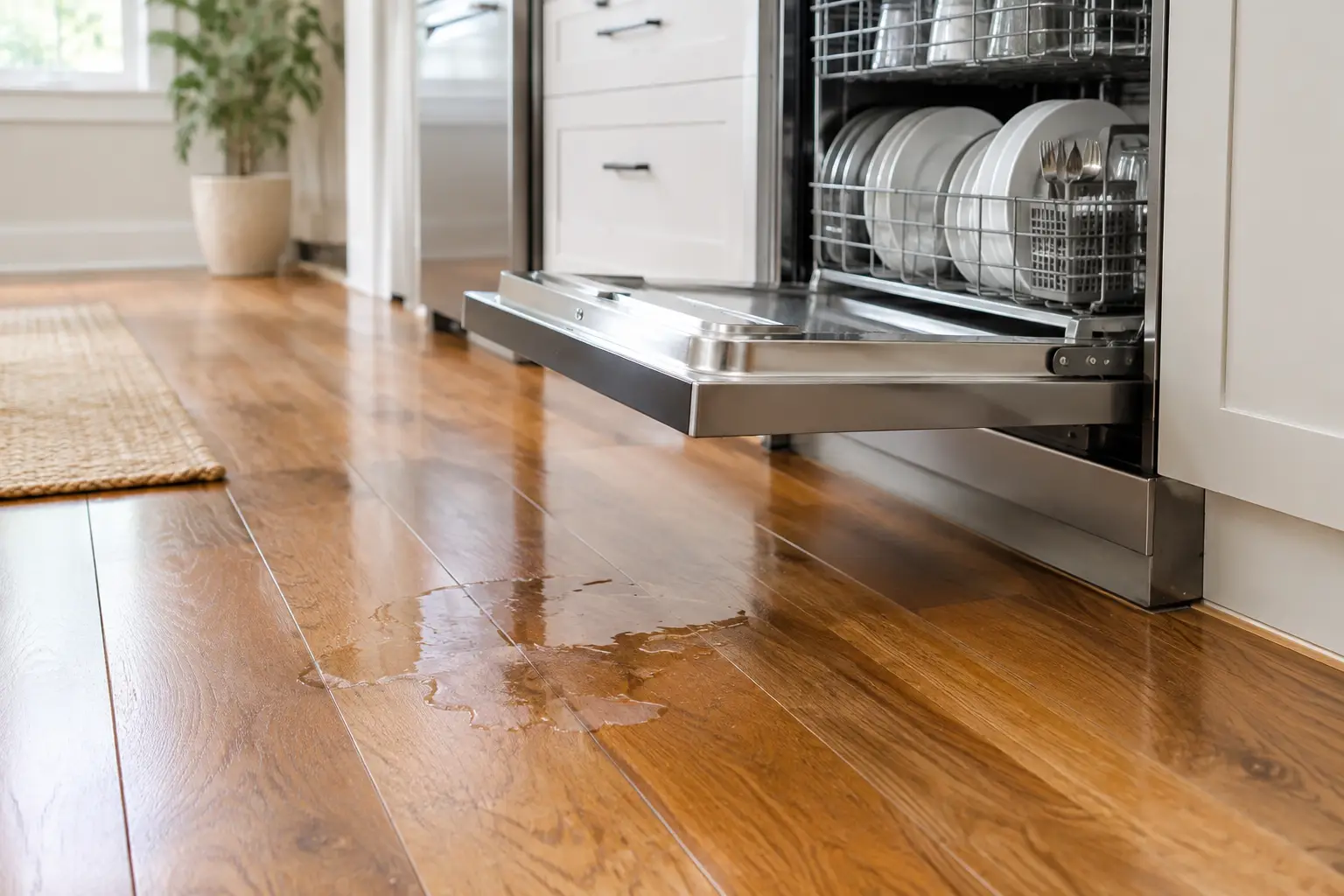
A dishwasher leak can start quietly: a damp line along the toe kick, a cabinet that feels warm and humid, or a faint musty odor near the sink. Can dishwasher damage hardwood floors? Yes. Even a slow, hidden leak can stain, cup, buckle, or loosen hardwood flooring if moisture reaches it repeatedly. Acting quickly can protect both your floor and the appliance.
Not Sure You Need a Repair?
Before you pay for a service call, try FixDecision AI. Describe what's wrong with your appliance and get a safety-first assessment to help you decide whether to DIY or call a professional.
Can a Dishwasher Damage Hardwood Floors?
Hardwood floors are durable, but they are not designed to absorb standing water. When water escapes from a dishwasher, it can travel under the appliance, through gaps at the cabinet base, and beneath nearby floorboards. The visible puddle is not always the full extent of the problem.
Solid hardwood can swell when it absorbs moisture. As boards expand, their edges may rise higher than the center, a condition called cupping. If the wood dries unevenly or remains wet for too long, boards may crown, separate, stain, or permanently warp. Engineered hardwood is also vulnerable, particularly if water reaches the seams or damages the plywood layers beneath the finished surface.
The amount of damage depends on how much water leaked, how long it sat, whether the floor has a strong protective finish, and what lies below the flooring. A one-time spill caught within minutes may leave no lasting mark. A leak that runs during every wash cycle can create expensive flooring damage before a homeowner realizes there is a dishwasher problem.
Why Dishwasher Leaks Reach the Floor So Easily
Dishwashers use several water connections and drainage components in a tight, enclosed space. A failure in almost any one of them can send water toward the floor. Because the appliance is typically installed beneath a counter and between cabinets, small leaks can remain hidden.
A worn door gasket is a common culprit. The rubber seal around the dishwasher door can become cracked, flattened, dirty, or misaligned, allowing water to escape from the front during a cycle. An overloaded dishwasher, a blocked spray arm, or the wrong detergent can also force water past the door.
Leaks can also come from a loose or damaged water supply line, a failing inlet valve, a cracked tub, or a drain hose connection. If water appears primarily after the dishwasher drains, the drain hose, air gap, garbage disposal connection, or pump area may need attention. Water underneath the unit is not something to ignore just because the dishwasher still seems to clean dishes normally.
Signs Your Hardwood May Already Be Affected
Look closely at the floor in front of and beside the dishwasher, not just directly beneath it. Early warning signs can be subtle. You may notice darker wood, cloudy finish, raised plank edges, soft spots, gaps between boards, or a change in the way the floor feels underfoot.
A musty odor around the dishwasher or lower cabinets can signal trapped moisture. Baseboards may swell or pull away from the wall. In more serious cases, the floor may buckle upward, and cabinet panels may show staining or delamination.
Do not assume the floor is dry because the surface looks dry. Water can move beneath hardwood and underlayment, where it evaporates slowly. If the dishwasher has been leaking for more than a day or two, the surrounding cabinets and subfloor may also need inspection.
What to Do When a Dishwasher Leaks on Hardwood
Start by stopping the source of water. Cancel the dishwasher cycle if possible, and shut off the dishwasher water supply valve, usually located under the kitchen sink. If you see significant water, hear electrical buzzing, or cannot safely stop the appliance, turn off power to the dishwasher at the circuit breaker before handling it.
Then move quickly to remove moisture. Use towels, a wet-dry vacuum, or both to collect visible water. Open nearby cabinet doors and remove damp items stored under the sink. Fans and a dehumidifier can help dry the room, but avoid blasting high heat directly onto hardwood. Rapid, uneven drying can make wood movement worse.
Take photos of the leak, the appliance area, and any floor changes before cleanup is complete. This creates a useful record if you need to speak with a repair provider, flooring professional, or insurance company.
If the leak was more than a small, quickly cleaned spill, these steps can help limit additional damage:
- Do not run the dishwasher again until the cause is identified and repaired.
- Pull the dishwasher out only if you can do so safely without damaging plumbing, wiring, cabinets, or flooring.
- Check the water supply valve and accessible hose connections for active drips.
- Use fans and a dehumidifier for several days, checking the wood for new cupping or discoloration.
- Contact a qualified appliance repair technician promptly to diagnose the leak before another cycle sends more water into the floor.
When the Dishwasher Needs Professional Repair
A homeowner can sometimes spot an obvious problem, such as a loose connection under the sink or food debris caught around the door seal. But water can also originate inside the dishwasher cabinet, where pumps, valves, hoses, and electrical components are harder to access.
Professional service is a smart choice when water is coming from underneath the appliance, the dishwasher leaks only during certain parts of the cycle, the door will not seal, or the same leak returns after a temporary fix. A technician can run the dishwasher, locate the source, inspect fittings and internal parts, and determine whether repair is practical.
This is also the safer route if the dishwasher is hardwired, tightly installed, or connected to damaged flooring. Pulling out a full-size dishwasher without disconnecting it correctly can strain the supply line or drain hose and turn a small leak into a larger one. Fast help from an experienced technician can provide peace of mind and get the dishwasher back up and running without putting your kitchen at greater risk.
US Appliance Repairs can help homeowners connect with independent local appliance repair providers when a dishwasher leak needs prompt attention. A repair professional can address the appliance issue, while a flooring or water-damage specialist can advise on drying and restoration if the hardwood has already changed shape or color.
Can Hardwood Floors Be Saved After a Dishwasher Leak?
Often, yes, especially when the leak is caught early. Hardwood may return close to normal as it dries slowly and evenly. Minor cupping can sometimes lessen over time once moisture levels stabilize. It is usually best to wait before sanding, refinishing, or replacing boards, since wood can continue moving as it dries.
However, permanent staining, severe buckling, loose boards, or a damaged subfloor may require professional flooring work. Engineered flooring with swollen or separated layers is less likely to recover fully than solid hardwood. If mold is suspected, if the floor feels soft, or if water traveled into adjoining rooms, bring in a qualified restoration or flooring professional rather than covering up the damage.
Reduce the Chance of Another Leak
A few routine habits can make dishwasher leaks easier to catch before they affect the floor. Check under the sink and along the dishwasher toe kick periodically for dampness. Wipe the door gasket clean so food particles do not interfere with the seal. Use dishwasher detergent made for automatic dishwashers, and avoid overfilling the machine.
Pay attention to changes in performance. A dishwasher that leaves water in the bottom, makes unusual noises, runs longer than normal, or leaks only occasionally is asking for attention. Delaying a repair may seem economical, but repeated water exposure can turn a manageable appliance repair into a flooring and cabinet restoration project.
Your hardwood floor does not need a major flood to suffer damage. If you spot moisture near the dishwasher, stop using it, dry the area thoroughly, and arrange for the leak to be diagnosed before the next cycle has a chance to do more harm.