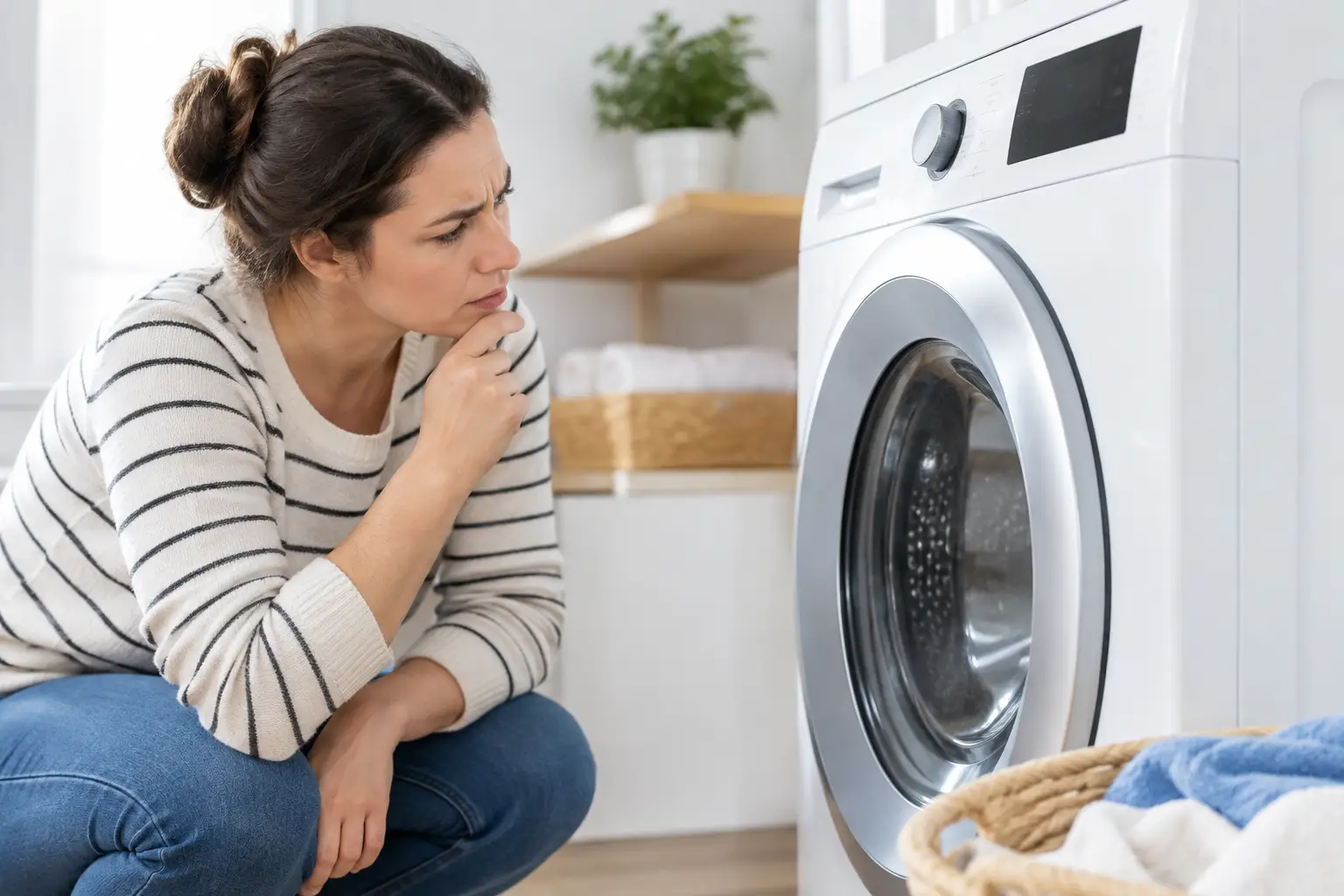
A washer that quits mid-cycle can turn a normal Saturday into a pile of wet towels, missed school uniforms, and a real household headache. The best signs a washer needs service are not always a total breakdown. Small changes – a new noise, a slow drain, or clothes that come out too wet – can point to a developing problem that is usually easier to address before the machine stops working altogether.
Not Sure You Need a Repair?
Before you pay for a service call, try FixDecision AI. Describe what's wrong with your appliance and get a safety-first assessment to help you decide whether to DIY or call a professional.
8 Best Signs Your Washer Needs Service Soon
1. Water is leaking onto the floor
A puddle under the washing machine deserves prompt attention, even if it seems small. Water may be escaping from a worn door gasket on a front-load model, a loose supply hose, a cracked drain hose, a failing pump, or an internal tub seal. On a top-load washer, water can also spill over when the machine is overloaded or unbalanced.
First, turn off the washer and avoid running another load until you can identify whether the water is coming from a hose connection or beneath the cabinet. A loose hose fitting may be a simple fix. Water coming from inside the machine is more likely to require a qualified technician. Waiting can damage flooring, baseboards, and nearby walls, turning a washer repair into a much more expensive cleanup.
2. The washer will not drain or spin
If you open the lid or door to find standing water, the washer may have a clogged drain hose, blocked pump filter, damaged drain pump, or an issue with the lid switch or door lock. A washer that drains but leaves clothes soaking wet may have a spin-cycle problem instead.
Check for a kinked drain hose and make sure the load is not packed tightly to one side of the tub. If those basics do not solve the problem, service is the smart next step. Repeatedly restarting a washer with water inside can strain the pump and leave you with a larger repair bill. A technician can determine whether the issue is a blockage, a worn mechanical part, or an electrical control problem.
3. It bangs, shakes, or walks across the room
Some vibration is normal, particularly during a high-speed spin. Violent shaking, loud banging, or a washer that moves away from the wall is not. Start by pausing the cycle and redistributing bulky items such as blankets, towels, or shoes. Then check whether the machine sits level with all four feet firmly on the floor.
When balancing does not stop the problem, worn suspension rods, shocks, springs, bearings, or a damaged tub assembly may be involved. Continuing to use a washer that is walking or slamming can loosen hoses, damage internal components, and create a leak. Fast repair help can prevent a manageable vibration issue from becoming a major failure.
4. You hear grinding, squealing, or repeated clicking
Washers make operating sounds, but homeowners usually notice when a familiar machine starts sounding different. A grinding noise during the spin cycle may indicate worn tub bearings or an object caught between the tubs. Squealing can point to a belt, motor, or pulley issue on models that use those parts. Repeated clicking may be related to a lid lock, door latch, control board, or shifting mechanism.
Do not assume a loud washer will simply work itself out. A coin, bra wire, or other small item might be a relatively straightforward removal. Bearing and motor problems can be more involved, and the repair decision may depend on the machine’s age, condition, and estimated cost. Having the cause diagnosed gives you a clear answer before you spend money on parts that will not solve the problem.
5. The washer stops before the cycle is finished
A cycle that stalls during filling, washing, draining, or spinning is one of the clearest signs your washer needs service. The cause can range from a faulty water inlet valve or pressure switch to a lid switch, door lock, timer, electronic control, or motor issue.
Before arranging service, confirm that both water supply valves are open and that the home has normal water pressure. You can also try a different cycle after unplugging the washer for a few minutes, if the manufacturer instructions allow it. If the failure repeats, avoid forcing the machine through cycle after cycle. Intermittent shutdowns often become complete shutdowns, usually at the least convenient time.
6. It has trouble filling, or fills at the wrong time
A washer that takes too long to fill can make laundry day drag on for hours. Sediment-clogged inlet screens, bent supply hoses, weak water pressure, or a failing inlet valve are common possibilities. Conversely, a washer that keeps filling or adds water at unexpected times may have a sensing or valve problem that needs immediate attention.
Turn off the water supply if the washer continues filling when it should not. An overflowing washer can cause significant water damage quickly. This is not a repair to postpone or attempt without the right experience, since it may involve electrical components and water connections working together.
7. Clothes come out dirty, damaged, or covered in residue
Poor wash results are frustrating, especially when the washer appears to complete its cycle normally. Clothing that still has soap residue may be caused by too much detergent, a cold-water setting, overloading, or a dispenser that is not flushing correctly. Musty-smelling clothes can result from detergent buildup, a dirty tub, or moisture trapped in the door gasket of a front-load washer.
Start with the washer’s recommended cleaning cycle and use the amount of high-efficiency detergent specified for your model. If the problem continues, or if clothes are snagging, tearing, or developing unusual marks, stop using the appliance until it is checked. A rough drum surface, loose agitator component, damaged gasket, or failed dispenser can harm clothing and signal a repair need.
8. Error codes keep returning
Modern washers use error codes to identify problems with filling, draining, balancing, locking, temperature, and communication between parts. An occasional code caused by an uneven load may clear after you rebalance the machine. A code that returns after basic troubleshooting should not be ignored.
Write down the exact code, the washer brand and model number, and what the machine was doing when the message appeared. That information helps a service professional arrive prepared and can speed up diagnosis. Resetting the machine may temporarily clear the display, but it does not repair a failing pump, sensor, latch, or control board.
When to Call for Washer Repair Right Away
Some washer concerns can wait a day or two, but active leaking, burning smells, smoke, sparks, a tripped breaker, or an electrical buzzing sound call for immediate action. Stop the cycle, unplug the machine if it is safe to do so, and shut off the water valves when there is a leak or overflow risk. Do not keep testing the appliance in hopes that it will finish one more load.
For less urgent symptoms, scheduling service early is still often the better value. A repair technician can inspect the machine, explain what failed, and provide an estimate that helps you decide whether repair makes sense. In general, repairing a newer washer with a targeted issue is often worthwhile. If an older unit needs a costly transmission, tub, or control repair, replacement may be the more practical choice.
US Appliance Repairs helps homeowners connect with independent local repair providers when laundry cannot wait. Asking about the diagnosis, repair cost, parts availability, and expected timeline can give you the peace of mind to make a confident decision.
A washer does not need to be completely dead before it deserves attention. Acting when the first warning signs appear can protect your home, preserve your clothes, and get your laundry routine back up and running with far less disruption.