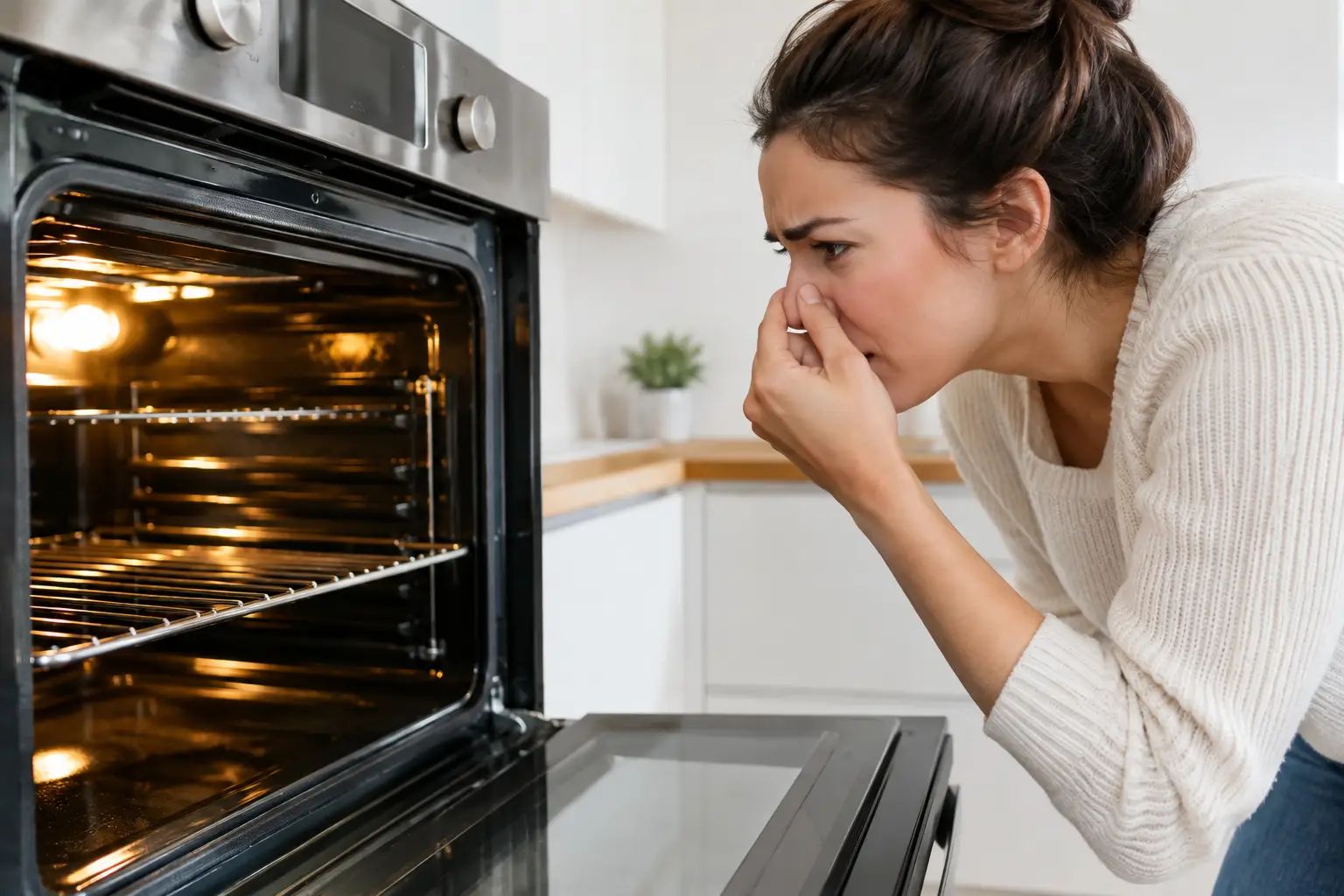
A faint gas odor for a second or two as a gas oven ignites can be normal. A strong smell, an odor that lingers, or gas you notice when the oven is off is not something to wait out. If you are asking, “why does oven smell gas,” treat the answer as a safety question first and a repair question second.
If the smell is strong or persistent, do not light a burner or oven, operate electrical switches, use a phone inside the home, or try to locate the leak with a flame. Leave the house with everyone inside, then call 911, your gas utility’s emergency line, or the fire department from a safe location. If you use propane, act especially quickly. Propane can settle in low areas, while natural gas generally rises.
Not Sure You Need a Repair?
Before you pay for a service call, try FixDecision AI. Describe what's wrong with your appliance and get a safety-first assessment to help you decide whether to DIY or call a professional.
When a Gas Smell From an Oven Can Be Normal
Most modern gas ovens use an electronic igniter. When you turn the oven on, gas begins flowing to the bake burner and the igniter should light it promptly. You may notice a brief whiff of gas during that startup period, particularly if you are standing close to the open oven door.
That odor should disappear almost immediately once the burner lights. You should see a steady blue flame along the burner tube or through the openings at the bottom of the oven, depending on the model. A flame that takes more than a few seconds to appear, burns unevenly, or goes out after lighting points to a problem that deserves professional attention.
A gas smell after accidentally turning a control knob without lighting the burner can also happen. Turn the knob fully to OFF, ventilate the area by opening doors or windows if it is safe to do so, and avoid creating sparks. If the odor does not clear quickly, leave and contact emergency help.
Why Does Oven Smell Gas During Preheating?
When the odor happens only while preheating, the most common cause is delayed ignition. Gas reaches the burner before the igniter gets hot enough to light it. Even if the oven eventually works, that delay can allow unburned gas to build up inside the oven cavity.
A weak or failing igniter
A hot-surface igniter can glow orange yet still be too weak to open the gas safety valve correctly or ignite the gas quickly. This is one of the more common oven repair issues. Homeowners may notice longer preheat times, a recurring gas smell at startup, or an oven that sometimes lights and sometimes does not.
Replacing an igniter is a routine repair for a qualified appliance technician, but it is not a good place for guesswork. The correct part, proper mounting, wire connections, and burner operation all matter. A technician can also verify that the gas valve and safety system are working as intended.
Dirty or blocked burner ports
Grease, food debris, rust, or residue can block portions of the bake burner. Gas may not travel evenly across the burner, leading to delayed lighting, popping sounds, or flames that only appear on one side. A burner problem can leave unburned gas in the oven before the flame catches.
Do not insert pins, wire, or other objects into burner openings while troubleshooting. That can damage the burner or alter how it distributes gas. A technician can inspect and clean the burner safely and determine whether replacement is the better option.
A burner that is not seated correctly
After cleaning, moving, or servicing the oven, a bake burner or its cover may not be reinstalled in the correct position. If the igniter is not properly aligned with the burner, ignition may be slow or unreliable. This is especially likely if the gas smell started right after the oven was cleaned or a part was removed.
Problems with the gas valve or controls
A worn oven safety valve, faulty thermostat, control board issue, or wiring problem can interfere with the normal ignition sequence. These failures are less obvious from the outside, which is why a proper diagnosis matters. Replacing parts based on a guess can add expense without solving the safety concern.
Gas Smell When the Oven Is Off Is More Urgent
An oven should not smell like gas while all controls are off. That can indicate a leaking supply connection, a valve that is not closing fully, a damaged flex line, or a problem elsewhere in the gas system. The source may be behind the range, under the cooktop, or at another appliance, so do not assume the oven itself is the only possibility.
Leave the home if the odor is noticeable or growing stronger. Do not unplug the range, pull it away from the wall, or shut off a valve unless you can do so safely without disturbing electrical equipment or entering an area with a heavy gas smell. Emergency personnel or the gas utility can help determine whether the home is safe before an appliance repair is scheduled.
A gas odor outdoors near the meter, regulator, or propane tank also needs immediate attention from the utility or propane supplier. Appliance repair addresses appliance components, but utility equipment and gas supply lines may fall under different responsibility and safety procedures.
Do Not Confuse a Gas Smell With Carbon Monoxide
Natural gas and propane are treated with an odorant so leaks are easier to detect. Carbon monoxide, however, has no smell, color, or taste. It can be produced when gas does not burn completely or combustion gases are not venting correctly.
Symptoms such as headache, dizziness, nausea, confusion, chest pain, or unusual fatigue while an oven or other fuel-burning appliance is running should be taken seriously. Get everyone into fresh air and seek emergency assistance, especially if more than one person feels sick or a carbon monoxide alarm sounds. Never use a gas oven to heat the home. It is not designed for space heating and can create a dangerous carbon monoxide risk.
Working carbon monoxide alarms are an essential backup, but they do not replace prompt action when you smell gas. Test alarms according to the manufacturer’s instructions and replace batteries or units when required.
What You Can Check Safely Before Calling for Repair
Once there is no active gas emergency and the odor appears limited to oven ignition, observe the appliance without taking it apart. Notice whether the smell lasts one second or twenty, whether the oven lights every time, and whether preheating has become slower. Those details help a technician narrow down the cause.
You can also check that the oven door closes normally and that no foil, cookware, or oven liner is covering the burner area or blocking airflow. Use the oven only if it lights promptly, burns with a stable blue flame, and no gas odor remains after ignition. If any of those conditions are not met, stop using it until it is inspected.
Avoid the common do-it-yourself fixes that create bigger risks: removing gas fittings, spraying questionable leak-detection products near hot components, bypassing an igniter, or repeatedly cycling the oven in hopes it will catch. Repeated failed ignition attempts can increase the amount of unburned gas in the oven.
When to Schedule an Oven Repair Visit
Schedule service promptly when the oven smells like gas every time it starts, takes a long time to ignite, makes a boom or whoosh when lighting, has yellow or uneven flames, or will not maintain temperature. These are not just cooking-performance issues. They can signal a burner, igniter, valve, or airflow problem that should be corrected before regular use continues.
A certified appliance technician can inspect the igniter’s performance, burner alignment and condition, gas valve operation, wiring, pressure-related concerns, and visible connections. The final repair cost depends on the oven’s make, model, age, part availability, and the failed component. In many cases, an igniter or burner repair is more practical than replacing an otherwise dependable range. A major gas valve or control-board repair on an older unit may call for a repair-versus-replacement conversation.
For homeowners who need fast help without spending hours screening providers, US Appliance Repairs can help connect you with independent local appliance repair professionals. Ask the technician to explain the diagnosis, the recommended repair, and whether the oven can be used safely before the work is completed.
A gas odor is one household warning sign worth taking seriously. Trust your senses, keep your family away from a suspected leak, and get qualified help so your kitchen can get back up and running with greater peace of mind.