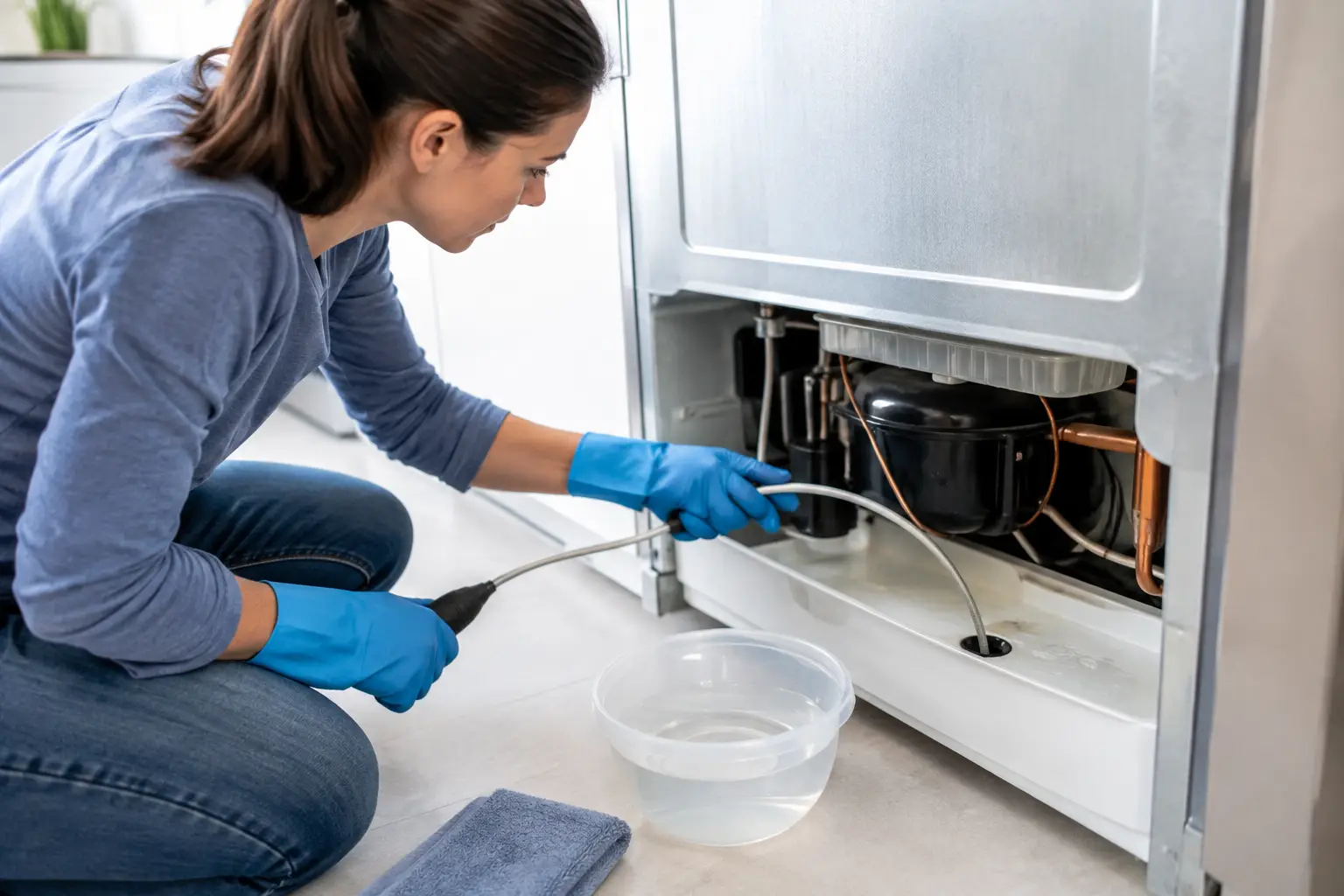
A puddle under the crisper drawers or a sheet of ice at the bottom of the freezer usually points to one small but frustrating problem: a blocked defrost drain. Learning how to unclog refrigerator drain can save your kitchen floor, prevent recurring ice buildup, and get your refrigerator back to normal without replacing a major part.
The drain is designed to carry water created during the refrigerator’s automatic defrost cycle to a pan beneath the appliance, where it evaporates. When food debris, dust, mold, or ice blocks that path, the water has nowhere to go except back into the refrigerator or freezer compartment. The good news is that many homeowners can clear a simple blockage safely. The key is to work slowly and avoid damaging the drain tube, liner, or nearby electrical components.
Not Sure You Need a Repair?
Before you pay for a service call, try FixDecision AI. Describe what's wrong with your appliance and get a safety-first assessment to help you decide whether to DIY or call a professional.
Before You Unclog a Refrigerator Drain
Start by protecting the floor with towels. Remove food from the affected area and place perishable items in a cooler if you expect the door to stay open for more than a few minutes. If there is standing water inside the refrigerator, soak it up before it reaches vents or electrical connections.
Unplug the refrigerator before removing panels, using warm water near internal components, or working around a frozen drain. This reduces the risk of electric shock and prevents the fan from starting while your hands are inside the appliance. Avoid using sharp knives, screwdrivers, coat hangers, or ice picks to chip at ice. They can puncture the plastic liner or damage a hidden refrigerant line, turning a straightforward cleanup into a costly repair.
You will usually need towels, a shallow container, warm water, a turkey baster or squeeze bottle, and a soft pipe cleaner or flexible plastic drain-cleaning tool. A small amount of mild dish soap can help remove greasy residue, but harsh drain chemicals do not belong in a refrigerator drain system.
How to Unclog Refrigerator Drain Step by Step
The drain opening is commonly found at the back of the fresh-food compartment, beneath the crisper drawers, or in the freezer below the evaporator cover. Its exact location depends on the model, so check the owner’s manual if the opening is not obvious.
1. Clear the access area
Remove the drawers, shelves, and any lower freezer basket blocking the drain area. If a rear panel covers the drain, look for screws or clips and remove it carefully. Keep track of fasteners and do not force a panel that seems stuck. Ice may be holding it in place.
If the drain trough is covered with ice, let it thaw naturally with the refrigerator unplugged and doors open. You can place bowls of hot water inside the compartment and close the door for several minutes to speed thawing. A hair dryer can work on a low setting if kept well away from standing water and plastic surfaces, but warm water and patience are generally safer.
2. Flush the drain opening with warm water
Once you can see the drain hole, fill a turkey baster or squeeze bottle with warm, not boiling, water. Slowly squeeze water into the opening. Give it a moment, then repeat. If the drain is clear, the water should disappear freely instead of pooling in the trough.
Do not use boiling water. Sudden high heat can warp plastic components or crack cold surfaces. If the water backs up, move to the next step rather than forcing more water into a fully blocked tube.
3. Loosen the blockage gently
Feed a soft pipe cleaner or flexible plastic tool into the drain opening. Work it in and out gently to break up residue. Never push hard. A blockage may be ice farther down the tube, and forcing a tool can disconnect or puncture the drain line.
After loosening the material, flush the opening again with warm water. Repeat the gentle cleaning and flushing process until water runs through consistently. A little mild soapy water can help if the drain appears slimy, followed by several flushes of plain warm water to remove soap residue.
4. Check the drain pan and outlet tube
On many refrigerators, the drain tube ends near the compressor area above a shallow drain pan. Pull the refrigerator away from the wall carefully, making sure not to strain the power cord or water supply line if the unit has an ice maker or dispenser.
Look for the tube outlet and drain pan. Dust, pet hair, and grime around the outlet can contribute to recurring clogs. Clean accessible debris with a damp cloth. Some models have a rubber duckbill or check valve at the tube end that can trap sludge. If it is easily removable, rinse it with warm water and clear debris before reinstalling it securely.
If you cannot identify the drain tube, or accessing it requires removing extensive panels, stop there. Refrigerators vary widely, and a certified technician can inspect the full drain path without risking damage to wiring, fans, or sealed-system components.
5. Reassemble and monitor the refrigerator
Dry the drain trough, reinstall panels and drawers, and plug the refrigerator back in. Over the next day or two, check the bottom of the fresh-food section and freezer for water or new ice. A clear drain should allow defrost water to flow away without collecting under drawers.
If the same puddle returns soon after cleaning, the clog may be deeper in the line, the drain tube may be misaligned, or the appliance may have a defrost-system problem. Recurring water is a reason to schedule service rather than repeatedly flushing the drain.
Why Refrigerator Drains Clog or Freeze
Most clogs develop gradually. Crumbs, spilled liquids, food particles, and mineral residue can wash toward the drain opening. In households with pets, dust and hair near the rear drain outlet can also interfere with proper flow. A refrigerator that is not level can make drainage less reliable, although leveling alone will not clear a blocked tube.
Freezer drains can freeze when cold air reaches the opening, when the refrigerator door is left open for extended periods, or when a defrost component is not working correctly. A failed defrost heater, thermostat, sensor, or control board can create ice patterns that look like a simple drain clog. That distinction matters because clearing the drain will only provide temporary relief if the defrost cycle itself is failing.
When a Drain Clog Needs Professional Repair
A basic warm-water flush is reasonable when the refrigerator is cooling normally and the only symptom is a small amount of water or ice near the drain. Call for professional help if you notice repeated flooding, a thick ice sheet that quickly returns, poor cooling, unusual fan noise, burning odors, or water leaking onto electrical connections.
You should also leave the repair to a technician if the refrigerator must be disassembled beyond an interior cover, if the drain tube is cracked or detached, or if you suspect a frozen evaporator coil. Those problems can involve the appliance’s defrost system and require proper diagnosis. Replacing parts based on a guess can cost more than having the issue identified correctly the first time.
For homeowners who need fast help, US Appliance Repairs can connect you with independent local appliance repair providers for refrigerator drainage and defrost issues. A qualified technician can clear the line, inspect the drain pan and outlet, and determine whether a hidden component failure is causing the problem.
Preventing Another Clogged Drain
A few routine habits can reduce the chance of another backup. Wipe spills promptly, keep uncovered foods from shedding debris near the rear of the refrigerator, and clean beneath crisper drawers during regular kitchen cleaning. Vacuuming dust from behind and underneath the refrigerator every few months also helps keep the compressor area and drain-pan zone cleaner.
Make sure doors close fully and door gaskets are clean and intact. Excess warm, humid air entering the refrigerator can increase frost and defrost water. If your model has an external water line, inspect the area occasionally so a supply-line leak is not mistaken for a drain problem.
A refrigerator drain is a small part of a large appliance, but it protects your food storage, flooring, and peace of mind. Address the first signs of pooling water early, use gentle cleaning methods, and bring in a professional when the leak keeps coming back.