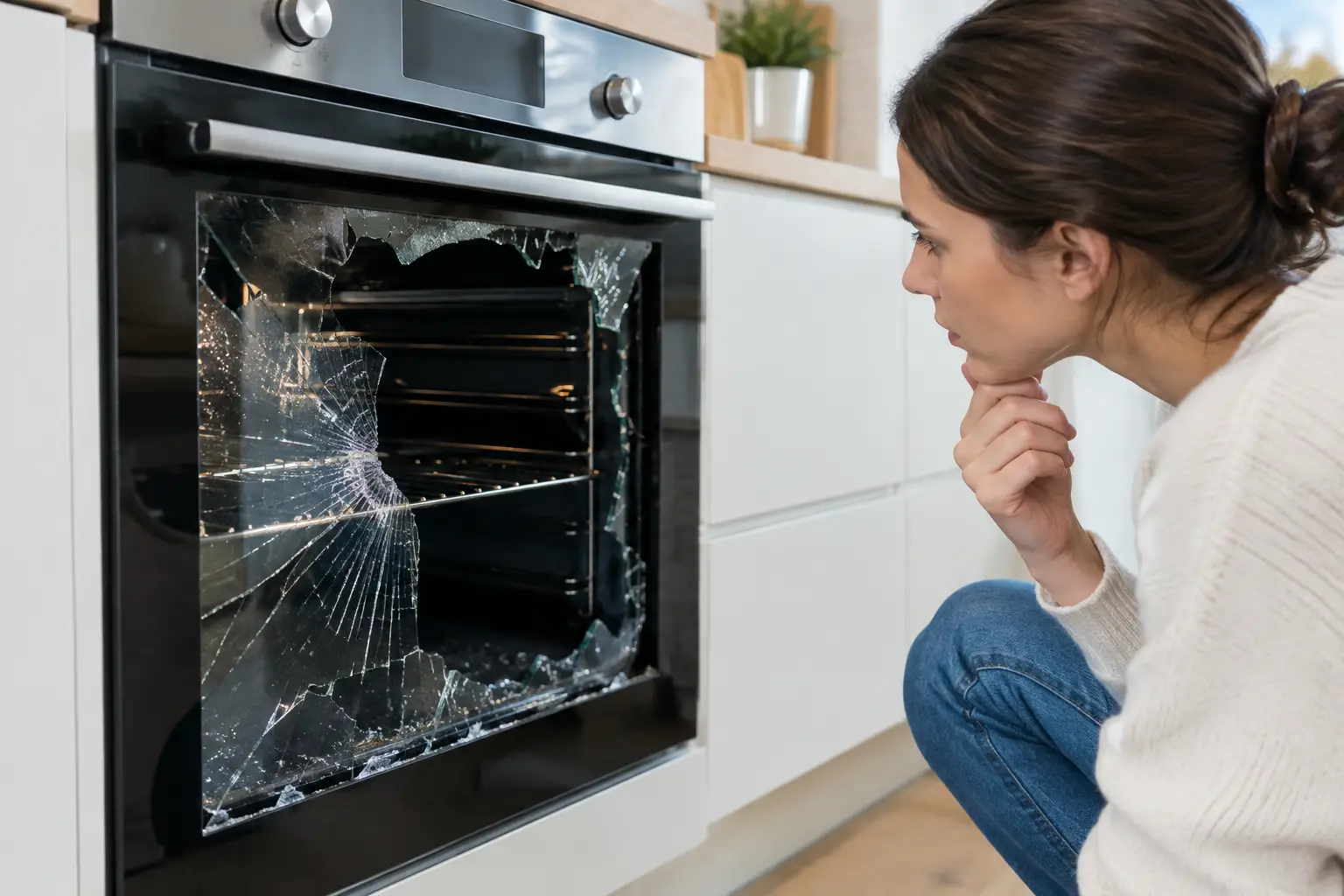
A shattered oven door can turn a normal dinner plan into a safety issue in seconds. If your oven glass shattered, do not touch the door, try to close it, or continue cooking. Broken tempered glass can scatter far beyond the oven opening, including under cabinets and across the kitchen floor. The priority is protecting people, pets, and feet first, then arranging the right repair.
Not Sure You Need a Repair?
Before you pay for a service call, try FixDecision AI. Describe what's wrong with your appliance and get a safety-first assessment to help you decide whether to DIY or call a professional.
What to Do Immediately When Oven Glass Shatters
Keep everyone out of the kitchen, especially children and pets. If the oven is on, turn it off using the controls. Do not reach across broken glass to do so. Once the appliance has cooled, shut off power at the circuit breaker if you can access it without walking through debris. For a gas range, turn off the gas supply valve only if it is easy to reach and you know where it is.
Give the glass time to cool completely. Even when the door looks mostly intact, tiny fragments may continue to fall from the frame. Put on closed-toe shoes, thick work gloves, and eye protection before starting cleanup.
Start by picking up the larger pieces with gloved hands and placing them in a sturdy box or rigid container. Avoid pressing on the remaining glass in the door. Sweep smaller fragments with a broom and dustpan, working outward from the appliance. A damp paper towel can collect fine slivers from hard flooring and nearby counters. Check the floor several times from different angles, since tempered glass catches light and can be easy to miss.
Do not use the oven until the damaged door glass has been replaced and the door assembly has been inspected. A cracked or broken panel affects insulation, heat containment, and safe operation. It can also leave sharp edges exposed every time the door is opened.
If the Inner or Outer Glass Broke
Most oven doors have two or more panes of glass. The outer pane is the one facing the kitchen, while the inner pane faces the oven cavity. Either one can break, and both situations require attention.
An outer-pane failure creates an immediate cut hazard and can make the door unstable. A broken inner pane may leave glass inside the oven cavity or between door panels, where it can contaminate food and interfere with door parts. If you cannot tell which panel broke, treat the appliance as out of service until a qualified technician examines it.
Why Oven Door Glass Breaks
Oven glass is made to handle high heat, so a shattered panel often feels random. In many cases, though, thermal stress, impact damage, or a door-related problem has been building over time.
A sharp temperature change is one possible cause. For example, placing a cold or wet item against hot door glass can create stress. High-heat cleaning cycles can also expose an already weakened pane or door seal. That does not mean a self-clean cycle always causes breakage, but it can reveal an existing problem.
Small chips and scratches matter more than many homeowners realize. A pan bumping the door, a hard object striking the glass, or abrasive cleaning can damage the surface. Tempered glass is designed to break into many small pieces rather than dangerous long shards, but one damaged area can eventually trigger a full failure.
Door alignment is another factor. Worn hinges, loose screws, a failing gasket, or a warped frame can prevent the door from closing squarely. The glass may be put under pressure each time the door is shut or heated. Slamming the oven door, even occasionally, makes that risk worse.
Manufacturing defects can happen, particularly if glass breaks without any visible chip, impact, or misuse. Save photos of the damage and note the appliance model number, purchase date, and whether the oven was running. If the range is still under a manufacturer or extended warranty, that information may help with a claim.
Can You Still Use an Oven With Shattered Glass?
No. Even if one pane remains in place and the oven appears to heat normally, it should not be used. The door is part of the appliance’s heat-control and safety system. With a broken panel, heat can escape unevenly, the exterior can become hotter than expected, and the remaining glass may be more likely to fail.
Using a damaged oven can also make a repair more expensive. Loose fragments may get into hinges, vents, insulation, or the door latch. If the oven was hot when the glass broke, wait for it to cool and leave the door in its current position rather than forcing it open or shut.
For an over-the-range microwave or a microwave oven, a cracked or shattered door should be treated even more cautiously. Do not operate it. Microwave doors have specialized shielding and latching components that need professional inspection.
Should You Replace the Glass or the Whole Oven Door?
In many cases, replacing the broken glass panel is the practical fix. A technician can identify the correct inner, outer, or middle panel for your model and confirm that the frame, hinges, gasket, and handle are still sound. Replacing only the damaged panel usually costs less than replacing the entire door assembly.
The decision depends on the appliance’s age, the availability of parts, and what else is wrong. If the door is bent, the hinges are badly worn, multiple panels are damaged, or the replacement glass is discontinued, a complete door assembly may be the better option. Some door assemblies are expensive enough that comparing repair cost with the age and condition of the full range makes sense.
Glass and labor costs vary by brand and oven style. A straightforward panel replacement may be a few hundred dollars, while premium models, double ovens, specialty finishes, and complete door assemblies can cost considerably more. Ask for an estimate that separates the part, labor, service call, and any additional door repairs. That gives you a clearer repair-versus-replacement decision before work begins.
Why Professional Oven Glass Repair Is Worth It
Oven door glass replacement looks simple until the door comes apart. Many doors contain layered glass, clips, insulation, spacers, springs, wiring, and hinge mechanisms under tension. Reassembly has to be precise. A panel installed in the wrong position or a door that does not close evenly can create more heat loss and another breakage risk.
A qualified appliance repair technician can match the part number to the model, remove hidden glass fragments, inspect the door components, and test the door after reassembly. That inspection matters when the glass shattered without an obvious impact. Replacing the pane without correcting a misaligned hinge or damaged gasket may only postpone the next problem.
If you need fast help, US Appliance Repairs can connect homeowners with independent local appliance repair providers for oven and range service. Before scheduling, have the model number ready and mention whether the inner, outer, or both glass panels appear damaged. Clear details help the provider prepare for the right repair.
How to Reduce the Risk of Another Broken Oven Door
Once the repair is complete, a few habits can protect the new glass. Let the oven door cool before cleaning it, and use a soft cloth with a cleaner approved for glass surfaces. Skip abrasive pads, harsh scraping tools, and cleaners that may damage surrounding door finishes or seals.
Close the door gently rather than using it as a shelf or leaning against it. Keep heavy cookware from striking the glass, and do not place cold dishes directly against a hot door. If the door starts sagging, scraping, failing to seal, or needing a push to latch, arrange service before the problem puts extra stress on the glass.
A shattered oven door is disruptive, but it does not automatically mean the entire range is finished. Secure the area, stop using the appliance, and have the door and its supporting parts checked so your kitchen can get back up and running safely.