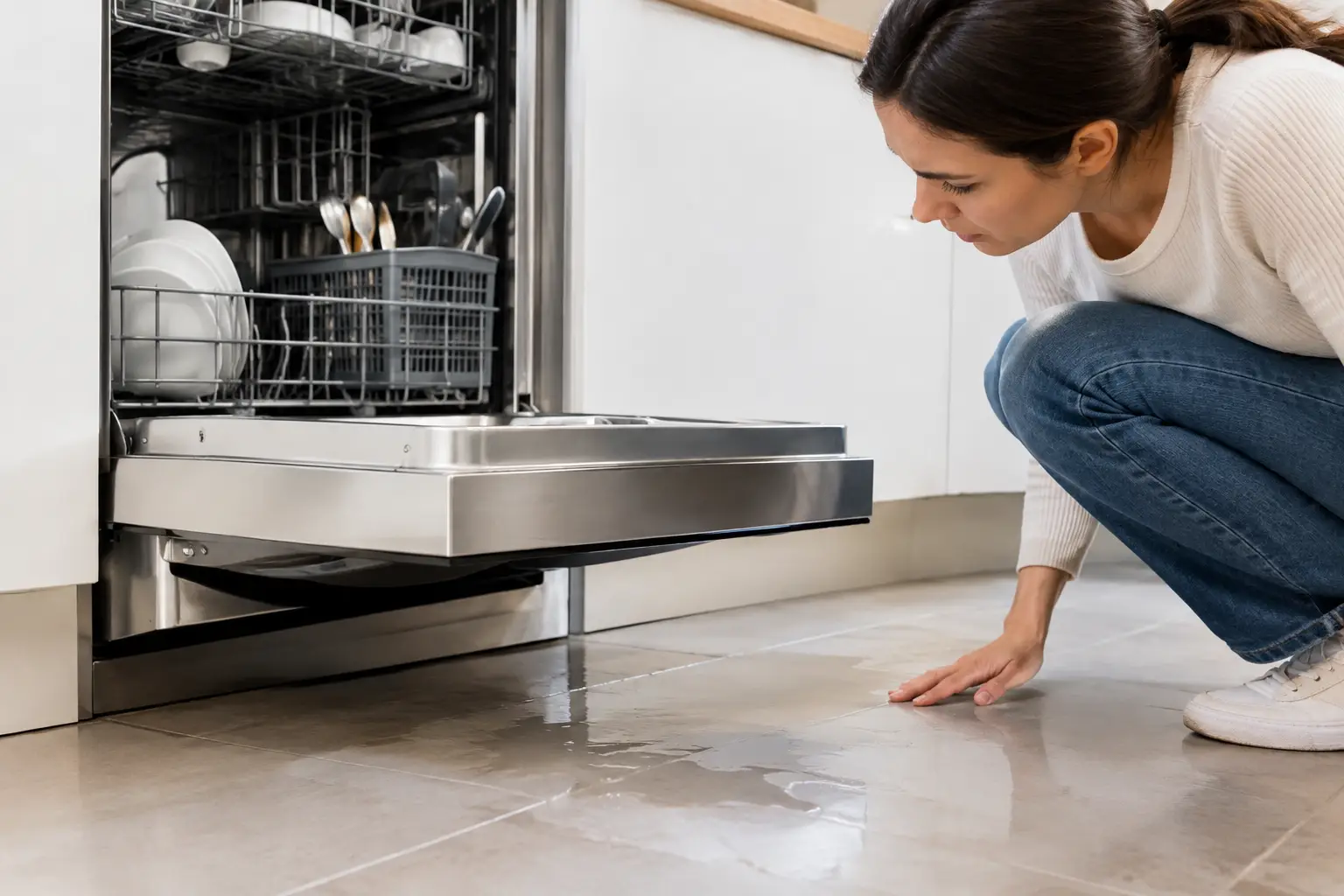
A puddle under the dishwasher can feel like a minor cleanup job, especially if the appliance still runs. But is dishwasher leaking dangerous? It can be. The immediate risk depends on where the water is going, how much is escaping, and whether it has reached electrical connections, flooring, cabinets, or nearby rooms.
A few drops from a loose connection may not be an emergency. Water spreading across the kitchen floor, leaking from underneath the machine, or appearing near an outlet deserves faster action. Stop using the dishwasher until you know why it is leaking. That one decision can prevent a small repair from becoming water damage, mold growth, or an electrical safety concern.
Not Sure You Need a Repair?
Before you pay for a service call, try FixDecision AI. Describe what's wrong with your appliance and get a safety-first assessment to help you decide whether to DIY or call a professional.
When a dishwasher leak becomes dangerous
Dishwasher water is not usually dangerous because of the water itself. The concern is what that water contacts and how long it stays hidden. A leak that happens only during the wash or drain cycle can run under the dishwasher, behind baseboards, and beneath flooring before anyone notices it.
The most urgent situation is water near electricity. Dishwashers are powered appliances, and many are hardwired or plugged into an outlet inside the cabinet next to the sink. If water is close to an outlet, cord, junction box, or exposed wiring, do not touch wet electrical components. Avoid standing in water while reaching for switches or plugs. If you can safely access the electrical panel without crossing water, turn off the dishwasher circuit. Otherwise, keep people and pets away from the area and arrange for professional help.
Floor damage is another real risk. Wood, laminate, and some vinyl flooring can swell, separate, stain, or loosen when water gets underneath. A slow leak may also weaken the subfloor over time. In homes with a basement, crawl space, or finished room below the kitchen, dripping water can damage ceilings and insulation as well.
Then there is mold. One brief, fully dried spill usually will not create a mold problem. A hidden leak that keeps cabinets, drywall, or flooring damp for days can. Musty smells, soft cabinet panels, dark staining, or warped flooring are signs that moisture may have been present longer than expected.
Is dishwasher leaking dangerous if it is only a small amount?
It depends on the source. A small amount of water on the floor after opening the door may be caused by a wet dish or a worn door gasket. It still needs attention, but it is generally less urgent than water coming from beneath the unit during a cycle.
Small leaks can be misleading because they often repeat. A dishwasher runs with several gallons of water over the course of a cycle. Even a slow drip from a pump seal or hose connection can release enough water over weeks to damage the floor under the appliance.
Treat a leak as more serious when you see water during operation, find a growing puddle, notice water under nearby cabinets, or smell mildew. If the dishwasher trips a breaker, makes unusual buzzing sounds, or has water around electrical components, stop using it immediately.
What to do first when your dishwasher leaks
Start by canceling the cycle or turning the dishwasher off. If the water is contained and there is no electrical concern, place towels around the base of the appliance and clean up standing water promptly. Remove the lower rack and check whether the dishwasher is overfilled with water. Do not continue testing cycles until the cause is identified.
Next, turn off the dishwasher’s water supply valve if you can reach it safely. The valve is often under the kitchen sink. This is particularly helpful if water is still entering the appliance or leaking even when it is not running. If the leak is substantial, shut off the home’s main water supply if necessary.
Once the area is dry enough to inspect safely, look for the obvious clues: water around the door, a loose or damaged supply line under the sink, a drain hose that has slipped out of place, or a clogged filter causing poor drainage. Take photos before moving the dishwasher. Pictures can help a repair technician identify the source and can be useful if you need to document flooring or cabinet damage.
Do not pull a built-in dishwasher out by yourself if water or electrical wiring is involved. The drain hose, supply line, and power connection can be damaged or strained. A certified appliance technician can disconnect and inspect the unit properly, then determine whether a plumber, electrician, or water-damage professional is also needed.
Common causes of dishwasher leaks
The location and timing of the leak provide useful clues. Water escaping from the front during a wash cycle often points to a door seal, latch, spray arm, or detergent issue. A damaged gasket can allow water past the door. An overfilled dishwasher may also leak if the float switch fails or excessive soap creates thick suds that push out around the door.
Water appearing under the dishwasher is more commonly related to internal components. A worn pump seal, cracked hose, loose clamp, damaged inlet valve, or leaking tub can send water straight to the floor beneath the appliance. These problems are harder to see without removing the lower access panel or pulling out the dishwasher.
A leak that occurs near the end of a cycle can involve the drain system. A split drain hose, loose connection, blocked air gap, or backup at the sink drain may force water out where it does not belong. If you recently had a garbage disposal installed or replaced, check whether the dishwasher drain connection was opened correctly. A missed knockout plug can prevent proper draining, although it more often causes water to remain inside the dishwasher than a floor leak.
Age matters, too. Rubber seals harden, hoses become brittle, and plastic components can crack after years of heat and vibration. Still, replacement is not always the answer. Many dishwasher leaks are repairable when the tub and major mechanical parts are otherwise in good condition.
When to call for dishwasher repair right away
Call for repair promptly if the leak returns after cleanup, water comes from underneath the appliance, or the source is not visible. Fast help is especially worthwhile when the dishwasher is installed over wood flooring or near finished living space. The cost of diagnosing a leak is often far lower than replacing damaged flooring, cabinets, or a ceiling below the kitchen.
You should also arrange service if the dishwasher will not drain, shows an error code, trips a breaker, has a burning smell, or leaves water near its electrical connection. Those symptoms go beyond a simple door-gasket concern and should not be treated as a do-it-yourself experiment.
For homeowners who need a dependable local referral, US Appliance Repairs can help connect you with an independent appliance repair provider. Ask the technician to inspect the leak source, water supply connection, drain line, door seal, pump area, and signs of moisture beneath the unit. A complete inspection offers more peace of mind than replacing one visible part and hoping the problem is solved.
How to reduce the chance of another leak
A little routine care can catch problems before water reaches the floor. Clean the dishwasher filter as recommended by the manufacturer so food debris does not interfere with drainage. Check the door gasket occasionally for cracks, flattening, or buildup, and wipe it clean with a soft cloth.
Use only dishwasher detergent and avoid adding more than the product directions call for. Hand-washing soap can create excessive suds and force water out of the door. Also, do not block the spray arms with tall pans or oversized items. Deflected spray can repeatedly hit the door seal and cause water to escape.
Finally, look under the sink and around the dishwasher base every month or two. You are not looking for a perfect appliance – you are looking for early warning signs: dampness, cabinet swelling, mineral residue, or a new musty odor. Catching those signs early is one of the simplest ways to keep a dishwasher repair manageable and get your kitchen back up and running with less stress.