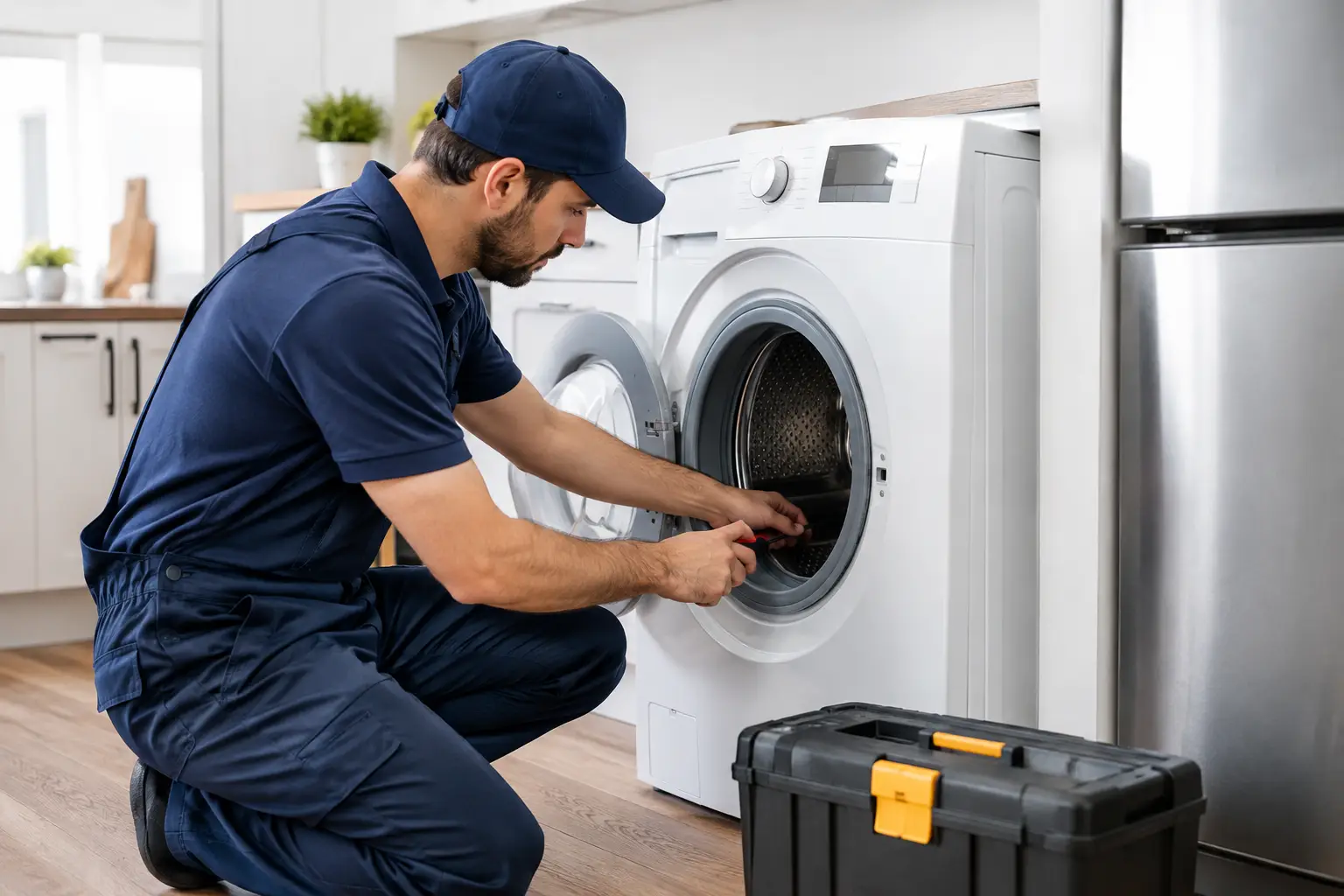
Your refrigerator sends an alert that its temperature is rising. Your washer stops mid-cycle and displays a code you have never seen. Your oven works, but its touchscreen will not respond. Smart appliance repair trends are changing what these problems look like, how technicians diagnose them, and what homeowners should do before a small issue becomes a major disruption.
Connected features can make appliance ownership more convenient, but they also add sensors, circuit boards, software, and network connections to equipment that already works hard every day. That does not mean every smart appliance problem is expensive or complicated. It does mean that getting the right diagnosis matters more than ever.
Not Sure You Need a Repair?
Before you pay for a service call, try FixDecision AI. Describe what's wrong with your appliance and get a safety-first assessment to help you decide whether to DIY or call a professional.
Smart Appliance Repair Trends Changing Service Calls
The biggest change is that many service calls now begin with information. A smart refrigerator, dishwasher, washer, dryer, or range may display an error code, send a mobile notification, or record unusual operating behavior before the appliance stops working entirely. This can give a homeowner and a qualified technician a useful starting point.
Still, an error code is not a complete diagnosis. A code may point to a temperature sensor, for example, while the actual cause could be a wiring problem, a control-board issue, poor airflow, or a failing component elsewhere in the system. Treating the code as a clue rather than a final answer can prevent unnecessary parts replacement.
Technicians are also relying more often on digital diagnostic tools. Instead of testing only with basic electrical meters, they may use manufacturer service modes, diagnostic software, or model-specific technical data to check communication between components. This is particularly common with appliances that use electronic control boards to manage heating, water levels, motors, ice makers, and door locks.
For homeowners, the practical benefit is often faster, more accurate service. The trade-off is that some repairs require a technician with specific experience on the appliance brand and model. A mechanical problem such as a worn dryer belt may be straightforward. An intermittent communication failure between a dryer control board and display panel can take more time to isolate.
Remote Diagnostics Are Helpful, but Not a Complete Fix
Remote diagnostics are one of the most visible trends in connected appliance service. Some models can share basic operating data, fault histories, or performance alerts through an app. In certain cases, a technician may be able to review this information before arriving, helping them bring likely replacement parts or prepare for the type of repair involved.
That can be valuable when a refrigerator is not cooling or a washer is leaking and the household needs fast help. Fewer return trips may mean less downtime and a better chance of getting the appliance back up and running sooner.
But remote information has limits. It cannot inspect a cracked hose, confirm a damaged wire, detect every drain blockage, or evaluate physical wear inside a motor or compressor system. It also cannot replace an on-site safety check when an appliance has a burning smell, visible damage, repeated tripped breakers, gas odor, smoke, or signs of overheating. In those situations, stop using the appliance and arrange professional service promptly.
Smart features can also create confusion when the issue is not truly a repair problem. A disconnected Wi-Fi network, app permission setting, router update, or power interruption can make an appliance appear offline even though its core functions are working normally. Before scheduling service for a connectivity-only issue, check the appliance display, confirm power is available, and follow the manufacturer’s basic reset instructions if they are safe for your model.
Electronic Parts Are Driving Different Repair Decisions
For years, many appliance repairs centered on common mechanical parts: belts, rollers, switches, pumps, valves, heating elements, and gaskets. Those parts are still frequent causes of trouble. Smart appliances, however, place more importance on electronic components such as user-interface panels, sensors, inverter boards, and main control boards.
These parts can deliver better efficiency and more precise operation. A modern washer can adjust water use based on load sensing. A refrigerator can monitor temperatures more closely. A dishwasher can tailor cycles to soil levels. The downside is that electronic components may cost more than a simple mechanical replacement, and availability can vary by brand, model, and age.
That is why repair-versus-replacement decisions deserve a closer look. A newer appliance with a single failed board may be worth repairing, especially if the rest of the machine is in good condition and the part is readily available. An older appliance with a costly control-board failure, corrosion, multiple ongoing problems, or weak performance may call for a more careful cost comparison.
A dependable service professional should explain the likely cause, the estimated repair cost, and whether additional concerns were found. No one wants to put money into a repair only to face another major failure shortly afterward. At the same time, replacing an appliance too quickly can be expensive when a targeted repair would restore reliable operation.
Cybersecurity and Privacy Are Part of Ownership
When an appliance connects to a home network, it becomes another device to manage. Most homeowners do not need to be technology experts, but a few simple habits can reduce frustration and protect household information.
Use a strong, unique password for the appliance account and keep the related app updated. If you sell, donate, or discard a connected appliance, remove it from your account and reset personal settings when possible. It is also wise to use a secure home Wi-Fi password and install manufacturer updates when they are available.
These steps usually have more to do with account access and app reliability than with the appliance’s mechanical health. Still, they matter. A missed alert, locked account, or disconnected appliance can make it harder to notice a developing issue early.
What Homeowners Can Do Before Calling for Repair
Smart appliances provide more information, but homeowners should not feel pressured to troubleshoot beyond their comfort level. Start with a few safe observations that can help speed up the appointment: note the exact error code, when the problem began, whether the appliance is still operating, and any sounds, smells, leaks, or visible changes.
If the appliance has an app, take a screenshot of the alert and record the model number. For a refrigerator or freezer, protect food first by keeping doors closed as much as possible and moving perishables if temperatures are rising. For a leaking washer or dishwasher, turn off the water supply if you can do so safely. For an electric appliance that is sparking, smoking, or repeatedly tripping a breaker, disconnect power if it is safe and do not continue testing it.
Avoid repeatedly resetting an appliance to force it through a cycle. A reset can sometimes clear a temporary software glitch, but repeated resets may erase useful fault information or allow a serious problem to continue. Likewise, do not open sealed refrigerator system components, bypass door switches, or attempt electrical repairs without proper training.
When you contact a repair provider, share the brand, model, symptoms, error codes, and whether the unit is connected to an app. That information helps match the job with a technician prepared for the appliance involved. US Appliance Repairs helps homeowners connect with independent local repair providers when fast, informed service is needed.
The Best Trend Is Earlier, More Accurate Service
The most useful technology is not a flashy screen or a notification by itself. It is the ability to catch trouble earlier and make a better repair decision. A dryer that reports restricted airflow, a dishwasher that identifies a drain issue, or a refrigerator that signals an abnormal temperature can give you time to act before the disruption gets worse.
Even so, smart appliances still depend on the same basics: clean filters, clear vents, sound electrical connections, proper loading, level installation, and regular attention to unusual noises or performance changes. Technology can support maintenance, but it cannot replace it.
If an alert keeps returning, a major appliance is not performing as it should, or you are unsure whether repair makes financial sense, do not wait for a complete breakdown. A clear diagnosis from an experienced technician can bring peace of mind and help you make the next step with confidence.