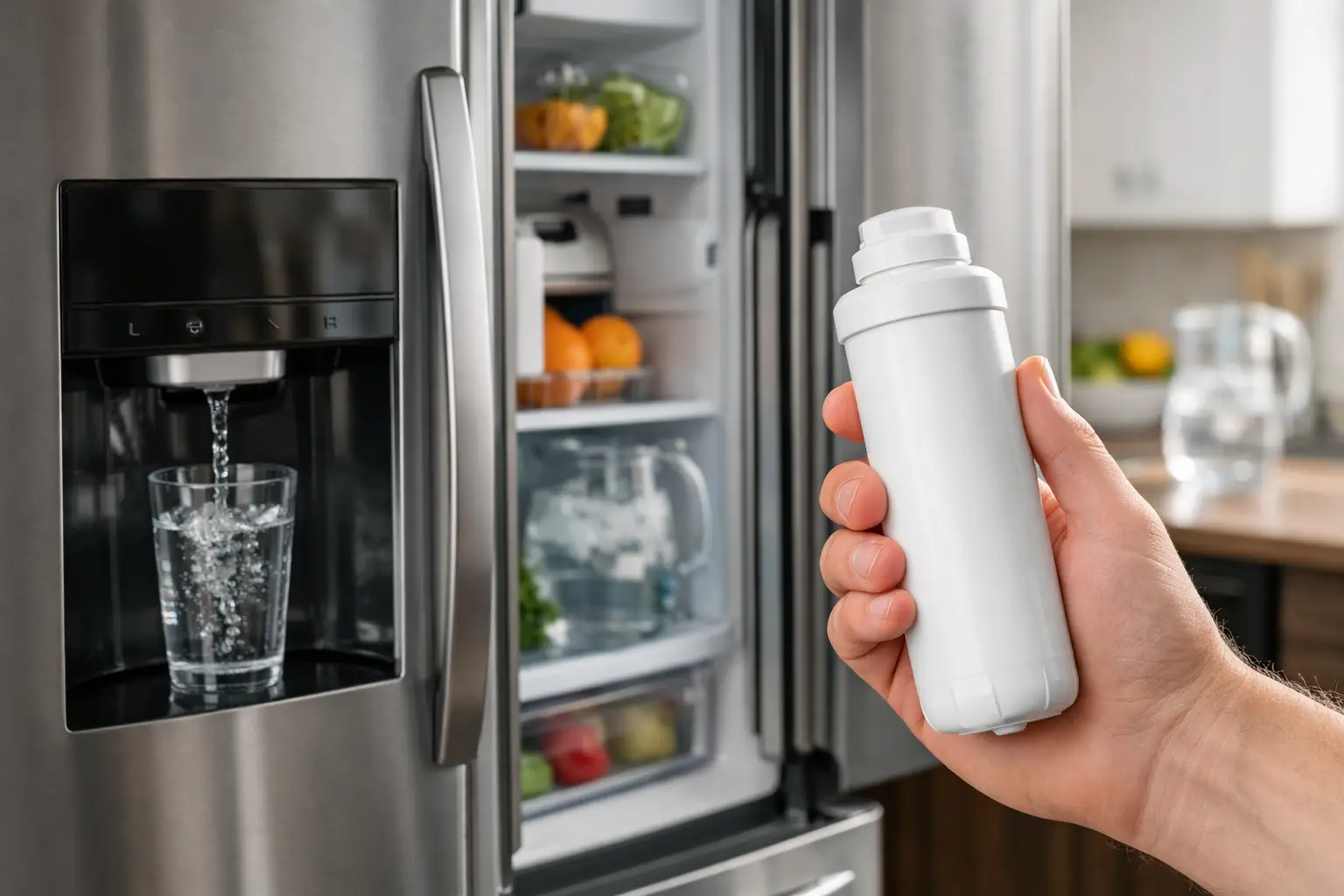
A glass of water that suddenly tastes odd, smells faintly of chlorine, or comes out in a slow trickle is more than an inconvenience. It can be the first sign that your refrigerator filter needs attention. This refrigerator water filter guide helps homeowners understand what the filter does, how often to change it, and when a water or ice problem may need professional refrigerator repair.
What a Refrigerator Water Filter Actually Does
Most refrigerator water filters are carbon-based cartridges installed inside the fresh-food compartment, in the grille near the floor, or behind a rear access panel. As water passes through the filter, the media reduces certain substances that can affect taste, odor, and appearance. Depending on the filter and its certification, that may include chlorine, sediment, lead, select pharmaceuticals, or other contaminants.
The key word is “certain.” A refrigerator filter is not a universal water-treatment system, and no two filters perform exactly the same way. Its performance depends on the filter model, the condition of your household water supply, and whether the cartridge is genuine or an appropriate certified replacement. Check the filter packaging for its specific claims rather than assuming it removes everything.
The filter also protects parts of the refrigerator. Sediment and mineral buildup can affect the water inlet valve, dispenser tubing, and ice maker. Replacing a filter on schedule is a small maintenance task that may help prevent larger water-delivery issues later.
When to Replace Your Refrigerator Water Filter
Many manufacturers recommend replacing the filter about every six months. That is a useful starting point, but it is not a hard rule for every household. A busy family that uses the dispenser all day, fills water bottles, and makes plenty of ice may need a replacement sooner. A part-time home with low water use may get closer to the recommended interval.
Your refrigerator may have a filter indicator light, but the light is usually based on elapsed time or estimated water use. It does not test water quality. Replace the filter when the indicator alerts you, at the manufacturer’s recommended interval, or sooner if you notice a clear change in performance.
Common signs include slow water dispensing, smaller or hollow ice cubes, cloudy ice, a change in water taste or odor, or water that sputters from the dispenser. A recently installed filter can also cause sputtering if air has not been flushed from the line. Run several glasses of water through the dispenser after installation, following the instructions for your model.
How to Find the Right Replacement Filter
The safest approach is to use the exact filter part number listed in your refrigerator’s owner’s manual, on the existing cartridge, or on a label inside the refrigerator. Model numbers can be easy to confuse, especially when several refrigerator versions look nearly identical from the outside.
Original manufacturer filters are designed for a specific refrigerator and are generally the simplest choice for fit and compatibility. Third-party replacements can cost less, but quality varies. If you choose one, confirm that it is made for your precise refrigerator model and carries credible independent certification for the claims it makes.
Avoid forcing a filter into place. A cartridge that appears close but does not lock securely can leak, bypass the filtration path, or damage the filter housing. Saving a few dollars on the wrong filter is not worth a kitchen-floor water leak.
Do You Need to Shut Off the Water?
Many modern refrigerator filters are designed for simple replacement without turning off the house water supply. When the old cartridge is removed, an internal shutoff usually stops the water flow. Still, keep a towel nearby because a small amount of water may drip from the filter or housing.
If your refrigerator has an older inline filter or an unusual installation setup, the procedure may be different. Follow the instructions for your specific appliance. If the housing is cracked, the filter will not release, or water continues pouring out after removal, stop and arrange service rather than trying to improvise a repair.
Basic Filter Replacement Steps
The exact process varies by brand, but most refrigerator filters are replaced by locating the old cartridge, turning it or pressing a release button, and inserting the new one until it seats firmly. Do not use tools unless your manufacturer specifically instructs you to do so.
After installing the new filter, flush the system. This clears trapped air and loose carbon particles from the new cartridge. Water may look gray or contain tiny black specks during the first few dispenses. That is commonly harmless carbon dust from the filter media, but it should clear after flushing.
Reset the filter indicator light afterward. On some refrigerators, holding a button for several seconds resets the reminder. If you forget this step, the filter light may stay on even though the cartridge is new.
Write the replacement date on the filter or set a reminder in your phone. This takes the guesswork out of routine maintenance and helps you avoid waiting until water flow becomes a problem.
When a New Filter Does Not Fix the Problem
A filter is often blamed for every dispenser or ice-maker issue, but it is not always the cause. If you replace the filter and water still barely flows, the problem may be a restricted water line, a failing inlet valve, a frozen reservoir, low household water pressure, or a dispenser assembly problem.
Start with the simple checks. Make sure the water supply valve behind or below the refrigerator is fully open and that the supply line is not bent or pinched. If the refrigerator was recently pushed back into place, the line can get compressed against the wall. Also check whether the refrigerator compartment is set too cold. A frozen water reservoir or water line can stop the dispenser even when the filter is new.
Ice maker symptoms can point in the same direction. Slow water flow may produce undersized cubes, few cubes, or no ice at all. On the other hand, an ice maker that leaks, overfills, or fails to cycle may have a separate mechanical or electrical issue.
Call for refrigerator repair when the filter housing leaks, the appliance makes unusual buzzing sounds during water dispensing, the dispenser remains slow after basic checks, or water is pooling under the refrigerator. A qualified appliance technician can test water pressure, inspect the inlet valve and lines, and identify whether the repair is worthwhile before parts are replaced unnecessarily.
Common Filter Mistakes That Create Bigger Headaches
The most frequent mistake is waiting too long. An overused filter can restrict flow and leave you assuming the refrigerator is failing. Another is buying by appearance rather than part number. Similar-looking cartridges do not always seal or filter the same way.
Homeowners also sometimes remove the filter and run the refrigerator without the required bypass plug. Some models will not dispense water without either a filter or the manufacturer-approved bypass in place. Others may dispense unfiltered water, which defeats the purpose of the system.
Finally, do not ignore a leak just because it starts after a filter change. Remove the cartridge, inspect the O-rings and housing for visible damage, and reinstall only if everything is clean and properly aligned. If the leak returns, shut off the refrigerator water supply if possible and get help quickly. Even a slow leak can damage flooring, cabinets, and walls.
A Filter Change Is Small Maintenance With Real Value
Replacing a refrigerator water filter is one of the easiest ways to keep drinking water and ice tasting fresh while supporting the appliance’s water system. But the right answer is not always “replace the filter again.” If clean, correctly installed filters do not restore normal flow or stop a leak, the refrigerator is telling you something else needs attention.
Keeping the filter part number and replacement date handy gives you a reliable first step when water or ice performance changes. When that first step does not solve the problem, fast help from an experienced appliance technician can bring peace of mind and get your refrigerator back up and running.