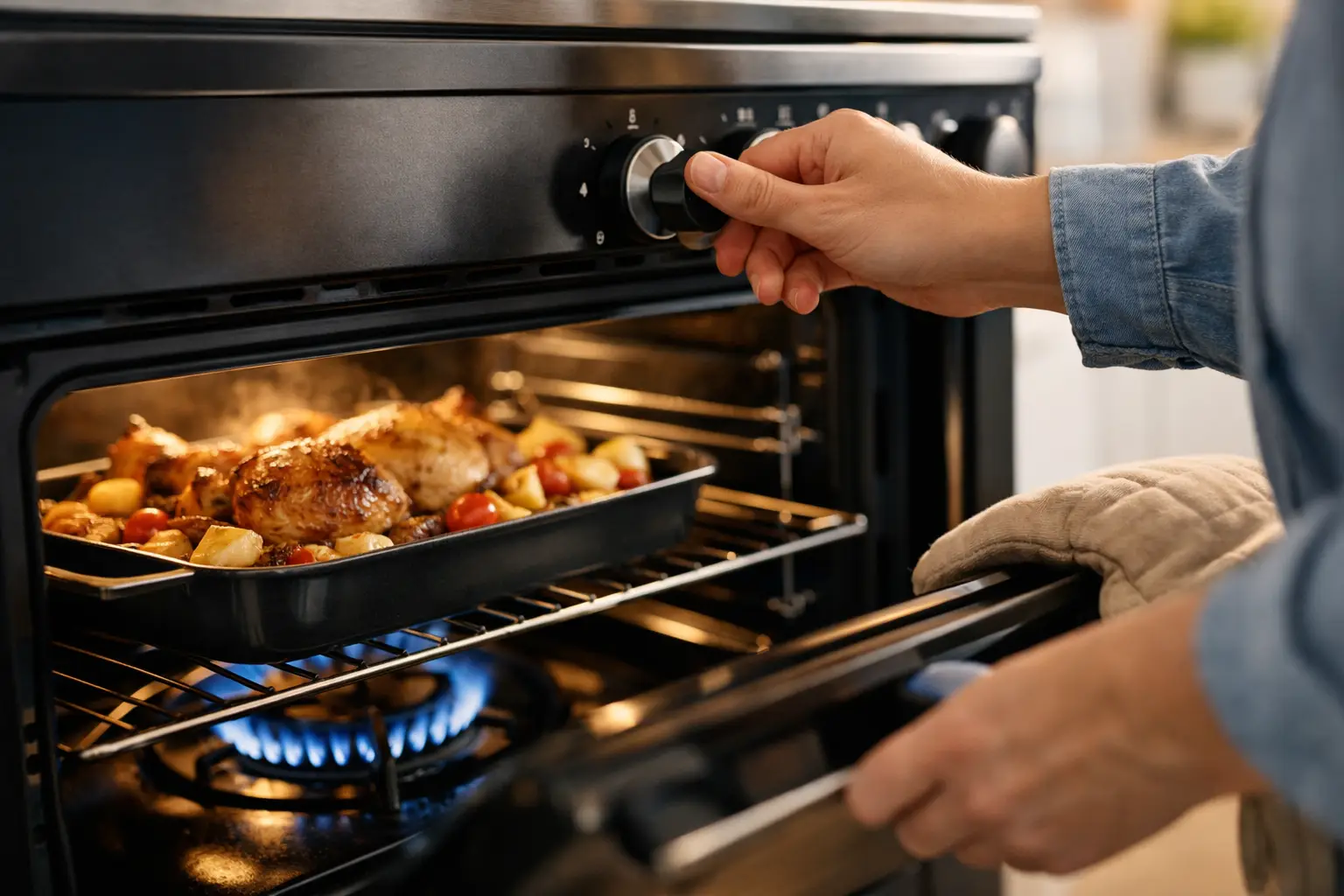
A gas oven should produce heat, not worry. If you smell gas, see unusual burner flames, hear hissing, or feel dizzy while cooking, stop using the appliance right away. This gas oven safety guide explains the everyday habits that reduce risk, the warning signs that need fast attention, and when a qualified appliance technician should take over.
Start With the Signs You Should Never Ignore
The strongest gas odor is the clearest reason to act. Natural gas has an odorant added so homeowners can recognize a leak. If you smell it near the oven or anywhere in the home, do not light a match, use a lighter, flip electrical switches, start an appliance, or make a phone call from inside the house. Leave the area with everyone in the home, then call your gas utility or emergency services from a safe location.
A brief whiff of gas when the oven ignites can happen with some models, but a smell that lingers, grows stronger, or returns after the oven is off is not normal. Treat it seriously. The source could be a burner that is not lighting properly, a damaged gas connection, a failed valve, or another issue that needs professional diagnosis.
Other warning signs include a yellow or orange flame where you normally see blue, soot around the burner area, repeated clicking without ignition, or a flame that goes out unexpectedly. A gas flame can have small yellow tips at times, especially if there is dust or humidity in the air. A consistently yellow, lazy, or uneven flame deserves service because it may indicate incomplete combustion or a burner problem.
Keep Carbon Monoxide Protection in Place
Gas ovens are designed to burn fuel safely when their components and ventilation are working correctly. Problems with combustion or airflow can create carbon monoxide, an odorless gas that can make people seriously ill. Never rely on smell alone to determine whether your kitchen air is safe.
Install carbon monoxide alarms according to the manufacturer’s directions and local code requirements. At a minimum, keep working alarms near sleeping areas and test them regularly. Replace batteries when needed and replace the unit at the end of its stated service life. A detector that chirps, shows an error, or has expired cannot provide the peace of mind your household needs.
Headaches, nausea, dizziness, confusion, weakness, chest discomfort, or flu-like symptoms that improve when you leave the house can be possible carbon monoxide exposure signs. If a carbon monoxide alarm sounds or anyone has symptoms, get everyone outside immediately and call emergency services. Do not go back inside until responders say it is safe.
Never use a gas oven to heat your home. An oven is not a space heater, even during a cold snap or a furnace outage. Running it for heat raises the risk of carbon monoxide exposure, burns, and fire while also putting extra strain on the appliance.
Use the Oven the Way It Was Designed
Safe cooking starts before you turn a knob. Keep dish towels, paper products, plastic containers, oven mitts, food packaging, and other combustible items away from the cooktop and oven vents. Storage drawers beneath an oven are convenient, but they are not the right place for anything that can melt, burn, or block ventilation.
Check that racks are level and cookware is stable before loading a hot oven. Heavy pans can tip if they are pulled too far forward, particularly when children or pets are nearby. Use dry oven mitts, keep loose sleeves away from open flames, and turn pot handles inward on the cooktop so they cannot be bumped.
Do not line the oven bottom, racks, or vents with aluminum foil unless your owner’s manual specifically allows it. Foil can trap heat, disrupt airflow, damage oven surfaces, and interfere with burner performance. The same goes for oversized pans or baking sheets that block vents. Your model’s instructions should always win when general online advice conflicts with them.
After cooking, confirm that all controls are fully in the off position. This sounds simple, but a partially turned knob can allow gas to flow without producing a flame. If your oven has electronic controls, make sure the display has ended the cooking cycle before leaving the kitchen.
Clean Carefully to Prevent Fires and Damage
Grease buildup, crumbs, and spilled sauces are more than a housekeeping issue. They can smoke, ignite, and create unpleasant odors that make it harder to notice a real gas problem. Let the appliance cool fully, then clean spills promptly with products approved for your oven’s finish.
Avoid spraying cleaner directly into burner openings, igniters, control knobs, or ventilation slots. Excess liquid can affect ignition components and may lead to clicking, delayed lighting, or poor burner performance. For a stubborn spill near a burner, it is usually safer to use a damp cloth and a small amount of cleaner on the cloth rather than saturating the area.
Self-cleaning cycles require extra care. These cycles operate at extremely high temperatures, so remove racks and accessories if your manual directs you to do so, ventilate the kitchen as recommended, and stay home while the cycle runs. If your oven produces heavy smoke, unusual odors, or error messages during self-cleaning, turn it off if you can do so safely and arrange a professional inspection before using it again.
When an Ignition Problem Becomes a Safety Issue
A gas oven that does not light promptly should not be repeatedly forced to ignite. If you turn on the oven and it clicks without lighting, turn the control off and wait several minutes before trying again. This gives unburned gas time to clear. Repeated attempts can allow gas to build up in the oven cavity.
Do not try to light a modern gas oven manually unless the manufacturer explicitly provides instructions for doing so. Older appliances and newer electronic-ignition models work differently. Using a match or lighter near an appliance with a possible ignition or gas-flow problem can cause a flash of flame and serious injury.
A delayed ignition can sound like a small whoosh or boom when the burner finally lights. While the sound may be minor, it is not a condition to ignore. Common causes include a dirty burner, weak igniter, restricted gas flow, or a misaligned component. A certified technician can identify the cause and help get the oven back up and running safely.
A Practical Gas Oven Safety Guide for Homes With Kids and Pets
Children and pets make normal kitchen routines less predictable. Use knob covers or control locks if your model supports them, and teach children that the oven is not a toy or a source of warmth. Keep them out of the kitchen during broiling, self-cleaning, and any time the oven door is open.
Be especially careful with the oven door. Some doors and handles become hot during long cooking cycles, and opening the door releases a blast of heat and steam. Stand to the side when opening it, use mitts for hot cookware, and keep pets from resting directly in front of the appliance.
If a control knob is loose, cracked, missing, or easy to turn accidentally, schedule repair rather than improvising a fix. Controls are part of the appliance’s safety system, not just a convenience feature.
Know When to Call for Professional Help
Some maintenance is appropriate for homeowners, such as cleaning visible spills, checking that vents are clear, and reviewing the owner’s manual. Gas connections, igniters, valves, regulators, internal wiring, and burner adjustments are different. These parts require the right tools, testing procedures, and experience.
Arrange service if you notice a persistent gas smell, ignition delays, weak or irregular flames, soot, repeated burner outages, damaged knobs, a door that will not close properly, or an oven that overheats or will not maintain temperature. Repairs can range from a straightforward igniter replacement to diagnosing a gas supply or control issue. The right answer depends on the model, its age, and the exact symptom.
For homeowners who need fast help, US Appliance Repairs can help connect you with an independent local appliance repair provider. Before service, write down the oven’s brand, model number, when the problem started, and whether you noticed odors, sounds, error codes, or flame changes. Those details can help the technician diagnose the problem efficiently.
A reliable gas oven should fade into the background of family life: dinner cooks evenly, controls respond as expected, and your kitchen feels safe. When something feels off, trust that instinct. Turning the appliance off and getting qualified help early is often the simplest way to protect your home and get back to cooking with confidence.