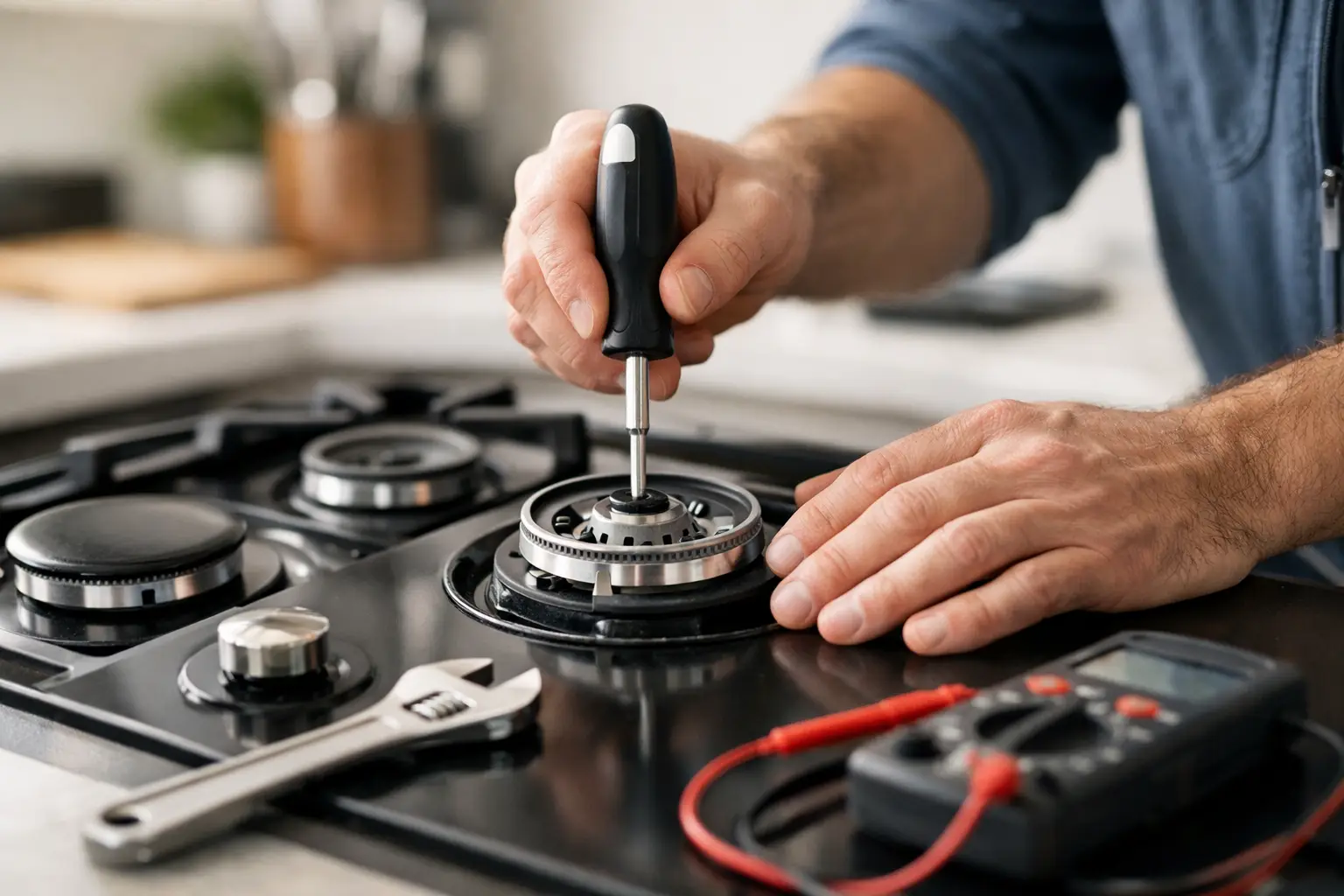
A burner that will not heat can turn a quick weeknight dinner into a frustrating problem. Whether one element stays cold, a gas burner keeps clicking, or an induction zone will not recognize your pan, cooktop burner repair starts with identifying the appliance type and ruling out a few safe, simple causes. The right next step can save time, prevent further damage, and get your kitchen back up and running.
Start With Safety Before Cooktop Burner Repair
Turn the cooktop controls off before inspecting anything. For an electric or induction cooktop, shut off power at the breaker if you need to remove a burner element, lift a cooktop surface, or look beyond the control knobs. A cooktop can retain electrical energy even when it appears to be off.
For a gas cooktop, stop immediately if you smell gas and do not try to relight the burner. Avoid switches, open flames, and electrical devices near the appliance. Leave the area and contact your gas utility or emergency services from a safe location. A gas odor is not a DIY troubleshooting situation.
Once the appliance is safe, notice exactly what the burner is doing. Does it fail completely, heat unevenly, take too long to boil water, spark constantly, trip the breaker, or work only at certain settings? Those details help a qualified technician narrow down the cause much faster.
Common Cooktop Burner Problems by Type
Electric coil burners
A removable coil burner that does not heat may have a loose connection, a worn receptacle, or a failed burner element. First, make sure the coil is fully seated in its socket. With power disconnected, look for blistering, cracks, corrosion, or a burned terminal on the coil and receptacle.
If another same-size burner works in that location, you may be able to test the coil by swapping it after the cooktop has cooled and power is off. If the problem follows the coil, the element is likely the issue. If the good coil also fails in that position, the receptacle, wiring, switch, or power supply may need professional service.
Smooth-top radiant cooktops
On a glass-top electric cooktop, the heating element sits beneath the glass. A burner that glows only partially, cycles strangely, or stays cold may have a damaged radiant element, faulty infinite switch, sensor issue, or wiring problem.
Do not use the cooktop if the glass is cracked. Heat, spills, and cleaning moisture can reach electrical components underneath, creating a shock and fire risk. Replacing a smooth-top surface or internal heating system is usually a job for an experienced appliance technician because the glass and wiring must be handled correctly.
Gas burners that will not light or heat evenly
Food residue and moisture are frequent reasons a gas burner clicks without lighting. After the surface is cool, remove the burner cap and clean dried spills from the ports with a soft brush or nonmetal tool. Make sure the cap sits level and in the correct position. Even a slightly misplaced cap can cause weak flames, delayed ignition, or uneven heating.
If the igniter keeps clicking after the flame lights, moisture around the igniter can be the cause. Let the area dry thoroughly. Persistent clicking, no spark, yellow or orange flames, or a burner that lights only with a match can point to a failed igniter, spark module, clogged orifice, valve problem, or gas-pressure issue. Those repairs call for trained service.
A healthy gas flame is mostly blue and even around the burner. Small occasional orange tips can occur from airborne particles, but a consistently yellow, lazy flame deserves attention.
Induction zones that do not respond
Induction cooktops heat the cookware, not the glass itself. If one zone does not work, first confirm that the pan is magnetic, centered on the cooking zone, and large enough for that zone. A simple magnet should stick firmly to the bottom of compatible cookware.
If compatible cookware is in place and the zone still shows an error, shuts off repeatedly, or will not power on, the problem may involve a sensor, cooling fan, control board, or induction module. These components operate with high voltage and should not be diagnosed from inside the unit by a homeowner.
Checks Homeowners Can Safely Make
Before scheduling service, check whether the cooktop has power. If every electric burner is dead, inspect the breaker panel. Reset a tripped breaker once. If it trips again, leave it off and arrange service rather than repeatedly resetting it.
Next, look at the control lock feature. Many modern cooktops have a lock mode that can make the controls seem unresponsive. The owner’s manual usually explains the button sequence to disable it. Also check for error codes, since the display message can help identify whether the issue is related to overheating, cookware detection, communication, or power.
For gas models, confirm that other gas appliances are working and that the burner cap is clean and correctly installed. Never insert sharp objects deeply into burner openings or alter gas fittings. What looks like a simple blockage can become a damaged burner assembly or create an unsafe gas-flow problem.
What Does Cooktop Burner Repair Cost?
The cost depends on the cooktop type, brand, part availability, local labor rates, and whether the issue is limited to one burner or involves a main control component. A basic electric coil replacement or burner receptacle repair is often among the more affordable fixes. Replacing a radiant element, gas ignition system, electronic control board, or induction module can cost substantially more.
As a general planning range, homeowners may see service and repair totals from about $150 to $500 for common burner-related issues. More involved electronic repairs, premium-brand parts, damaged glass, or multiple failed components can exceed that range. A service call and diagnostic charge may be applied separately or credited toward the completed repair, depending on the local provider.
A clear estimate should identify the diagnosed problem, parts needed, labor, and any additional concerns found during service. That transparency matters when deciding whether to repair now or consider replacement.
Repair or Replace? The Practical Decision
Repair is often the sensible choice when the cooktop is relatively new, the problem is isolated to a burner, igniter, switch, or element, and the rest of the appliance performs well. It is also usually preferable when the cooktop is part of a matching built-in kitchen package, since replacing it may involve countertop fit, electrical changes, or gas-line work.
Replacement becomes more worth considering when the glass is badly damaged, multiple burners have failed, parts are discontinued, or the repair estimate approaches a significant portion of the cost of a comparable new unit. Age matters, but condition matters more. A well-maintained cooktop with one failed component can still have years of reliable use left.
When to Call a Qualified Technician
Call for help promptly if a breaker repeatedly trips, the cooktop sparks, you see melted wiring, the glass is cracked, gas flames are yellow, ignition fails after cleaning, or an error code returns. These symptoms can involve electrical supply, gas flow, internal controls, or safety devices that require proper testing tools.
For homeowners who need fast help without spending hours screening providers, US Appliance Repairs can help connect them with an independent local appliance repair professional. Ask the technician about the likely cause, the full repair estimate, part availability, and whether the repair is expected to restore normal operation.
A cooktop should make meal preparation easier, not force you to work around one unreliable burner. Addressing the problem early, before heat damage or repeated ignition failures spread, gives you the best chance of a straightforward repair and a kitchen that feels dependable again.