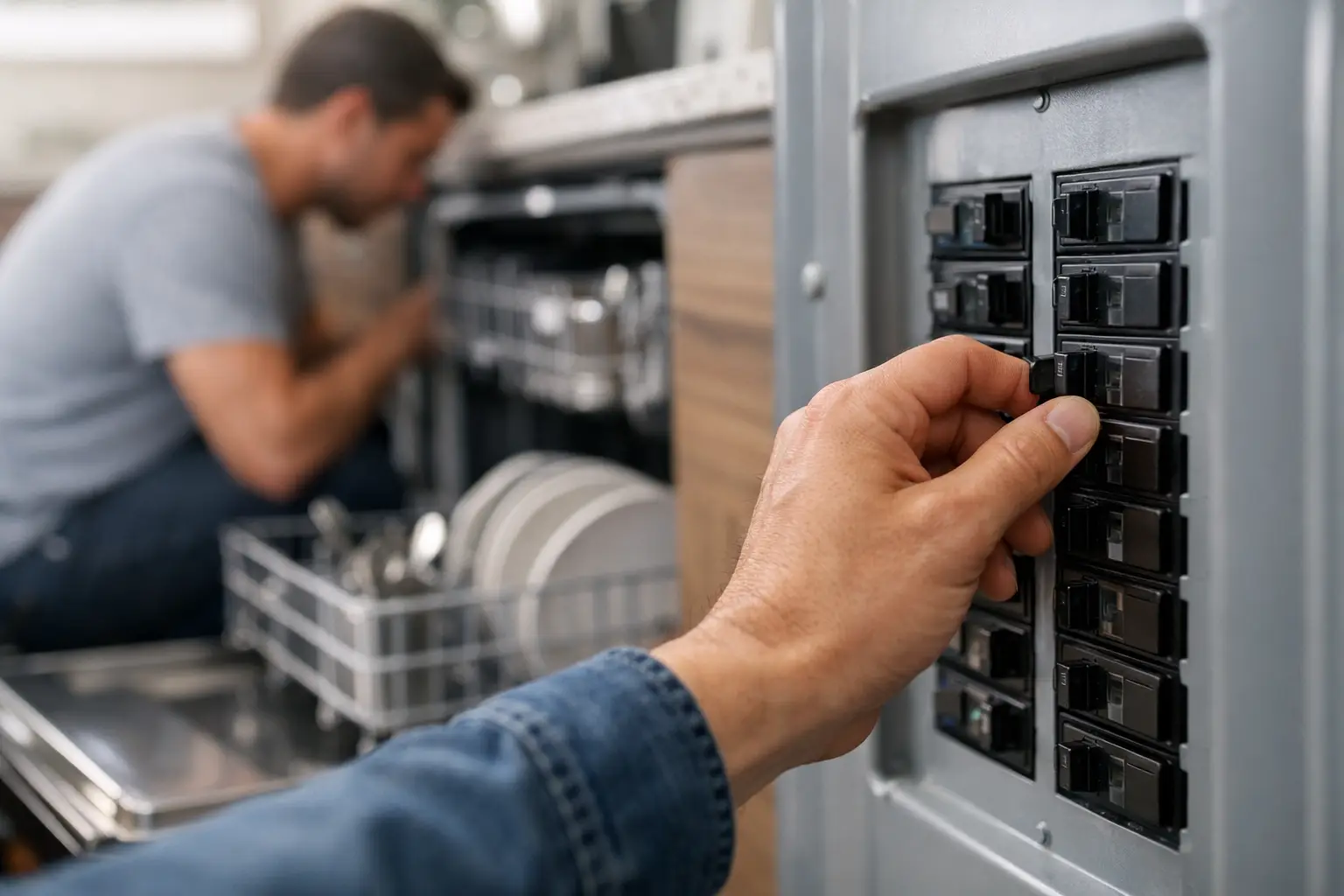
A dishwasher that stops mid-cycle can turn a normal evening into a kitchen cleanup problem fast. If you need to reset a tripped dishwasher breaker, start with safety, not speed. A breaker can trip because of a brief power issue, but it can also be warning you about a faulty dishwasher part, damaged wiring, or moisture where it does not belong.
Resetting the breaker once is a reasonable homeowner step. Resetting it repeatedly is not. Knowing the difference can protect your home, your appliance, and your peace of mind.
Not Sure You Need a Repair?
Before you pay for a service call, try FixDecision AI. Describe what's wrong with your appliance and get a safety-first assessment to help you decide whether to DIY or call a professional.
How to Reset a Tripped Dishwasher Breaker
Before touching the electrical panel, make sure the dishwasher is off. If it is built in, open the door and press the power or cancel button. Do not stand on a wet floor, and do not handle the panel if your hands are wet.
Find your home’s electrical panel and look for the breaker labeled kitchen, dishwasher, or disposal. Labels are not always accurate, especially in older homes, so use caution. A tripped breaker may sit in the middle position rather than fully in the ON or OFF position.
To reset it, move the breaker firmly all the way to OFF first. Then move it back to ON. You should feel it click into place. Return to the kitchen and see whether the dishwasher has power.
If your dishwasher is plugged into an outlet under the sink, check the nearby GFCI outlet as well. These outlets have TEST and RESET buttons and may protect more than one kitchen appliance. Press RESET once if it has tripped. A GFCI can trip even when the breaker remains on.
Do not remove the dishwasher kick plate, open electrical junction boxes, or attempt to replace a breaker yourself unless you are qualified to do that work. The goal is to safely restore power, not to chase an electrical fault inside the appliance.
What to Do After the Breaker Resets
Once power is restored, give the dishwasher a moment to respond. Many models will need you to select a new cycle. Start with a short rinse or quick cycle while you stay nearby and listen for unusual sounds.
Pay attention to when the breaker trips, if it does. Does it trip immediately when power returns? When the dishwasher begins filling? When it starts washing, draining, or heating water? That timing gives a repair technician useful clues about the likely failure.
If the breaker stays on and the dishwasher completes a cycle normally, the trip may have resulted from a one-time power surge or a temporary GFCI interruption. Keep an eye on it over the next few uses. One successful cycle is encouraging, but it does not always rule out an intermittent electrical issue.
Why a Dishwasher Breaker Trips
A breaker shuts off power when it detects an overload, short circuit, or other condition that could overheat wiring. In some homes, the dishwasher shares a circuit with the garbage disposal, kitchen outlets, or another appliance. Running several high-demand appliances at once can overload that circuit.
However, a dishwasher that repeatedly trips a dedicated breaker often has a problem inside the unit. A worn heating element can leak electrical current to the dishwasher tub. A failing circulation pump or drain pump may draw too much current as its motor struggles. Damaged wiring, a loose terminal, or a failed control board can also create a short or ground fault.
Water makes the situation more urgent. A slow leak beneath the dishwasher can reach wires, a terminal box, or an outlet. You may not see a large puddle. Check for dampness on the floor, swelling of nearby cabinet material, a musty odor, or water marks under the sink. If you notice moisture and a tripped breaker, leave the dishwasher off until the source is identified.
Older dishwashers can develop electrical problems as insulation, door seals, motors, and heating components wear down. Newer models are not immune, either. A recent installation, kitchen remodel, or replacement disposal can introduce wiring or circuit issues that show up once the dishwasher begins operating.
When Not to Reset the Breaker Again
One reset is usually enough to test whether the problem was temporary. Stop and arrange professional help if the breaker trips again, especially if it trips as soon as you turn it on. Repeated resets can allow a damaged component or wiring issue to continue overheating.
Turn off the dishwasher circuit and avoid using the appliance if you smell burning plastic, see smoke, hear buzzing from the panel or dishwasher, notice scorch marks, or receive an electrical shock or tingling sensation from the appliance. These are not troubleshooting situations. They require prompt attention from a qualified electrician or appliance repair professional, depending on the cause.
You should also stop using the dishwasher if it trips only during the heated portion of a cycle. That pattern can point to a heating element or related wiring problem. If it trips when the motor starts, the pump assembly or motor circuit may be involved. The exact repair depends on the make, model, age, and condition of the appliance.
Simple Checks That Can Prevent Another Trip
After resetting power, you can perform a few safe checks without disassembling the dishwasher. Make sure the door closes fully and no utensil, dish, or rack is interfering with the latch. Look beneath the sink for a loose dishwasher plug, a wet outlet area, or a power cord that appears pinched or damaged.
If the dishwasher shares a circuit with a garbage disposal, avoid running both appliances at the same time until the issue is resolved. Unplug other items from nearby kitchen outlets if you suspect an overloaded circuit. Never use an extension cord for a built-in dishwasher.
Also inspect the dishwasher filter and remove food debris if it is accessible from inside the tub. A clogged filter does not usually trip a breaker by itself, but it can make the pump work harder and contribute to operational problems. Follow your owner’s manual for the correct filter-cleaning steps.
Do not try to solve a repeated breaker trip by installing a larger breaker. Breaker size must match the wiring and appliance circuit requirements. Using the wrong breaker can create a serious fire risk and may violate local electrical code.
Repair or Replace: What Makes Sense?
A tripped breaker does not automatically mean you need a new dishwasher. A repair may be worthwhile when the unit is relatively new, in good overall condition, and the issue is limited to a replaceable part such as a pump, heating element, latch, or wiring connection.
Replacement can make more sense if an older dishwasher has multiple failures, visible rust or tub damage, frequent leaks, and a major electrical problem. The cost of the repair matters, but so do the appliance’s age, expected lifespan, and whether other parts are beginning to fail. A technician can test the dishwasher safely and explain whether a targeted repair is likely to provide reliable service.
For homeowners who need fast help, US Appliance Repairs can connect you with independent local appliance repair providers. A qualified technician can diagnose whether the tripped breaker is caused by the dishwasher, the outlet, the circuit, or a separate electrical issue, helping you avoid paying for the wrong repair.
Give the Breaker a Reason to Stay On
A dishwasher should run quietly in the background, not leave you standing at the electrical panel wondering what happened. Reset the breaker once, watch for repeat trips or warning signs, and stop using the appliance if the problem returns. Getting the cause checked early is often the safest way to get your kitchen back up and running without a larger disruption later.