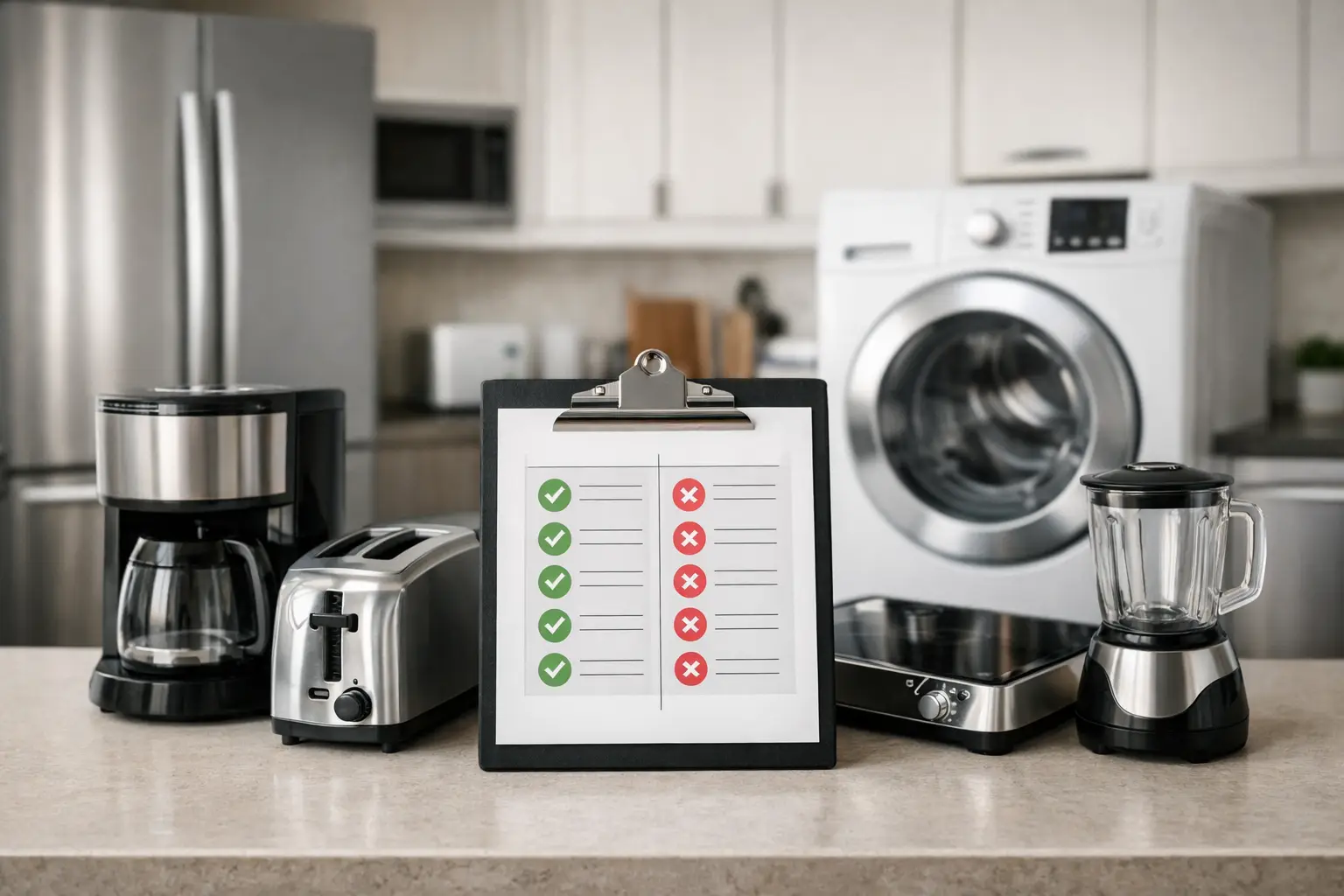
A refrigerator that stops cooling the week after its warranty expires can turn a routine Tuesday into a stressful decision: pay for a repair, replace the appliance, or hope a protection plan will help. A careful appliance warranty comparison can prevent that uncertainty before a breakdown happens. The best option is not always the longest plan or the lowest upfront price. It is the coverage that fits the appliance, its age, and your household’s repair risk.
For most homeowners, the question is simple: if something fails, will the plan pay enough to make service worthwhile? The answer depends on the fine print, including what parts are covered, whether labor is included, how claims are handled, and what exclusions can leave you paying out of pocket.
Not Sure You Need a Repair?
Before you pay for a service call, try FixDecision AI. Describe what's wrong with your appliance and get a safety-first assessment to help you decide whether to DIY or call a professional.
The Three Types of Appliance Coverage
Most warranty decisions involve a manufacturer warranty, an extended warranty or service contract, or a home warranty plan. They can sound similar, but they address different situations.
A manufacturer warranty comes with a new appliance. It commonly covers defects in materials or workmanship for one year, although certain components may have longer coverage. For example, a refrigerator compressor or sealed system may carry limited coverage beyond the first year. That extended component coverage may not include labor, diagnostic fees, transportation, or every part connected to the failed system. Always check the specific terms instead of assuming a 10-year component warranty means 10 years of free repairs.
An extended warranty, sometimes called a protection plan, is purchased separately from the appliance seller or a third-party provider. It usually begins after the original manufacturer warranty ends. These plans may cover mechanical and electrical failures from normal use, and some include labor and replacement if a repair is not practical. Coverage varies widely, especially for limits, service-call fees, maintenance requirements, and whether the provider chooses the technician.
A home warranty covers several household systems and appliances under one annual plan. It can be appealing if you own an older home with several aging appliances. However, home warranties generally charge a service fee for each claim and may cap what they will pay. They also commonly exclude pre-existing conditions, improper installation, cosmetic damage, and failures caused by poor maintenance.
Appliance Warranty Comparison: What to Check First
Price matters, but a plan’s real value comes down to the repair costs it actually absorbs. A $250 protection plan is not automatically a bargain if it has a $100 service fee, a low payout cap, and exclusions that apply to common failures.
Start by identifying what the plan covers. Look for language covering parts and labor for electrical, mechanical, and functional failures under normal household use. Then look just as closely at what is excluded. Common exclusions include rust, corrosion, accidental damage, misuse, pest damage, clogged drain lines, poor ventilation, power surges, and parts considered consumable.
For an appliance such as a dishwasher, a covered control board could be valuable. A clogged drain caused by food debris may not be. For a dryer, a failed heating element may qualify, while a blocked exterior vent or improper venting may not. Those distinctions matter because maintenance-related problems are among the most common reasons claims are denied.
Also compare the service process. Some plans let you select a qualified local repair provider and seek reimbursement. Others require you to use their assigned technician network and obtain authorization before work begins. If your refrigerator is warm and food is at risk, waiting several days for claim approval can be frustrating. Fast help has value, particularly for appliances that keep your home running.
Questions worth asking before you buy
Before signing up, get clear answers to these questions: What is the service-call fee? Is labor fully covered? Is there a maximum claim amount or annual limit? Does the plan replace an appliance if it cannot be repaired? Can you choose the repair company? And is regular maintenance required to keep coverage valid?
If the representative cannot explain the terms clearly, read the contract before paying. A warranty should provide peace of mind, not create another argument when an appliance breaks down.
When an Extended Warranty Can Make Sense
Extended coverage is often most useful for appliances with expensive electronic components or costly sealed systems. Modern refrigerators, wall ovens, premium dishwashers, and front-load washers can have control boards, sensors, motors, displays, and specialty parts that raise repair bills quickly.
It may also make sense when replacing the appliance would put pressure on your household budget. A predictable plan cost can be easier to manage than an unexpected repair charge, even if the plan does not save money in every scenario. Homeowners who prefer certainty may find that trade-off worthwhile.
The case is weaker for a basic, lower-cost appliance with a strong reliability history. If a simple microwave costs $150 to replace and the protection plan costs $80 plus a service fee, paying for coverage may not be practical. The same is true when a plan lasts only a short time but has narrow coverage.
Age is another factor. Buying a multi-year plan for a new appliance may be reasonable, but purchasing coverage for an appliance that already has years of wear can be more complicated. Many plans will not cover a known issue, and some home warranty claims can be denied if the provider determines the failure was pre-existing.
Home Warranties Versus Savings for Repairs
A home warranty can be a useful budgeting tool, but it should not replace an emergency repair fund. One plan may cover a refrigerator, dishwasher, washer, dryer, oven, and built-in microwave, yet each claim can carry a service fee. If two appliances fail in the same month, those fees add up.
There is also a difference between a coverage limit and the full cost of restoration. Suppose a refrigerator repair requires a compressor, refrigerant work, and labor. A plan may pay up to its stated limit, but you could be responsible for costs above that amount or for excluded work. If replacement is offered, the plan may provide a cash allowance rather than a like-for-like appliance.
For homeowners with multiple older appliances, a home warranty may be worth considering if the contract has reasonable limits and a reliable claims process. For someone with newer appliances still under manufacturer coverage, setting aside the annual premium in a repair fund can be the better move.
Do Not Overlook Manufacturer Coverage
When an appliance fails, many homeowners assume the warranty is over without checking. Review the owner’s manual, purchase receipt, and manufacturer warranty document first. You may find that a major component has additional coverage, even if the standard one-year term has ended.
Keep records of installation, maintenance, and prior repairs. A refrigerator’s coils, a dishwasher filter, washer hoses, dryer venting, and range connections all benefit from routine attention. Documentation will not guarantee a claim, but it can help if a warranty provider asks whether the appliance was properly maintained.
Be cautious with repairs that could affect coverage. Some manufacturers require authorized service during the original warranty period. If an appliance is still covered, contact the manufacturer or review its procedure before arranging repair work.
Compare the Cost of Coverage With the Cost of Failure
The most practical appliance warranty comparison uses real numbers. Add the plan price, expected service fees, and deductible or claim charges over the coverage term. Then compare that total with the appliance’s likely repair costs and replacement value.
A repair often makes financial sense when the appliance is relatively new, the failure is limited to a serviceable part, and the repair cost is well below replacement. But an older appliance with repeated problems, poor efficiency, or a major sealed-system failure may be a replacement candidate even if some coverage is available.
If you are facing a breakdown now, ask for a clear diagnosis and written estimate before deciding. A qualified appliance technician can help identify whether the problem is a straightforward repair, a maintenance issue, or a sign that the appliance is nearing the end of its useful life. US Appliance Repairs can help homeowners connect with independent local repair providers when fast, dependable service is needed.
The Coverage You Can Actually Use Matters Most
The right warranty is one you understand before the appliance fails. Read the exclusions, keep your maintenance records, and know the claim process while there is no emergency in the kitchen or laundry room. When a refrigerator quits, a dryer will not heat, or a dishwasher will not drain, a clear plan and a reliable repair option can make the next step far less stressful.