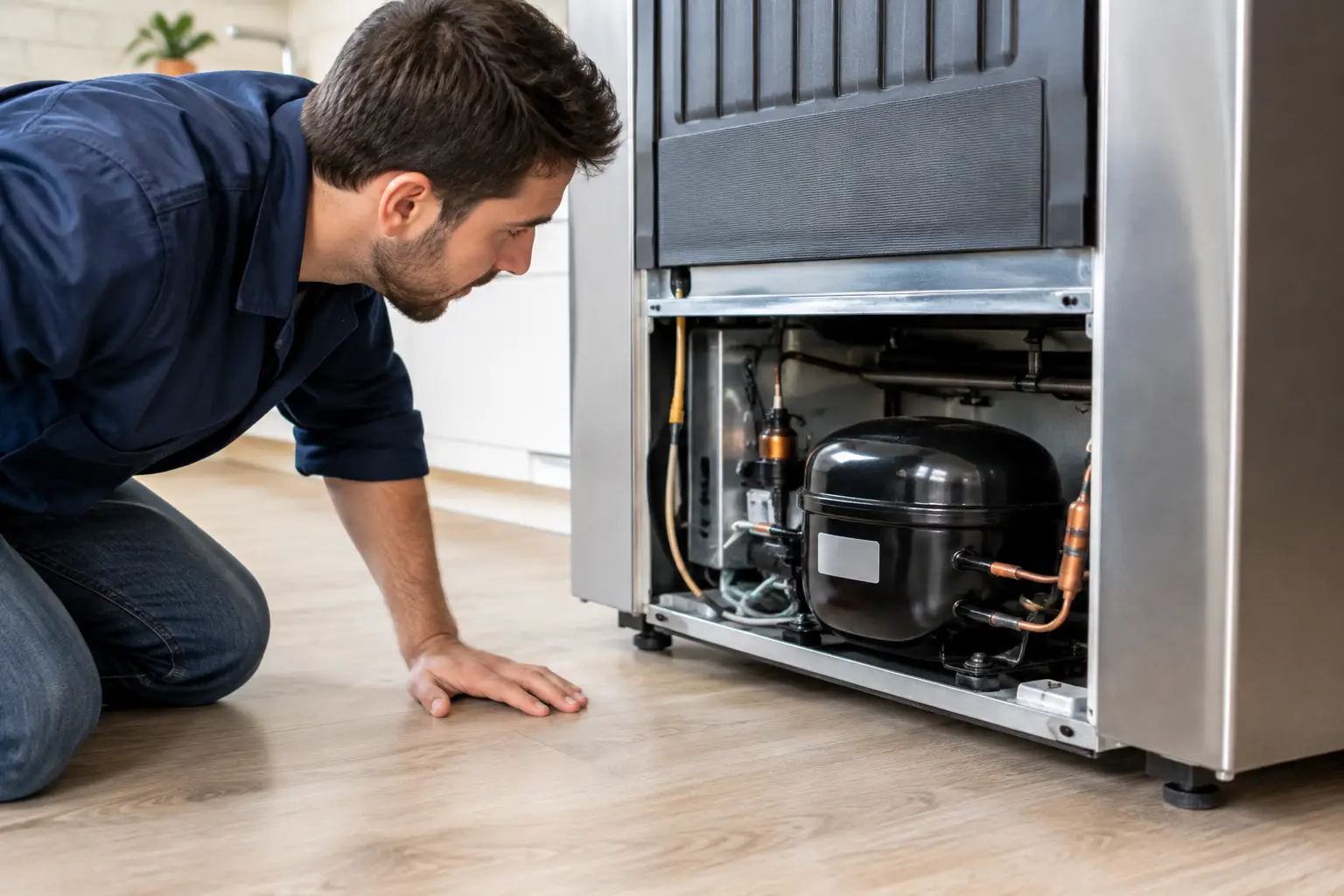
A refrigerator that suddenly feels warm can turn into a costly problem fast. Spoiled groceries, melting freezer food, and constant running are among the top signs a compressor is failing, but they can also point to simpler issues such as dirty condenser coils or a bad door seal. Knowing the difference can help you protect your food, avoid unnecessary stress, and get the right repair help before the appliance stops cooling altogether.
The compressor is often described as the heart of a refrigerator. It pressurizes refrigerant and helps move heat out of the cabinet so fresh food and freezer compartments can stay cold. When it starts to fail, the refrigerator may still run for a while, but it usually cannot maintain the temperatures your food needs.
Not Sure You Need a Repair?
Before you pay for a service call, try FixDecision AI. Describe what's wrong with your appliance and get a safety-first assessment to help you decide whether to DIY or call a professional.
Top Signs a Refrigerator Compressor Is Failing
A failing compressor does not always quit without warning. Many homeowners notice smaller changes first, especially when the refrigerator is working harder than usual or struggling to keep the freezer cold.
The refrigerator is warm, but the lights still work
Interior lights, a working display, and fans that seem to run can make a warm refrigerator confusing. Those components use electricity separately from the cooling system. If the refrigerator has power but the fresh-food section is above 40 degrees Fahrenheit or the freezer is above 0 degrees, the compressor or another cooling-system component may be at fault.
Check the temperature with an appliance thermometer if possible. Refrigerator controls are not always accurate, particularly when the unit is failing. Move perishable food to a cooler with ice or another refrigerator if the temperature has been unsafe for more than two hours.
You hear clicking, humming, or repeated restart attempts
Most refrigerators make a low hum when the compressor starts. What is not normal is a repeated click followed by a brief hum, then silence, over and over again. This pattern can mean the compressor is trying to start but cannot stay running.
The cause may be a failed start relay, overload protector, or capacitor rather than the compressor itself. That distinction matters because a start-component repair is often much less expensive than replacing a compressor. A qualified appliance technician can test these parts and confirm whether the compressor is drawing excessive current or has an internal failure.
The compressor runs constantly
A refrigerator may run longer during hot weather, after a large grocery trip, or when the doors have been opened frequently. But it should still cycle off periodically once it reaches temperature. A compressor that seems to run nearly all day while the refrigerator remains warm is a serious warning sign.
Constant operation can indicate a weak compressor that can no longer circulate refrigerant effectively. It can also result from dirty condenser coils, a failed evaporator fan, a defrost problem, or a refrigerant leak. This is why diagnosing by sound alone can lead to the wrong repair.
The back or bottom of the refrigerator is unusually hot
It is normal for the area around the compressor and condenser to feel warm. It should not be so hot that you cannot comfortably keep your hand near it. Excessive heat, particularly when paired with poor cooling or clicking sounds, can mean the compressor is overheating or working under heavy strain.
Before assuming the worst, unplug the refrigerator and inspect the condenser area for heavy dust, pet hair, or blocked airflow. On many models, the coils are underneath or behind the unit. Cleaning accessible coils carefully can improve performance. Never force tools into tight areas or remove sealed-system components yourself.
Food temperature swings from too warm to too cold
A refrigerator with a weakening compressor may cool inconsistently. Milk may spoil early one week, while produce freezes near the back wall the next. The freezer may develop soft ice cream, then temporarily recover. These swings can happen because the compressor is not maintaining stable refrigerant pressure.
Other parts can cause uneven temperatures, including a faulty thermistor, control board, air damper, or fan motor. Still, temperature inconsistency deserves prompt attention because food safety and energy use can both suffer.
The compressor is noisy or suddenly silent
A compressor usually makes a steady, modest sound. Loud buzzing, rattling, knocking, or a harsh metallic noise can signal internal wear. A compressor that is completely silent while the refrigerator is warm can also be a concern, especially if fans and lights still operate.
Some noises are harmless vibrations from a loose drain pan, an uneven refrigerator, or tubing touching the cabinet. Gently make sure the refrigerator is level and has clearance from the wall. If the unusual sound continues with cooling problems, schedule a diagnosis rather than waiting for a complete shutdown.
Problems That Can Look Like Compressor Failure
Compressor replacement is one of the more involved refrigerator repairs, so it is worth ruling out common look-alikes first. Homeowners can safely check whether the doors close firmly, the temperature settings were changed accidentally, and the vents inside the refrigerator are blocked by food containers. A packed refrigerator can restrict airflow, while a damaged gasket lets warm room air leak inside.
Dirty condenser coils are another common culprit. If your model has accessible coils, vacuuming dust from the area after unplugging the refrigerator may help it release heat more effectively. Give the appliance room to breathe and avoid pushing it tightly against the wall.
If the freezer is cold but the refrigerator compartment is warm, the compressor may actually be working. A blocked air passage, failed evaporator fan, or defrost issue is often more likely. On the other hand, when both sections are warm and the unit is clicking, overheating, or running nonstop, compressor-related trouble moves higher on the list.
When to Call for Refrigerator Repair
Call for service quickly if your refrigerator cannot hold safe temperatures, repeatedly trips a breaker, smells like burning electrical components, or makes loud clicking and buzzing sounds. Unplug the appliance if you notice a burning smell, smoke, damaged wiring, or an unusually hot electrical cord. Do not continue resetting a breaker or repeatedly plugging the refrigerator back in to see if it will start.
A certified technician can test the start relay, compressor windings, cooling fans, controls, and sealed system. Sealed-system work requires specialized equipment and handling procedures. Refrigerant should never be added as a guess or treated as a routine do-it-yourself fix, since a low refrigerant charge generally means there is a leak that must be found and repaired.
Fast help matters when food is at risk. A local appliance repair professional can identify whether the compressor has failed or whether a less expensive component is keeping the refrigerator from cooling. US Appliance Repairs can help homeowners connect with independent local repair providers when a refrigerator problem needs prompt attention.
Is It Worth Replacing a Failed Compressor?
The answer depends on the refrigerator’s age, type, condition, and repair estimate. Compressor replacement can be worthwhile on a newer, high-end refrigerator, especially if the appliance is otherwise in good condition and the compressor has a manufacturer parts warranty. Some brands offer extended coverage on sealed-system components, though labor may not be fully covered.
For an older basic refrigerator, a major compressor or sealed-system repair may approach the cost of replacement. Consider the unit’s history as well. If it has already needed several costly repairs, has rust or damaged shelving, or uses an older design that is less energy-efficient, replacement may offer better long-term value.
Ask for a clear diagnosis and estimate before deciding. A dependable technician should explain whether the issue is truly the compressor, what related parts are needed, and whether repair makes practical sense for your specific model. That clarity can give you peace of mind and help get your kitchen back up and running with fewer surprises.
If your refrigerator is warming up, clicking repeatedly, or running without cooling, do not wait for a total failure. Protect your food, keep the doors closed as much as possible, and arrange a professional diagnosis while there may still be time to prevent a bigger household disruption.