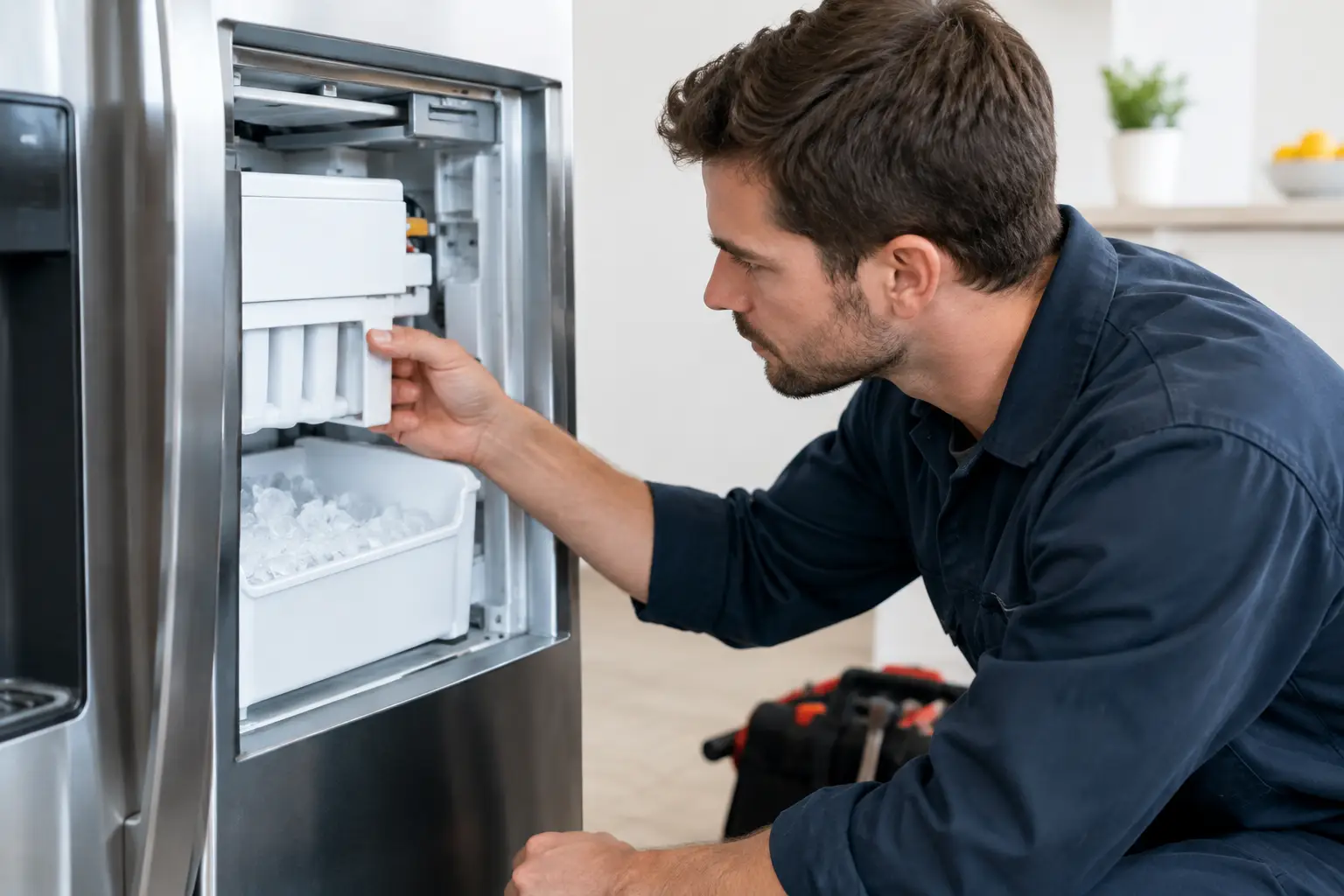
A refrigerator that suddenly stops making ice can turn an ordinary week into a hassle fast. Whether you are filling water bottles, hosting family, or simply used to a full ice bin, ice maker repair starts with finding out whether the problem is a simple setting, a water-supply issue, or a failed component that needs professional attention.
Most refrigerator ice makers are dependable, but they work through a chain of small parts: a water line, inlet valve, filter, freezer controls, sensors, mold heater, and ejector mechanism. One weak link can leave you with tiny cubes, no cubes, or water on the kitchen floor. The good news is that a few safe checks may narrow down the cause before you schedule service.
Not Sure You Need a Repair?
Before you pay for a service call, try FixDecision AI. Describe what's wrong with your appliance and get a safety-first assessment to help you decide whether to DIY or call a professional.
Start With the Symptoms
The details matter. An ice maker that produces no ice at all has a different likely cause than one that makes hollow cubes or spills water into the bin. Before moving anything or removing panels, look for the most obvious clues.
If the ice maker is silent and the bin stays empty, check whether its on-off switch or wire shutoff arm has been turned off. Some refrigerator models stop producing ice when the arm is raised or when the bin is not seated correctly. A power interruption can also reset certain electronic controls.
If ice production is slow, the freezer may not be cold enough. Most ice makers need the freezer to stay around 0°F to work consistently. A freezer that feels cold but runs closer to 10°F may preserve food for a while, yet still struggle to freeze water into a proper batch of cubes. Overpacked shelves, blocked air vents, dirty condenser coils, worn door seals, or a larger refrigerator cooling problem can all contribute.
Hollow, small, cloudy, or misshapen cubes often point to restricted water flow. A clogged water filter, kinked supply line, partially closed shutoff valve, or failing water inlet valve can prevent the mold from filling fully. If the refrigerator’s water dispenser is also weak or slow, that adds to the case for a water-flow issue.
Safe Ice Maker Repair Checks at Home
Homeowners can handle a few basic checks without taking apart electrical components or water connections. Start by confirming that the refrigerator is plugged in, the freezer door closes firmly, and the ice maker is switched on. Then make sure the ice bin is fully in place and no frozen clumps are blocking the ejector arm or mold.
Check the refrigerator water supply behind or beneath the unit only if you can do so safely. The supply valve should be open, and the visible portion of the line should not be sharply bent, crushed, or leaking. Do not force a rigid plastic or copper line into position. A damaged line can turn a minor ice problem into a water-damage repair.
Next, consider the water filter. A filter that is overdue for replacement can reduce flow enough to affect both the dispenser and ice maker. Follow your refrigerator manufacturer’s instructions for the correct replacement filter and for flushing the system afterward. Avoid using an incompatible filter just because it fits physically. Poor fit or weak seals can cause leaks.
A reset may help on some models, particularly after a filter change or power outage. The reset button location and procedure vary widely by brand and model. Consult the owner’s manual rather than pressing unfamiliar buttons or forcing the ice maker through a harvest cycle. If you cannot identify the correct procedure, it is better to stop there.
Do not chip at ice with a knife, puncture a frozen water line, or use a hair dryer near plastic parts and electrical wiring. Those shortcuts can damage the refrigerator or create a safety risk. If ice has built up repeatedly in the fill tube or around the ice maker, the underlying cause may be a leaking inlet valve, temperature issue, or failed control.
Common Causes a Technician Can Diagnose
When the basic checks do not restore production, a qualified appliance technician can test the components that are difficult to assess from the outside. The water inlet valve is a frequent culprit. This valve opens briefly to fill the ice mold, and it can fail electrically, become clogged with sediment, or stop sealing completely. A valve that does not close properly may lead to overfilling, frozen blocks of ice, or leaks.
The ice maker assembly itself can also wear out. Depending on the refrigerator, the issue may involve a broken ejector gear, failed motor, damaged mold heater, faulty thermostat, or electronic control board. On newer models, sensors and communication boards add convenience but can make diagnosis more specialized.
Temperature-related problems deserve attention as well. A failing evaporator fan, defrost system problem, airflow restriction, or weak compressor can keep the freezer from reaching the temperature the ice maker requires. In that situation, replacing only the ice maker may not fix the real problem. An experienced technician should check overall freezer performance before recommending parts.
Water leaking from the ice maker area should be treated with more urgency. Shut off the refrigerator water supply if you see active leaking, then dry the area around the refrigerator to limit floor and cabinet damage. If you notice a burning smell, repeated tripped breakers, or damaged wiring, unplug the refrigerator if it is safe to reach the plug and arrange prompt service.
When Is Ice Maker Repair Worth It?
The answer depends on the refrigerator’s age, condition, and the source of the failure. A refrigerator with years of reliable cooling and a single failed inlet valve, sensor, or ice maker component is often a reasonable repair candidate. Replacing a targeted part can be far less disruptive and less expensive than replacing the entire refrigerator.
The calculation changes when the refrigerator has multiple issues. If it has weak cooling, recurring leaks, excessive frost, loud compressor noises, and a failed ice maker, a repair professional may advise comparing the estimated repair cost with the cost of a replacement appliance. Age matters, but it is not the only factor. A well-maintained higher-end refrigerator may justify a repair that would not make sense for a lower-cost model near the end of its expected service life.
Ask for a clear explanation of the diagnosis, the part being replaced, and whether the repair addresses the root cause. It is also reasonable to ask whether the part is new, what service coverage the independent provider offers, and whether another refrigerator issue could cause the same problem again. Good information helps you make a decision with fewer surprises.
Prevent Future Ice Maker Problems
A little routine care can reduce the chance of an inconvenient failure. Replace water filters on schedule, or sooner if water flow drops noticeably. Keep freezer vents clear so cold air can circulate, and avoid leaving the door open while loading groceries. Wipe up spills in the ice bin and discard old ice occasionally, especially if it has absorbed freezer odors.
Pull the refrigerator away from the wall when appropriate and vacuum dust from accessible condenser areas according to the manufacturer’s care instructions. This supports efficient cooling, which matters to the ice maker as much as it does to food storage. If the appliance has a recurring issue, take a photo of frost buildup, leaks, or unusual error codes before service. Those details can help speed up diagnosis.
Get Reliable Help for a Failed Ice Maker
No ice, leaking water, or an ice maker that will not stop running can be frustrating, but you do not have to guess at a repair. If the simple checks have not solved the problem, connecting with a certified local appliance technician can provide a clearer answer and help get your refrigerator back up and running.
US Appliance Repairs helps homeowners find independent local repair providers for refrigerator and ice maker concerns, including urgent issues that cannot wait. A professional diagnosis can protect your kitchen from leaks, prevent unnecessary part replacements, and give you greater peace of mind about the next step. When cold food storage and daily routines depend on your refrigerator, getting the job diagnosed correctly the first time is worth it.