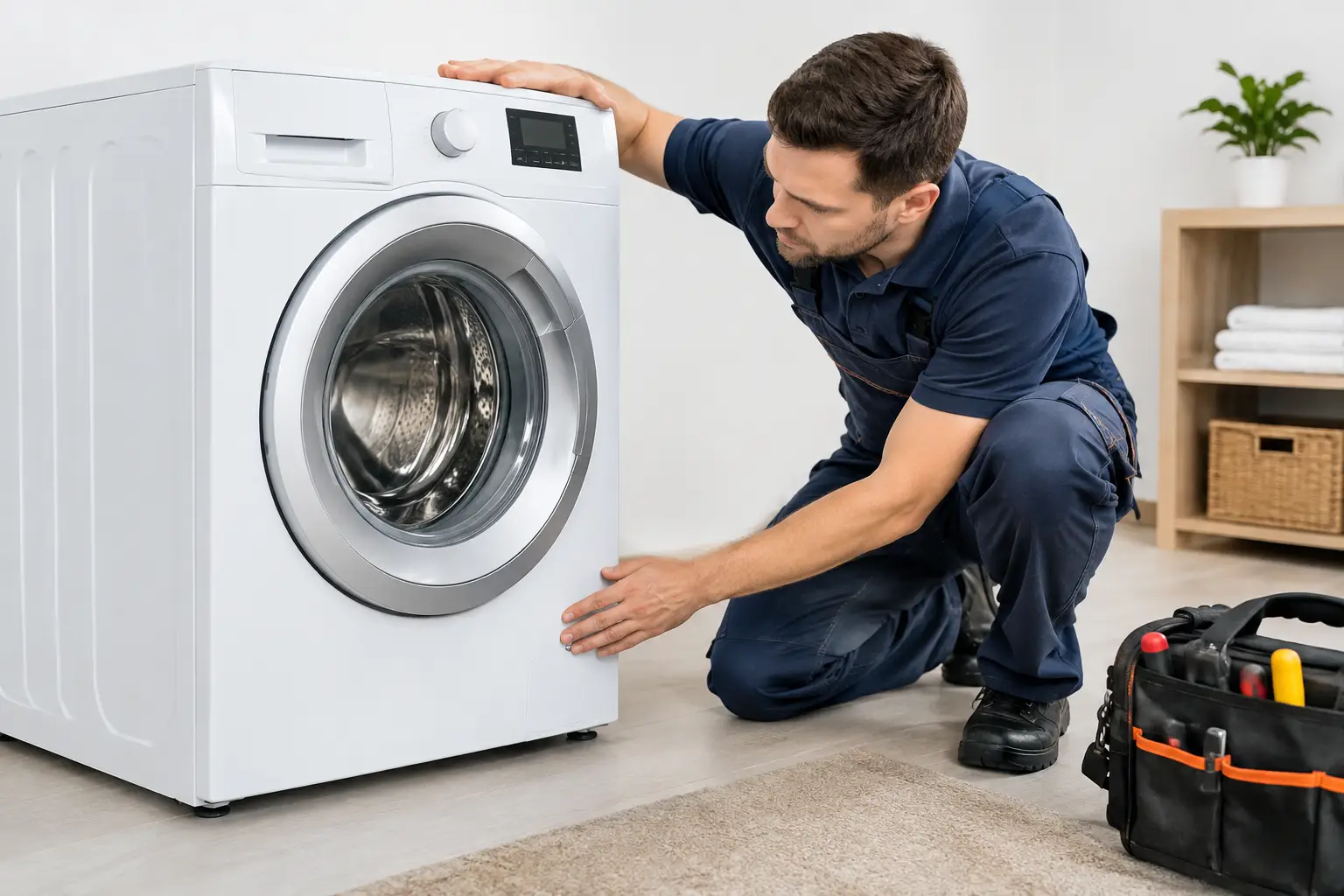
A washer that starts walking across the laundry room, banging against a wall, or shaking hard enough to rattle nearby shelves is more than an annoyance. Proper washer vibration diagnosis can prevent damaged flooring, loose plumbing connections, worn internal parts, and a machine that fails sooner than it should. Some causes take two minutes to correct. Others point to a repair that should not wait.
The key is to notice when the vibration happens. A slight hum or gentle movement during a high-speed spin can be normal. Repeated thumping, violent rocking, metal-on-metal noise, or a washer that moves several inches is not. Stop the cycle if the machine is unstable, especially if it is near water lines, a drain hose, or a gas dryer.
Not Sure You Need a Repair?
Before you pay for a service call, try FixDecision AI. Describe what's wrong with your appliance and get a safety-first assessment to help you decide whether to DIY or call a professional.
Start with the simplest washer vibration diagnosis checks
Before assuming a major part has failed, look at the washer’s position and the load inside. These are the most common reasons a washer suddenly begins shaking, particularly after moving, installing, or cleaning the appliance.
Check whether the washer is level
All four washer feet need firm contact with the floor. Press down on each corner of the cabinet. If the machine rocks, one or more feet are not supporting its weight correctly. Even a small amount of wobble can become dramatic during a fast spin cycle.
Use a level across the top of the washer, checking side to side and front to back. Adjust the leveling feet according to the owner’s manual, then tighten any locking nuts against the cabinet. Recheck the machine by pressing on its corners. The washer should feel solid before you run another cycle.
A level washer can still vibrate if the floor itself has too much flex. Older wood floors, raised laundry platforms, and unfinished basement floors may amplify movement. A qualified technician can help determine whether the appliance is the issue or whether the installation surface needs attention.
Look at the laundry load
One heavy item, such as a comforter, bath mat, jeans, or a small rug, can collect on one side of the drum. The result is an unbalanced load that makes the washer thump or stop before spinning. Pause the cycle, redistribute the item, and add a few similar-weight towels if the machine is underloaded.
Do not overcorrect by packing the drum tightly. Overloading keeps clothes from moving freely and can put extra stress on the suspension system. Follow the washer’s load recommendations, and wash bulky items individually only when the manufacturer allows it.
Confirm a new washer was installed correctly
If a new front-load washer has vibrated heavily from its first use, check whether the shipping bolts were removed. These bolts secure the drum during transportation. Running the washer with them still installed can cause severe shaking and may damage the appliance.
Shipping bolts are usually located on the back panel. Do not simply remove random screws. Refer to the installation instructions or have a local appliance professional inspect the setup. Keeping the bolts in a labeled bag is useful if the washer must be moved later.
What the type of vibration can tell you
The sound and timing of the vibration often narrow down the cause. Homeowners do not need to disassemble a washer to make useful observations. Those details help a repair technician arrive prepared and can reduce the time needed to diagnose the problem.
A rhythmic thump that begins only during spin is often related to an uneven load, a worn suspension component, or a basket that is not moving smoothly. A sharp bang may occur when the tub hits the cabinet because its support system is weak. Grinding, roaring, or rumbling during spin may point to worn tub bearings, a damaged drive component, or a foreign object caught between the tubs.
If the washer shakes during filling or agitation but not spin, the problem may be different. Loose cabinet panels, a poorly positioned drain hose, or an item trapped in the drum can make noise without indicating a major mechanical failure. Still, persistent noise deserves attention before it turns into a more expensive repair.
Internal parts that commonly cause washer vibration
Once leveling, loading, and installation have been ruled out, the washer may have worn components. These repairs vary widely by washer type and model. Front-load and top-load machines use different suspension designs, so a correct diagnosis matters before parts are ordered.
Suspension rods, springs, and shock absorbers
Top-load washers commonly use suspension rods or springs to keep the tub centered. Over time, these parts can weaken, lose tension, or become damaged. The tub may lean noticeably to one side, bounce excessively when pressed, or bang against the cabinet during spin.
Many front-load models use shock absorbers to control tub movement. Worn shocks allow the tub to swing too freely at high speed. Replacing only one worn component is not always the right answer. Technicians often replace matched suspension parts together so the tub is supported evenly.
Tub bearings and the drive system
A loud roar that gets worse as the spin speed increases can signal failing tub bearings. On some washers, bearing repair involves significant disassembly and may require replacing a rear tub assembly. The practical choice depends on the washer’s age, condition, repair estimate, and the price of a comparable new machine.
Problems with the drive belt, motor coupling, pulley, rotor, or clutch can also create vibration or irregular spinning. These are not safe guess-and-replace repairs for most homeowners. Unplug the washer and arrange service if you hear grinding, smell burning rubber, see leaking water under the machine, or notice that the basket will not spin normally.
Counterweights and loose mounting hardware
Some front-load washers use heavy concrete counterweights to stabilize the tub. A loose or cracked counterweight can create powerful banging and vibration. Because these pieces are heavy and internal access can be complicated, this is a professional repair.
Loose motor mounts, damaged cabinet braces, or a broken mounting bracket can produce similar symptoms. Continuing to use the washer may turn a manageable repair into cabinet, tub, or floor damage.
When to stop using a vibrating washer
A washer does not need to be completely unusable before you call for help. Stop running it and seek repair assistance if it moves across the room, leaks during vibration, trips a breaker, produces smoke or a burning smell, or makes grinding and metal-on-metal sounds. The same applies if the inner basket feels loose, scrapes the outer tub, or has visible damage.
It is also wise to schedule service when you have already leveled the washer and corrected the load, but the problem returns cycle after cycle. Repeated vibration is hard on hoses, electrical connections, flooring, and the washer itself. Fast help can protect the appliance and restore some peace of mind before laundry piles up.
What to tell a washer repair technician
A few clear details can make the service visit more efficient. Note the washer’s brand and model number, approximately how old it is, and whether it is a front-load or top-load machine. Explain when the vibration happens: during filling, agitation, draining, spin, or throughout the cycle.
Also mention any recent changes. Did the washer begin shaking after a move, new flooring, a plumbing repair, or installation? Does it happen with every load or only bulky items? Is there a new noise, water leak, error code, or burning odor? These observations help a certified technician distinguish a simple setup issue from a suspension, bearing, or drive-system repair.
Avoid tipping the washer, removing panels, or reaching beneath it while it is plugged in. Washers are heavy, and internal components can hold sharp edges or electrical risks. A professional diagnosis is usually the safer route when the cause is not obvious.
Repair or replace: making a practical call
For a washer with a leveling issue or worn suspension part, repair is often a sensible choice. For major bearing or tub damage on an older machine, replacement may be more cost-effective. There is no single rule because repair value depends on the model, condition, expected part cost, and whether other components are showing wear.
A local appliance repair provider can assess the source of the vibration and explain the options before work begins. US Appliance Repairs helps homeowners connect with independent local professionals when a shaking washer needs experienced attention. The goal is straightforward: identify the real problem, avoid unnecessary repairs, and get the laundry routine back up and running.
A washer should spin with steady purpose, not shake your home awake. Address unusual movement early, and you are far more likely to protect both the machine and the space around it.