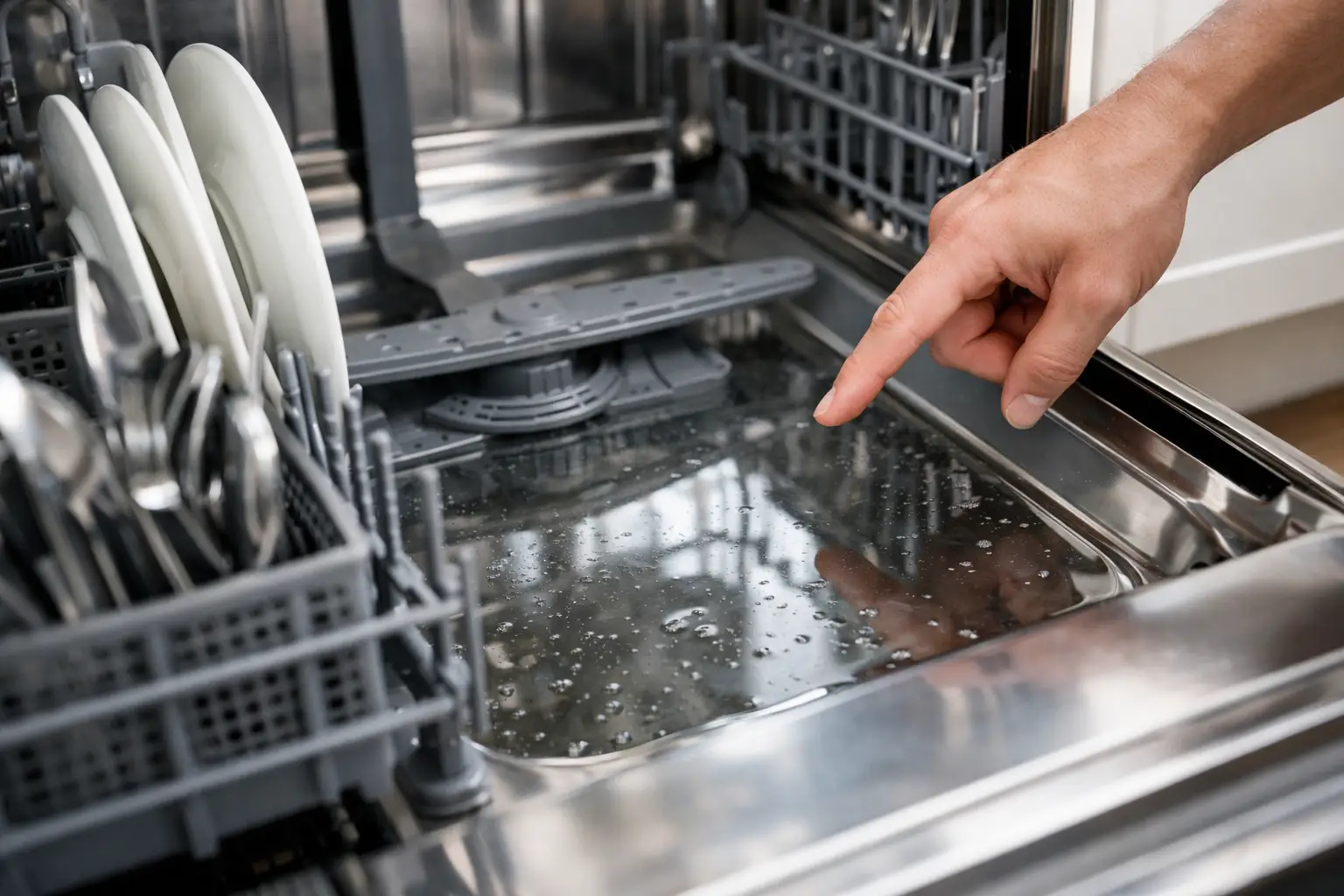
A dishwasher should leave the bottom of the tub mostly dry after it finishes. If you open the door and find a pool of cloudy water over the filter, do not start another load and hope it clears itself. Dishwasher standing water after cycle is usually a drainage problem, and catching it early can prevent odors, dirty dishes, leaks, and water damage beneath the appliance.
The good news is that some causes are simple enough for a homeowner to check safely. Others involve the drain pump, wiring, or plumbing connection and need professional attention. The key is knowing where to stop so a small drainage issue does not become a more expensive repair.
Is Water in the Bottom of a Dishwasher Normal?
A small amount of clean water below the filter area may be normal. Many dishwashers retain a little water in the sump to keep pump seals from drying out. That water should not cover the bottom of the tub, smell unpleasant, or rise above the filter.
Standing water that is visibly pooled, greasy, or filled with food debris is not normal. It means the machine did not fully drain at the end of the wash cycle, or dirty water flowed back into the tub after draining. If the dishwasher is also making a humming sound, stopping mid-cycle, or leaving dishes dirty, the problem may be more than a simple clog.
Water still sitting in the bottom after a full cycle? Run the free guided dishwasher diagnosis — it screens for electrical-safety hazards first, then walks you through safe checks for the filter, drain hose, and pump — and tells you honestly when to call a technician. Start the dishwasher diagnosis →
Why Dishwasher Standing Water After Cycle Happens
Dishwashers drain through a system of filters, a drain pump, a hose, and a connection to either the kitchen sink drain or garbage disposal. A blockage or failure anywhere along that route can leave water behind.
A clogged filter or sump area
Food particles, grease, broken glass, labels, and small utensils can collect around the filter and sump. Even households that rinse dishes before loading can develop buildup over time. When water cannot reach the drain pump properly, it remains in the bottom of the dishwasher.
Remove the lower rack and take out the filter according to your owner’s manual. Rinse it under warm water and use a soft brush to clear away residue. Look carefully in the opening beneath the filter for debris, but do not reach into it blindly. Broken glass is a common surprise.
A blocked or kinked drain hose
The drain hose carries wastewater from the dishwasher to the sink plumbing. A sharp bend behind the appliance, a crushed hose, or grease buildup inside the hose can slow or completely stop drainage.
If you can safely pull the dishwasher forward without straining electrical, water, or drain connections, inspect the hose for obvious kinks. Do not disconnect plumbing unless you are comfortable managing residual water and reinstalling the connection correctly. An improperly positioned hose can also allow sink water to flow back into the dishwasher.
A clogged garbage disposal or sink drain
Many dishwashers drain through the garbage disposal. If the disposal is clogged or the sink is draining slowly, dishwasher water may have nowhere to go. Run the disposal with cold water, then test the kitchen sink. A slow sink drain should be addressed before assuming the dishwasher itself has failed.
For a newly installed dishwasher, there is another possibility: the knockout plug inside the garbage disposal inlet may not have been removed. This plug blocks the dishwasher drain connection until it is punched out during installation. A new dishwasher that has never drained correctly often points to this issue.
A drain pump obstruction or failure
The drain pump pushes water out at the end of the cycle. Small hard objects such as glass, seeds, bones, or pieces of plastic can jam the pump impeller. In other cases, the pump motor wears out or an electrical issue prevents it from running.
You may hear a low hum without water moving, or no drain sound at all. Pump access varies widely by model and can require removing panels or working near electrical components. This is usually a good point to schedule a qualified appliance repair technician.
A problem with the air gap or high loop
Some kitchens use an air gap, the small fixture near the faucet, to prevent wastewater from siphoning back into the dishwasher. Others use a high loop, where the drain hose is secured high beneath the counter. If an air gap is clogged or the high loop has fallen down, dirty sink water can drain backward into the dishwasher.
If the water appears after the dishwasher initially drains, especially after using the sink, backflow is likely. An air gap can sometimes be cleaned by removing its cover and clearing visible debris. A missing or poorly installed high loop should be corrected to protect the dishwasher and kitchen plumbing.
Not sure which of these causes applies to you? The guided diagnosis narrows it down with safe, step-by-step checks. Run the dishwasher diagnosis →
Safe Checks Before You Call for Repair
Start by canceling the cycle or selecting the drain function, if your dishwasher has one. If it drains, the issue may be intermittent, but it still deserves attention. A recurring drain problem rarely gets better on its own.
Before cleaning or inspecting anything inside the dishwasher, turn off power at the circuit breaker or unplug the appliance if its plug is accessible. Then remove the bottom rack, take out the filter, and soak up standing water with towels, a sponge, or a shallow container. Avoid using chemical drain cleaner in the dishwasher. These products can damage internal components, leave harmful residue, and create a safety risk for anyone servicing the machine later.
Once the water is removed, clean the filter and inspect the sump area. Check whether the kitchen sink and garbage disposal drain normally. Finally, restore power and run a short rinse or drain cycle while listening for the pump. If water remains, returns, or leaks onto the floor, stop using the dishwasher until it is repaired.
If water isn’t draining and you’d rather have a professional confirm it, try the guided check first — it will flag when it’s time to call a pro. Start the free dishwasher check →
When a Dishwasher Drain Problem Needs a Technician
A service visit is the practical choice when basic filter cleaning does not solve the problem, the drain hose is inaccessible, or the dishwasher shows error codes. Call for help promptly if you notice burning smells, repeated tripped breakers, a leak under the machine, or water backing up from the sink.
Modern dishwashers may use sensors, control boards, check valves, and electronically controlled pumps. Replacing parts without testing the actual cause can waste money. An experienced technician can determine whether the issue is a clogged hose, failed drain pump, faulty control, or plumbing-related blockage and help get the appliance back up and running.
US Appliance Repairs can help homeowners connect with local independent appliance repair providers when a drainage issue needs fast, reliable attention. Ask the technician for a diagnosis and estimate before authorizing work, especially if the dishwasher is older or has had multiple recent problems.
Repair or Replace? Consider the Age and Condition
A clogged filter, hose, or air gap is generally worth fixing at any age. A drain pump repair can also make sense when the dishwasher is otherwise dependable and under roughly 10 years old. The decision becomes less clear when an older machine needs a pump, control board, and major labor at the same time.
Consider the appliance’s age, repair history, noise level, cleaning performance, and whether it has leaked before. If the repair estimate is a large share of the cost of a comparable new dishwasher, replacement may offer better long-term value. On the other hand, replacing a dishwasher because of a simple blockage is an unnecessary expense.
To weigh a repair against a replacement, review our dishwasher repair costs and dishwasher pump repair cost guides.
Prevent Standing Water From Returning
Use the dishwasher filter as part of regular kitchen maintenance. Check it monthly in busy households and clean it whenever you see grease or food buildup. Scrape large food scraps into the trash before loading dishes, but you do not need to pre-rinse every plate until it is spotless.
Run the garbage disposal before starting the dishwasher if they share a drain connection. Use the correct amount of detergent, since excess suds and residue can contribute to drainage and cleaning problems. If your dishwasher drains slowly, address it early rather than waiting for a full tub of standing water.
A clear filter and a healthy drain path are small details, but they protect one of the hardest-working appliances in the kitchen. Taking action at the first sign of standing water can save time, prevent unpleasant cleanup, and restore the peace of mind that comes with a dishwasher doing its job right.