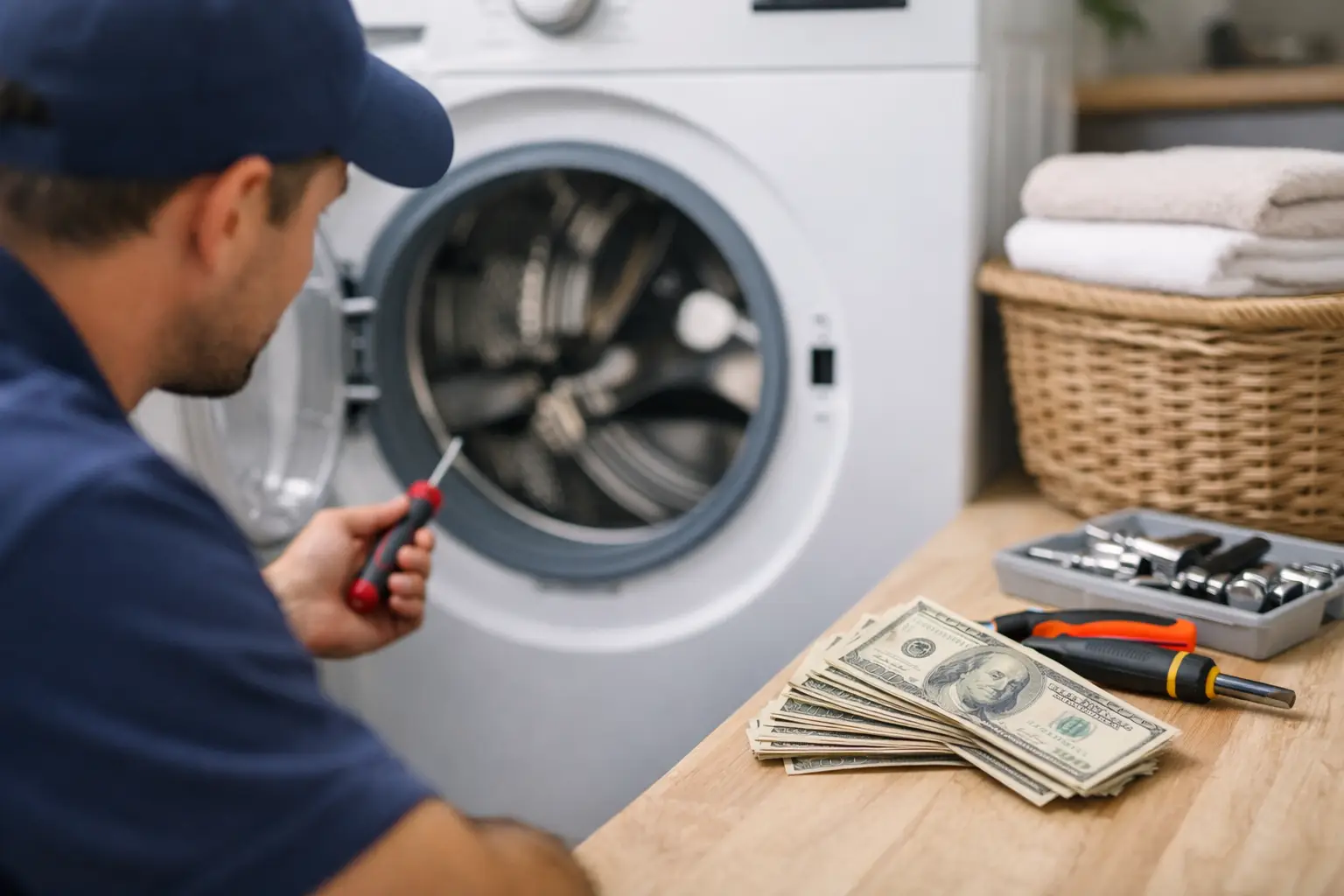
A dryer that tumbles but never gets warm can turn a normal laundry day into a pile of damp clothes fast. Dryer repair cost is usually far less than buying a new machine, but the right decision depends on the failed part, your dryer’s age, and whether the repair will restore reliable performance. A qualified local technician can identify the real problem before you spend money on the wrong fix.
For many homeowners, a typical dryer repair lands between $100 and $400, including parts and labor. Small electrical or airflow-related repairs may cost less, while a failed motor, control board, or major heating component can push the total higher. Prices also vary by location, dryer type, and the availability of replacement parts.
Dryer Repair Cost at a Glance
Most service visits begin with a diagnostic charge, often around $70 to $130. This covers the technician’s time to inspect the dryer, test components, and determine why it is not heating, starting, tumbling, or drying properly. Some repair providers apply that fee toward the completed repair, but homeowners should ask before scheduling.
A basic repair, such as replacing a thermal fuse, door switch, belt, or worn roller, often falls in the $100 to $250 range. Mid-level repairs involving a heating element, thermostat, igniter, or sensor commonly cost $150 to $350. More extensive work, including a motor or electronic control board replacement, may run $300 to $600 or more.
These are practical national benchmarks, not a guaranteed quote. A technician’s written estimate should separate the diagnostic fee, labor, parts, and any additional service charges so you can make a confident decision.
What Affects the Cost to Repair a Dryer?
The part that failed is the biggest cost factor, but it is not the only one. Gas and electric dryers use different heating systems, and gas dryer repairs can require added safety checks around the igniter, flame sensor, gas valve coils, and connections. Front-load, stackable, ventless, and smart dryers may also take longer to access and diagnose than a standard top-loading model.
Labor rates matter as well. Homeowners in major metro areas may see higher service pricing than those in smaller markets, although urgent after-hours appointments can cost more almost anywhere. If the dryer is stacked with a washer or installed in a tight laundry closet, additional labor may be necessary to safely move and reassemble the unit.
Part availability can change the equation. Common belts, fuses, rollers, and thermostats are generally affordable and readily available. Model-specific circuit boards, specialty sensors, or discontinued parts can be more expensive and may require an order. A dependable technician should explain whether a part is readily available, how long the repair may take, and whether an alternative makes more financial sense.
Common dryer problems and likely repair ranges
If the dryer will not start, the issue may be a broken door switch, blown thermal fuse, faulty start switch, or wiring problem. Repairs often range from $100 to $300, depending on the component and diagnosis.
If the dryer runs but does not heat, homeowners often suspect the heating element. That is possible, but restricted venting, a failed thermostat, thermal fuse, igniter, or gas valve component can cause the same symptom. Expect many no-heat repairs to fall around $150 to $350.
A loud thumping, squealing, scraping, or rumbling sound usually points to worn drum rollers, glides, bearings, or an idler pulley. Replacing these parts may cost $150 to $350. Address unusual noises promptly. Continuing to run the dryer can damage other components and turn a manageable repair into a larger one.
When the drum does not turn, a broken drive belt is a common culprit and often costs $120 to $250 to repair. If the motor has failed instead, the total can rise to $300 to $600, especially when additional wear-related parts should be replaced at the same time.
Electronic display problems, cycle failures, or a dryer that stops mid-cycle can involve a moisture sensor, wiring issue, user interface, or main control board. These repairs have a wide range, usually $150 to $500 or more, because electronic parts vary significantly by make and model.
Why a Dryer Takes Too Long to Dry May Not Be a Dryer Repair
A dryer that needs two or three cycles to finish a load can feel like a mechanical failure, but the source is often airflow. Lint buildup in the lint screen housing, exhaust duct, exterior vent hood, or vent flap restricts the movement of hot, moist air. The dryer then runs longer, wastes energy, and may overheat.
This is more than an inconvenience. Restricted dryer vents are a recognized fire risk. Clean the lint filter after every load, and have the full vent path inspected and cleaned when drying times increase, clothes feel unusually hot, or you notice a burning smell. Do not keep using a dryer that smells like burning, trips a breaker, sparks, or has visible damage. Turn it off and arrange professional help.
A vent cleaning may be all that is needed, or it may reveal that the dryer’s thermal fuse or heating system was damaged by overheating. Accurate diagnosis protects you from paying for parts that did not cause the problem.
Is Dryer Repair Worth It?
In many cases, yes. Dryers commonly last 10 to 13 years, and a well-maintained unit may last longer. Repair is often the practical choice when the machine is under 8 to 10 years old, the issue is isolated, and the estimated repair is well below the price of a comparable replacement.
A useful rule of thumb is to reconsider repair when the estimate approaches 50 percent of the cost of a new dryer. This is not an automatic replacement rule. A premium dryer with years of expected service left may be worth repairing, while an older basic model with repeated breakdowns may not be.
Consider the full picture: the dryer’s age, repair history, condition of the drum and cabinet, energy use, matching washer, and the cost to deliver and install a replacement. Replacing a dryer can also involve vent adjustments, stacking hardware, electrical work, or gas-line service. A transparent repair estimate gives you a real comparison rather than a guess.
Repair may be the better choice when
Repair usually makes sense when the dryer has one clear problem, such as a belt, fuse, roller, thermostat, igniter, or heating element. It can also be worthwhile for newer dryers with a failed sensor or control component, provided the part is available and the unit has otherwise been dependable.
Replacement deserves stronger consideration when the dryer is near the end of its expected life, needs a costly motor or control board, has rust or significant drum damage, or has required several repairs in a short period. For gas dryers, any suspected gas leak or combustion concern calls for immediate professional assessment rather than a do-it-yourself decision.
How to Get a Clear Dryer Repair Estimate
Before the appointment, write down the dryer’s brand, model number, approximate age, and the exact symptoms. Note whether the drum turns, whether the unit heats, whether it makes noise, and whether an error code appears. This information helps a repair provider send the right technician and may speed up the diagnosis.
Ask whether the service call fee is credited toward the repair, whether the estimate includes labor and parts, and whether the replacement part carries a warranty. You should also ask if the technician inspected the venting and whether a repair is likely to provide reliable service or simply delay another failure.
Avoid approving a major repair based only on a symptom over the phone. Several dryer problems can look identical from the outside. Certified, experienced technicians use electrical testing and component inspection to identify the failed part, which is the best path to doing the job right the first time.
A dryer failure is disruptive, but it does not have to become a rushed replacement purchase. Start with a professional diagnosis, compare the repair estimate with the dryer’s condition and value, and choose the option that gives your household the most reliable path back to dry laundry and peace of mind.