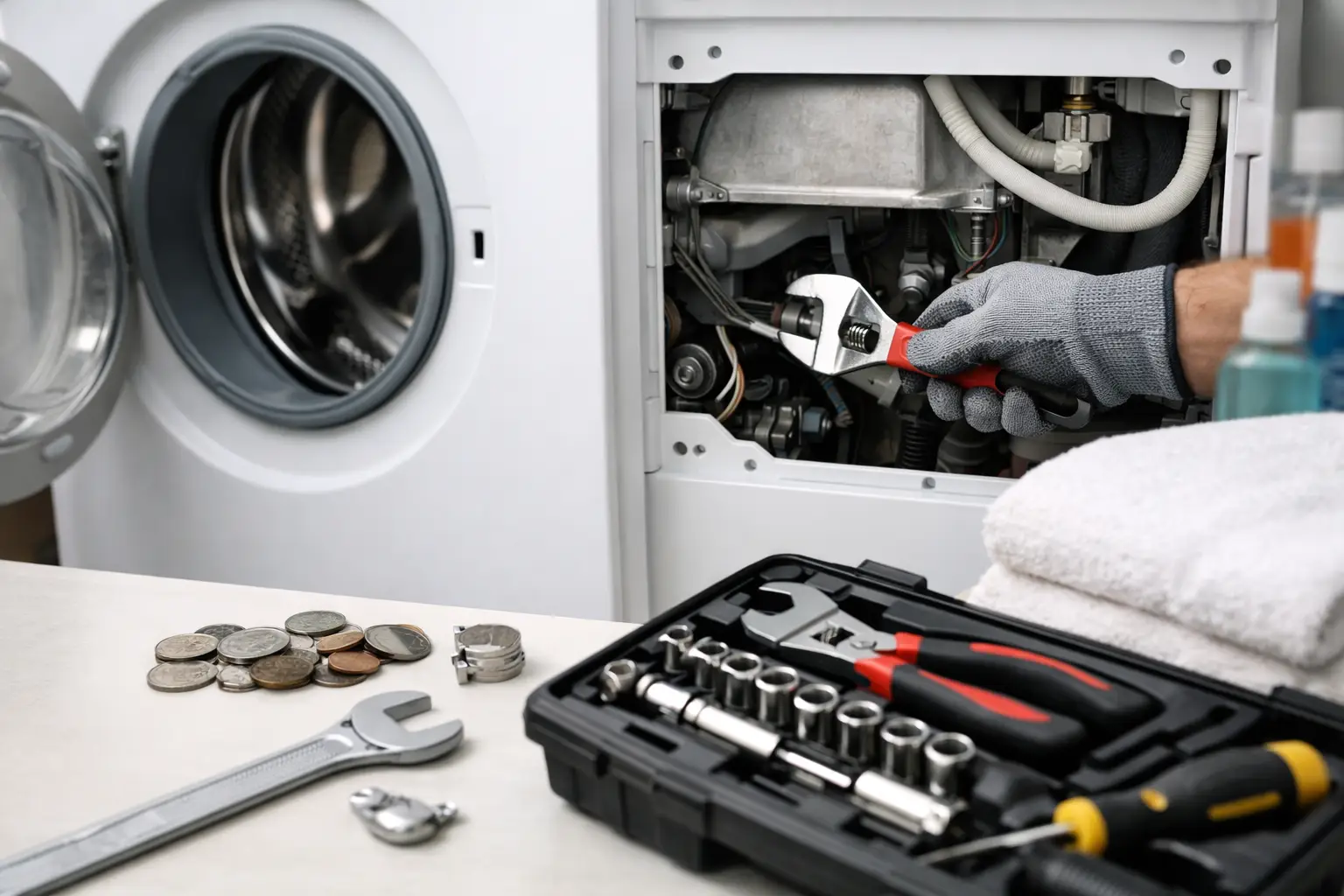
A washer that stops mid-cycle leaves more than a pile of wet laundry. It leaves you trying to decide whether the washer repair cost is reasonable, whether the problem is urgent, and whether your machine is worth saving. For most homeowners, a professional washing machine repair falls somewhere between $125 and $500, but the final price depends heavily on the failed part, the washer type, and local labor rates.
A simple lid switch or worn belt can be a relatively affordable repair. A failed motor, transmission, or major bearing problem may push the bill high enough to make replacement the better financial choice. The good news is that an experienced technician can usually identify the cause quickly and give you a clearer answer before major work begins.
Not Sure You Need a Repair?
Before you pay for a service call, try FixDecision AI. Describe what's wrong with your appliance and get a safety-first assessment to help you decide whether to DIY or call a professional.
Typical Washer Repair Cost by Problem
The repair price includes more than the replacement part. Most service companies charge for a diagnostic visit, labor, and parts. In many areas, a diagnostic or service-call fee ranges from about $75 to $150. Some providers apply that charge toward the repair when you approve the work, while others charge it separately. Ask before scheduling so there are no surprises.
Common washer repairs often fall into these ranges:
- Lid switch or door lock repair: $125 to $300. Top-load washers may refuse to spin when a lid switch fails, while front-load models can stop when the door lock will not engage.
- Drain pump replacement: $150 to $400. If the washer will not drain, leaves water in the tub, or displays a drain-related error, the pump, hose, or filter may be involved.
- Water inlet valve replacement: $150 to $350. A faulty valve can prevent the machine from filling, cause slow filling, or allow water to enter when the washer is off.
- Drive belt repair or replacement: $125 to $250. A worn or broken belt may keep the drum from spinning properly, especially in certain top-load designs.
- Suspension rods, shocks, or springs: $175 to $450. These parts help control vibration. When they wear out, the washer may bang, walk across the floor, or go out of balance repeatedly.
- Control board replacement: $250 to $600. Electronic control boards are common in newer machines and can be expensive because the part itself costs more than a basic mechanical component.
- Motor, transmission, or bearing repair: $350 to $800 or more. These are among the costliest repairs and deserve a repair-versus-replacement conversation before you authorize work.
These are broad homeowner benchmarks, not fixed quotes. A compact washer, a high-end front-load model, or a machine with hard-to-source parts can cost more. Prices also tend to run higher in large metropolitan areas where labor and operating costs are higher.
What Affects Your Washer Repair Cost?
The failed component is the largest factor, but it is not the only one. A $40 part can still lead to a higher bill if reaching it requires significant disassembly. Front-load washers, for example, may require more labor to access internal components than a straightforward top-load model.
Washer type and brand
Top-load washers are often less complex to service, particularly older models with familiar mechanical controls. Front-load washers can be efficient and gentle on clothing, but their door systems, drain assemblies, bearings, and electronic controls may take longer to diagnose or replace.
Brand matters because part prices and availability vary. A common replacement part for a widely sold washer may be readily available. A specialty part for a premium, discontinued, or imported model may cost more and take longer to arrive.
Labor and diagnostic time
Labor rates vary by market and by the complexity of the repair. A technician may resolve a clogged drain hose or replace a lid switch during a single visit. Intermittent electrical issues, error codes, leaks that appear only during spin, and control-board failures can require more testing.
A dependable technician should explain what failed, what the repair involves, and whether the quoted price includes parts, labor, and the service call. That clarity helps you compare the cost of fixing the machine with the cost of replacing it.
Emergency timing and access
Same-day service, weekend appointments, stacked washer-dryer units, tight laundry closets, and difficult access can add to the total. If a washer is leaking onto flooring or into a lower level, acting fast may prevent a much larger water-damage expense. Turn off the water supply valves and unplug the machine if it is safe to do so, then arrange professional help.
Is It Worth Repairing a Washing Machine?
The right answer depends on the machine’s age, original quality, condition, and repair estimate. As a general guideline, consider repair when the cost is less than about half the price of a comparable new washer and the appliance has not been giving you repeated problems.
A washer under five years old is usually a strong repair candidate unless it has a major mechanical failure. Many washers have an expected service life of roughly 10 to 13 years, though usage habits, maintenance, water quality, and model design all affect longevity. A well-maintained eight-year-old machine with a bad drain pump is very different from a 12-year-old machine with a failing transmission, corroded cabinet, and frequent error codes.
Replacement can make more sense when a major repair approaches $600 or more, especially on an older basic model. It can also be practical when parts are discontinued or when the washer has had multiple repairs in a short period. A technician cannot make the household budget decision for you, but an accurate diagnosis gives you the information to make it with confidence.
Common Problems That May Not Need a Major Repair
Not every washer problem means a costly component has failed. Before booking service, check whether the machine is plugged in, the circuit breaker has not tripped, and both water supply valves are fully open. A washer that will not drain may have a kinked drain hose or a small item trapped in the pump filter, depending on the model.
An unbalanced load can also make a washer shake violently or stop before the spin cycle. Pause the cycle, redistribute heavy items, and make sure the machine is level on the floor. Avoid overloading the drum, especially with bulky bedding or a single heavy item such as a bath mat.
That said, do not keep forcing a washer through cycles when it is grinding, smoking, leaking heavily, or producing a burning smell. Continuing to run it can damage additional parts and create a safety concern. These symptoms call for fast professional evaluation.
How to Get a Clear Repair Estimate
When you contact a local appliance repair provider, describe the symptoms rather than guessing at the part. Mention whether the washer fills, drains, spins, makes noise, leaks, displays an error code, or stops at a particular point in the cycle. Have the brand, model number, and approximate age ready if possible. This helps the technician prepare and may speed up the diagnosis.
Before approving work, ask whether the estimate includes the diagnostic fee, labor, parts, and taxes. Ask about the expected turnaround time if a part must be ordered, and request the warranty terms offered by the independent repair provider. A low initial quote is not always the best value if it does not include necessary labor or if the repair is not properly diagnosed.
US Appliance Repairs can help homeowners connect with independent local appliance repair providers when a washer problem needs prompt attention. The platform does not perform or warrant the contractor’s work, but it can save time when you need help finding a qualified professional.
Reduce the Chance of Another Washer Repair Bill
A few habits can protect the machine and your laundry room. Use the amount of detergent recommended for your washer type, since excess suds can contribute to drainage problems and residue. Check pockets for coins, screws, tissues, and small objects before loading clothes. These items can damage pumps, seals, and the inner drum.
It also helps to inspect water hoses periodically for bulges, cracks, or corrosion around the connections. Replace aging hoses before they fail, and leave the door or lid open after a load when practical so moisture can dry out. For front-load washers, clean the door gasket and detergent dispenser regularly to reduce odor and buildup.
A clear estimate turns a frustrating breakdown into a manageable decision. Whether the fix is a simple pump, a door lock, or a more serious internal repair, getting the problem diagnosed early gives you the best chance to protect your home, your budget, and your peace of mind.