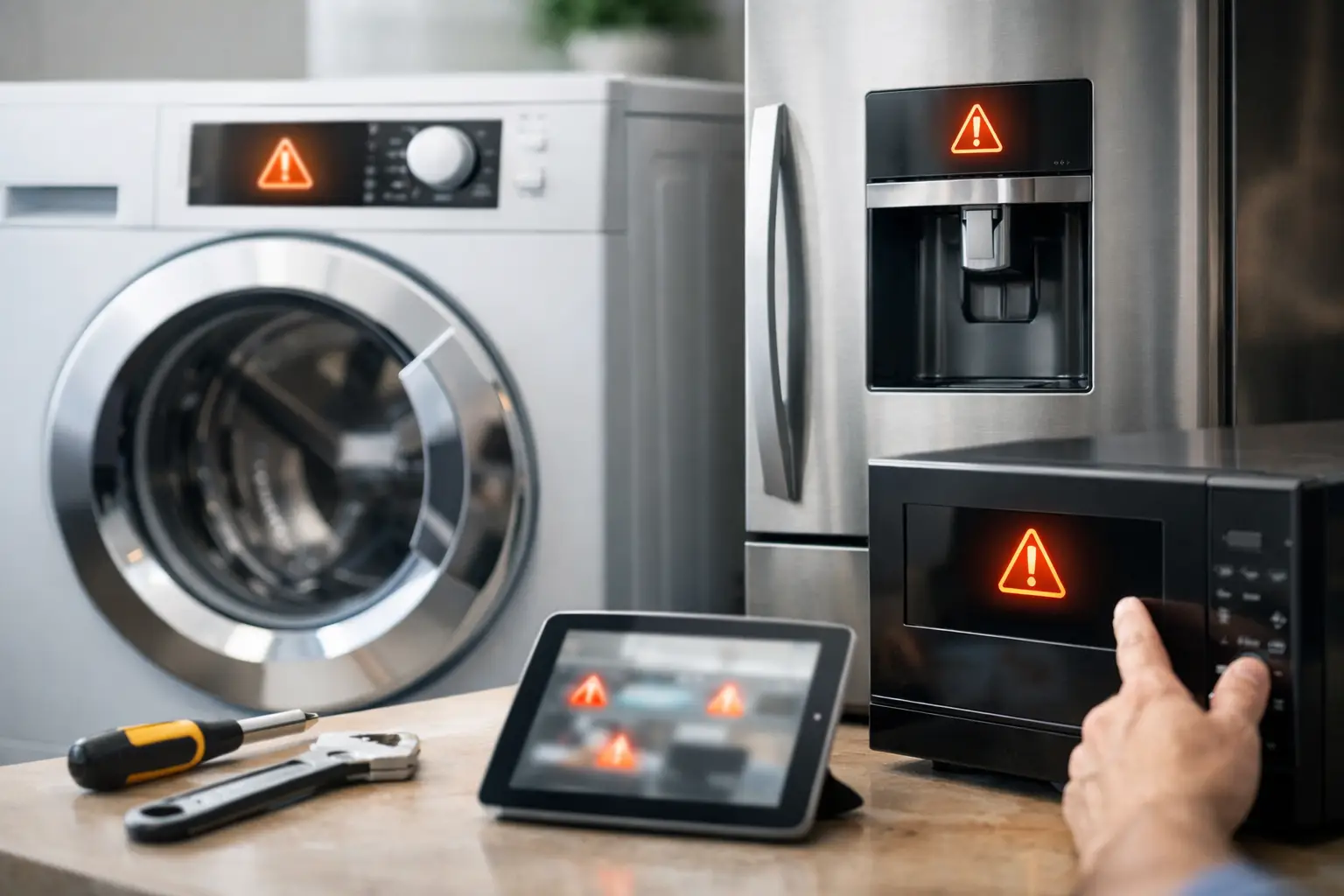
A refrigerator flashing a code after groceries are loaded, a washer stopping mid-cycle, or an oven beeping before dinner can make any household problem feel urgent. Appliance error codes are designed to narrow down what the machine has detected, but they do not always identify one failed part. Knowing how to respond can protect your appliance, prevent a bigger mess, and help you get reliable repair help faster.
Not Sure You Need a Repair?
Before you pay for a service call, try FixDecision AI. Describe what's wrong with your appliance and get a safety-first assessment to help you decide whether to DIY or call a professional.
What Appliance Error Codes Actually Tell You
Modern appliances use sensors, control boards, wiring, and safety switches to monitor temperature, water flow, drainage, motor movement, heating, and door position. When the appliance detects something outside its normal operating range, it may display a letter-and-number code, flash indicator lights, or sound an alarm.
That code is a starting point, not a final diagnosis. For example, a dishwasher drainage code may be caused by a blocked filter, a kinked drain hose, a failing drain pump, or a wiring issue. A refrigerator temperature code might mean the door was left open, but it can also point to a faulty fan, defrost problem, or electronic control failure.
The same-looking code can mean different things across brands and models. Even within one brand, the exact meaning may change by product series. That is why the full model number matters. You will usually find it on a label inside the refrigerator compartment, around the washer or dryer door opening, on the dishwasher door frame, or along the oven door frame.
Start With Safety Before You Reset Anything
It is tempting to clear the message and see whether it returns. A basic reset can sometimes resolve a temporary communication glitch after a power interruption. But resetting an appliance without checking for warning signs can hide a problem that needs attention.
Stop using the appliance and arrange professional service promptly if you notice a burning smell, smoke, sparks, repeated tripped breakers, a gas odor, a significant water leak, or unusual grinding noises. Turn off power at the breaker when it is safe to do so. If you smell gas, leave the area, avoid switches or open flames, and contact your gas utility or emergency services from a safe location.
For a non-emergency error message, start with a few safe checks. Confirm the appliance has power and that no breaker has tripped. Look for an improperly closed door or lid, an overloaded washer or dishwasher, a clogged accessible filter, or a water supply valve that was accidentally turned off. These basic conditions can trigger codes without requiring a major repair.
Avoid taking apart panels, bypassing door switches, or forcing a machine through a cycle. Appliances combine water, electricity, heat, moving parts, and sometimes gas. A certified technician can test components safely and determine whether the displayed code reflects the cause or only a symptom.
Common Appliance Error Codes by Appliance Type
Refrigerator and freezer codes
Refrigerator codes often involve temperature sensors, evaporator fans, defrost systems, ice makers, or communication between the display and control board. If food is warming, move perishable items to another cold location if possible. Keep doors closed to preserve the remaining cold air, and do not assume a reset will fix a cooling failure.
A code appearing after a power outage may clear once the appliance returns to normal temperature. If the code remains, the freezer develops heavy frost, or the refrigerator is running constantly without cooling properly, service is usually the safer choice. Food safety matters as much as the repair itself.
Dishwasher codes
Dishwashers commonly display codes for draining, filling, water temperature, leaks, or door latch problems. Before calling for help, check whether the filter is packed with food debris and whether the drain hose under the sink is bent or crushed. If water is sitting in the tub, cancel the cycle if the manufacturer instructions allow it and avoid running another load.
A leak-related code deserves faster attention. Water can travel beneath flooring and cabinets before it becomes visible. Place towels around a small, contained leak and stop using the dishwasher until the source is identified.
Washer codes
Washer error messages often relate to unbalanced loads, slow filling, failure to drain, motor movement, or lid and door locks. A bulky comforter or a single heavy item can throw a load out of balance, especially in a top-load machine. Redistributing the load may allow the cycle to continue.
Repeated drain or spin codes are different. Leaving a washer full of water can create a disruption quickly, and forcing the door open may cause flooding. A technician can determine whether the issue is a blockage, drain pump, pressure switch, motor, or control problem.
Dryer codes
Dryer codes may point to restricted airflow, heating failures, moisture sensor issues, or motor trouble. Clean the lint screen first, but do not mistake that for a full vent inspection. A clogged or damaged exhaust vent can cause long dry times, overheating, and a serious fire risk.
If a dryer shows a heat or airflow code repeatedly, stops mid-cycle, smells hot, or leaves clothes unusually hot, stop using it. Venting and heating repairs are not issues to postpone for convenience.
Oven, range, and microwave codes
Cooking appliances often flag temperature sensor faults, overheating, keypad problems, door-latch failures, or electronic control issues. An oven that cannot regulate temperature can burn food, undercook meals, or continue heating when it should not. A self-clean cycle error can also leave an oven door locked or expose an underlying latch problem.
Microwaves require extra caution. Their high-voltage components can retain a dangerous electrical charge even after the unit is unplugged. Do not remove a microwave cover to investigate an error code. Professional diagnosis is the right call for power, heating, door, or control faults.
How to Use an Error Code to Get a Faster Repair
Write down the code exactly as it appears, including letters, numbers, dashes, or flashing lights. Then note when it occurred and what the appliance was doing at the time. Did the washer fail during draining? Did the refrigerator code appear after a storm? Did the oven display the message while preheating?
This information gives a repair provider useful context before the visit. Have the appliance brand, model number, approximate age, and a brief description of symptoms ready as well. Mention any water leaks, electrical concerns, loss of cooling, or interruption to essential household routines. Clear details can help the technician arrive prepared and reduce delays in getting the appliance back up and running.
Photos of the display can also help, particularly if the code disappears after the appliance is powered down. Do not rely on a photo alone, though. A technician still needs to test the appliance because codes can be triggered by a failing sensor, damaged wiring, or a control board that is misreading normal conditions.
When a Reset Is Reasonable and When It Is Not
A reset is generally reasonable after a brief power outage, a known overload, or a door that was not fully closed. Follow the instructions in your appliance manual for the correct method. In many cases, this means turning the appliance off or unplugging it briefly, then restoring power. Never reset by repeatedly flipping breakers or disconnecting wires.
If the code returns immediately or keeps coming back over several cycles, treat it as an active fault. Repeated resets can waste time while a minor issue becomes more expensive, especially with refrigeration, leaks, and dryer airflow problems. The repair decision depends on the appliance age, repair cost, availability of parts, and overall condition, but an accurate diagnosis should come first.
Appliance Error Codes and the Repair-or-Replace Decision
An error code does not automatically mean an appliance is beyond repair. A failed latch, sensor, hose, pump, heating element, or fan can often be repaired for less than replacement. On the other hand, major sealed-system refrigerator failures, extensive electronic damage, or multiple problems in an older appliance may change the calculation.
Ask for a clear explanation of the failed component, the estimated repair cost, and whether the repair is expected to address the underlying problem. A dependable local technician should help you understand the options without pressuring you into a decision. That clarity brings peace of mind when a household essential suddenly fails.
When a code appears, save the details, address any immediate safety concern, and avoid guessing at repairs. Fast, informed action gives you the best chance of protecting your home and getting your appliance working properly again.