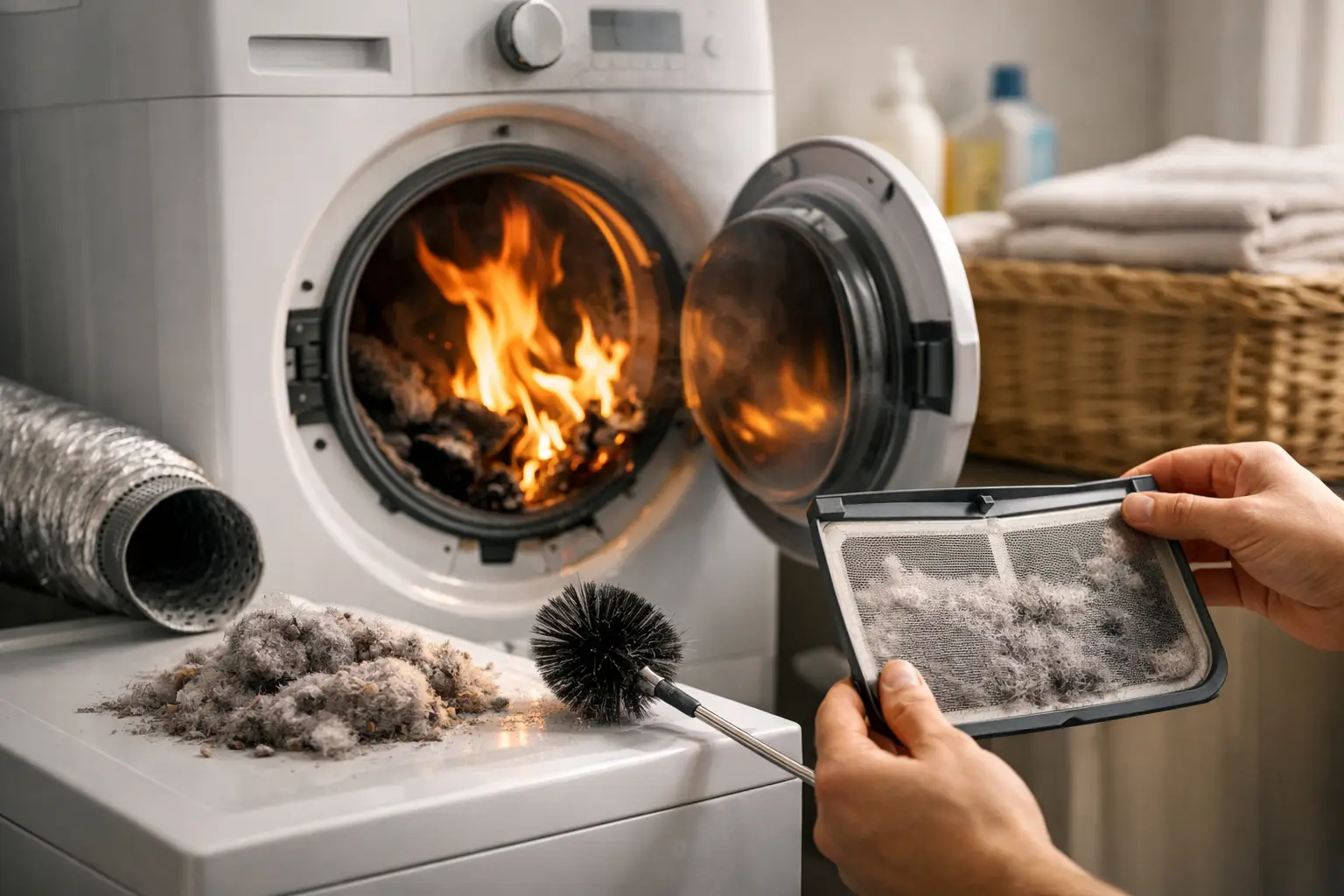
A dryer that takes two or three cycles to finish a normal load is not just wasting time and electricity. It may be warning you about restricted airflow, overheating, or a mechanical problem that needs attention. The best ways reduce dryer fires start with simple habits, but they also include knowing when a clogged vent or failing dryer part calls for fast professional help.
Dryer fires are often preventable because many begin with lint buildup and poor ventilation. Lint is highly flammable, and it does not stay neatly contained in the screen you clean after a load. It can collect in the vent hose, the exterior vent cover, the dryer cabinet, and around internal heating components. A few minutes of maintenance can protect your home, help the dryer run efficiently, and give you greater peace of mind.
Not Sure You Need a Repair?
Before you pay for a service call, try FixDecision AI. Describe what's wrong with your appliance and get a safety-first assessment to help you decide whether to DIY or call a professional.
Best Ways to Reduce Dryer Fires Before They Start
The single most useful habit is cleaning the lint screen after every load. Pull the screen out, remove the lint with your fingers, and put it back before running the next cycle. This improves airflow and keeps less lint from moving farther into the dryer and vent system.
Do not stop at dry lint removal. Dryer sheets, fabric softener, and some laundry products can leave a nearly invisible film on the screen. That residue restricts airflow even when the screen appears clean. Every few months, wash the lint screen with warm water, mild dish soap, and a soft brush. Let it dry completely before reinstalling it.
The area around the dryer matters, too. Keep clothes, cardboard boxes, cleaning supplies, paper, and pet bedding away from the machine. A crowded laundry room can put combustible materials too close to a hot appliance and makes it harder to spot problems such as lint on the floor or behind the dryer.
Be careful not to overload the drum. Large loads may seem efficient, but tightly packed clothes do not tumble or dry evenly. The dryer works harder and runs hotter, while damp loads often lead homeowners to keep restarting the cycle. Follow your dryer manual’s load guidance, especially for bulky bedding, towels, and heavy winter clothing.
Clean the Dryer Vent, Not Just the Screen
The lint screen is only the first line of defense. The vent duct carries hot, moist air from the dryer to the outside of your home. When that path is blocked, heat and lint can build up where you cannot see them.
Check the exterior vent cover while the dryer is running. Its flap should open freely, and you should feel a steady flow of warm air outside. If the flap barely moves, air feels weak, or lint is collecting around the opening, the vent may need cleaning. Leaves, nests, snow, landscaping debris, and stuck vent flaps can also block airflow from the outside.
Most households should have the full dryer vent system inspected and cleaned at least once a year. Homes with large families, frequent laundry loads, long vent runs, or pets that shed heavily may need service more often. There is no one schedule that fits every home. The right interval depends on how much laundry you do and how easily your dryer exhausts air outdoors.
The vent material matters as much as cleanliness. A short, smooth metal duct is generally safer and easier to clean than a flexible, ribbed hose that traps lint. Plastic or thin foil-style ducts can sag, tear, and hold heat. If you see crushed, kinked, disconnected, or damaged venting behind the dryer, arrange for a qualified appliance repair technician or vent professional to evaluate it.
Do not push the dryer so tightly against the wall that the vent hose bends or collapses. Leave enough room for the connection to remain straight and secure. A dryer may still run with a pinched vent, but it will run hotter and less efficiently.
Know the Warning Signs of Restricted Airflow
A dryer rarely goes from normal operation to a dangerous condition without giving any clues. Pay attention when drying times suddenly get longer, clothes feel unusually hot, or the outside of the dryer cabinet becomes hotter than usual. A burning smell, visible lint around the appliance, or a laundry room that feels humid after a cycle also deserve attention.
Other signs can point to a problem inside the machine. Squealing, thumping, scraping, or grinding noises may indicate worn drum rollers, a damaged belt, or an obstruction. A dryer that shuts off early, trips a breaker, displays an error code, or heats even on an air-only setting should not be treated as a minor inconvenience.
Turn the dryer off and unplug it if you smell burning, see smoke, notice sparking, or suspect overheating. For a gas dryer, close the gas shutoff valve if it is safe to do so and you know where it is located. Do not keep testing the machine to see whether the problem goes away. Call for repair help before using it again.
Use Safe Laundry Habits Around Heat
Some items need extra care before they go into a dryer. Towels, rags, mops, or clothing that have absorbed gasoline, paint thinner, solvents, cooking oil, motor oil, or other flammable substances should not be dried in a household dryer. Even after washing, residue can ignite when exposed to heat.
Follow garment labels, particularly for foam-backed rugs, rubber items, athletic gear, and delicate synthetics. Some materials can break down, melt, or retain heat. When in doubt, air-dry the item instead of selecting a high-heat cycle.
Try not to run the dryer when nobody is home or when everyone is asleep. This does not eliminate every risk, but it means someone is more likely to notice an unusual odor, sound, or heat problem before it becomes more serious. A working smoke alarm near, but not directly inside, the laundry area adds another layer of protection.
When Dryer Maintenance Needs a Technician
Homeowners can clean the lint screen, keep the exterior vent clear, and remove visible lint around the appliance. Internal cleaning and repairs are different. Taking apart a dryer can expose wiring, heating elements, sharp metal edges, gas connections, and components that must be reassembled correctly.
A certified technician can inspect the dryer cabinet for lint accumulation, test thermostats and thermal fuses, examine the heating system, check electrical connections, and identify airflow problems that are not obvious from the outside. This can be especially worthwhile if the dryer is older, repeatedly overheating, or still drying poorly after the vent has been cleaned.
Electrical concerns require prompt attention. A dryer that trips the breaker, has a scorched plug, produces a burning electrical smell, or has a damaged power cord should stay out of service until it is inspected. For gas dryers, any gas odor is an urgent reason to stop using the appliance, leave the area if necessary, and follow local gas safety guidance.
US Appliance Repairs can help homeowners looking for local repair assistance when a dryer is overheating, making unusual noises, or no longer drying reliably. Getting the right diagnosis early can help prevent a smaller airflow or component issue from becoming a larger safety concern.
Give Your Dryer a Clear, Cool Path to Work
Dryer safety is less about one dramatic fix and more about staying ahead of the small warning signs. Clean the screen, protect the vent path, avoid risky loads, and take unusual heat or odors seriously. A dryer that moves air freely and receives timely service is far more likely to keep your laundry routine running safely and reliably.