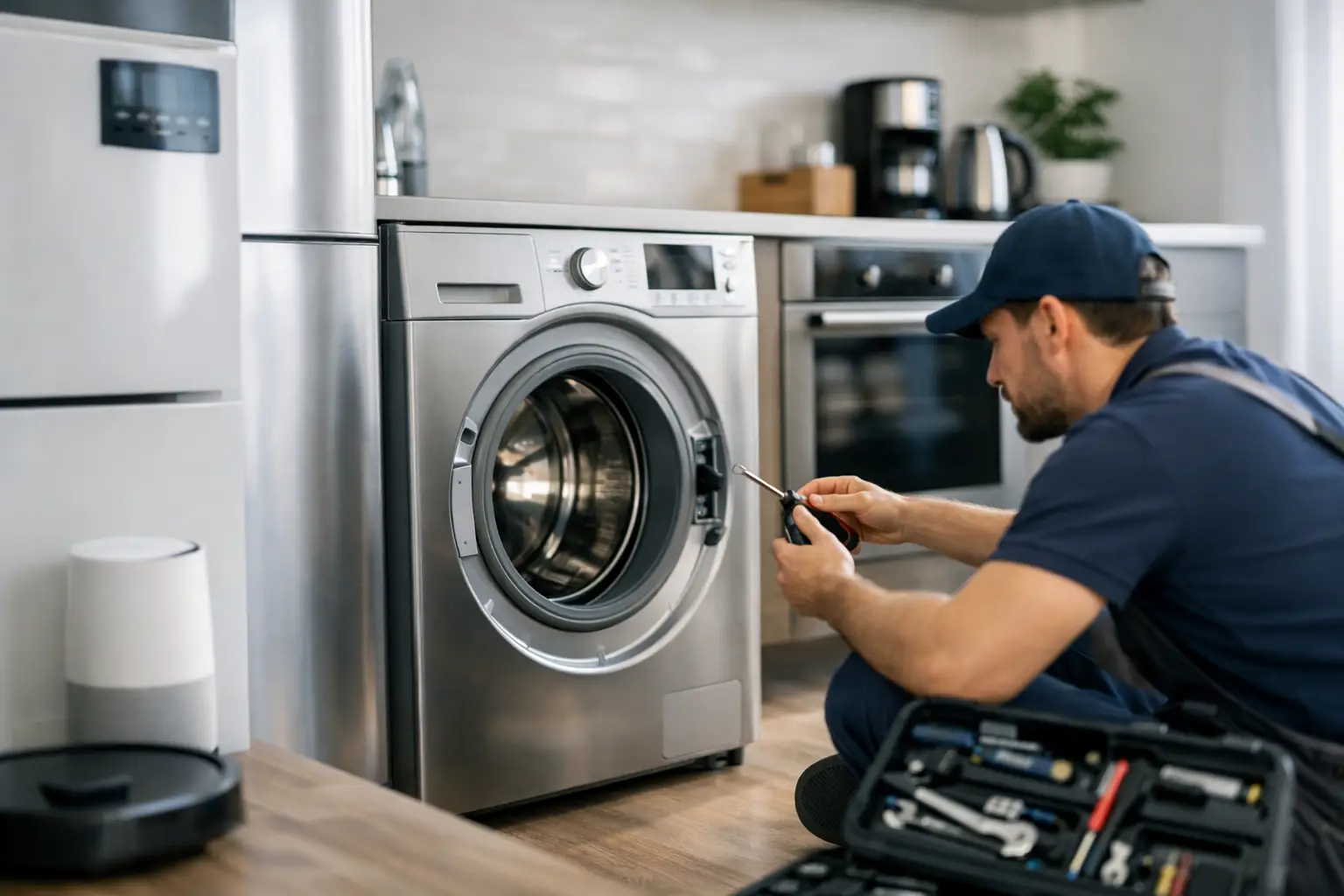
Broken refrigerator? Dryer won’t heat? Dishwasher leaking across the kitchen floor? A home appliance warranty guide can help you understand where financial protection begins and ends before a repair bill adds more stress to an already disruptive problem. The right coverage may save money on a major component failure, but a warranty is not a blank check for every appliance problem.
For most homeowners, the best approach is simple: know which warranty you have, read its limits before scheduling service, and keep basic records. That preparation can make a frustrating breakdown easier to manage and help get your appliance back up and running faster.
Not Sure You Need a Repair?
Before you pay for a service call, try FixDecision AI. Describe what's wrong with your appliance and get a safety-first assessment to help you decide whether to DIY or call a professional.
The three types of appliance coverage
Appliance coverage is often described with one word – warranty – but the details vary widely. Your protection may come from the manufacturer, a retailer, an extended service contract, or a home warranty plan. Each one has different rules for eligibility, service calls, parts, labor, and replacement.
Manufacturer warranties
Most new appliances include a limited manufacturer warranty. One year of parts and labor coverage is common, although certain components may have longer protection. A refrigerator compressor, for example, may carry a longer parts-only warranty than the rest of the refrigerator.
“Limited” matters. The manufacturer may cover a failed part caused by a defect but not labor after the first year. It may also exclude cosmetic damage, installation errors, clogged drain lines, filters, normal wear, or damage from power surges. Your original receipt, model number, serial number, and installation date can all be needed when you file a claim.
Extended warranties and service plans
An extended warranty is usually a service contract purchased separately from the appliance. It can add years of coverage and may include parts and labor after the manufacturer warranty expires. Plans differ considerably, so the value depends on the appliance, plan price, deductible, covered components, and claim restrictions.
A plan may be more appealing for a high-end refrigerator, built-in oven, or laundry pair with expensive electronic controls. For a basic microwave or an older dishwasher, putting the plan cost toward future repairs may make more sense. Read whether the plan pays for diagnosis, delivery, installation, food loss, or a replacement if a repair is not practical.
Home warranty plans
A home warranty is a broader annual contract that can cover multiple household systems and appliances. Homeowners usually pay a monthly or annual premium plus a service fee for each claim. These plans can be useful when several aging appliances are in the home, but they commonly have payout caps, exclusions, and rules about pre-existing conditions.
The provider may choose the technician, decide whether a repair is covered, and offer a cash allowance instead of replacing an appliance. That allowance may not match the cost of a comparable new model. Home warranty coverage can provide peace of mind, but it is worth reviewing the contract before relying on it during an emergency.
What an appliance warranty usually covers
Coverage generally focuses on mechanical or electrical failure during the applicable term. Depending on the agreement, covered repairs may include a failed control board, compressor, heating element, motor, pump, door latch, thermostat, or other internal component.
The claim still has to meet the contract conditions. A technician may need to diagnose the issue first, and the warranty administrator may require authorization before repairs begin. If you approve work without that authorization, reimbursement could be denied even if the failed part would otherwise qualify.
Coverage also does not always mean a completely free repair. Some plans charge a trip fee, deductible, or service-call fee. Others cover replacement parts but not labor, or cover labor up to a set amount. Ask for a clear explanation of your out-of-pocket responsibility before work starts.
Common exclusions that surprise homeowners
A warranty can be valuable, but exclusions are where many claims are decided. Exact terms vary, yet these issues are frequently excluded or limited:
- Normal wear, rust, corrosion, mineral buildup, or gradual deterioration
- Damage caused by misuse, pests, improper installation, moving, or accidents
- Problems linked to clogged vents, drain hoses, filters, ducts, or household plumbing
- Cosmetic issues such as scratches, dents, knobs, handles, and finish damage
- Food loss, laundry damage, spoiled items, or related property damage
- Commercial use, rental use, or appliances outside the plan’s age or model limits
Maintenance-related exclusions deserve special attention. A dryer that overheats because its vent is blocked or a dishwasher that drains poorly because of a neglected filter may not qualify for coverage. Regular cleaning and basic care protect appliance performance while reducing the risk of a disputed claim.
Home appliance warranty guide: Steps to take before service
When an appliance stops working, avoid assuming it is covered or that it needs immediate replacement. A few careful steps can protect both your household and your claim.
First, check for obvious safety concerns. Turn off power to a sparking appliance, shut off water to an active leak, and do not keep running a dryer that smells hot or burns. If a refrigerator has failed, move perishable food to another refrigerator or cooler as soon as possible.
Next, locate your warranty documents and confirm the model and serial number. Review the coverage dates, service fee, claim phone number, and requirement to use an authorized provider. Take photos or a short video of error codes, leaks, unusual sounds, or visible damage. This information can help the technician diagnose the failure and support your claim.
Then report the problem promptly. Describe symptoms accurately rather than guessing at a failed part. Saying that a washer fills but will not spin, or that a refrigerator is warm while the interior light still works, gives a service professional more useful information than requesting a specific part.
Do not disassemble the appliance or attempt complex repairs while waiting for a warranty decision. Unauthorized work can complicate coverage, create a safety risk, and turn a manageable repair into a larger problem.
Repair, replacement, and the warranty decision
A warranty claim does not automatically mean replacement is the best answer. If a covered repair restores a relatively young appliance at little cost to you, repair is usually the practical choice. Replacing an appliance can involve delivery, installation, haul-away, and possible changes to cabinetry, hookups, or flooring.
On the other hand, an older appliance with repeated failures may not be worth continued investment, especially if the plan offers only a limited repair allowance. Consider the appliance’s age, reliability history, repair estimate, energy use, and the availability of parts. A technician can explain whether the failure is isolated or a sign that more expensive problems may follow.
If warranty coverage is denied, ask why. A clear written explanation can help you determine whether the issue falls outside the contract, requires a maintenance correction, or may be eligible under a different warranty. Keep all invoices and diagnostic notes, particularly when an appliance has a longer component-specific manufacturer warranty.
Choosing repair help without losing coverage
Warranty rules and repair quality both matter. Before scheduling, ask whether the provider is authorized for your plan and whether diagnostic charges are covered. Confirm that the technician will submit any required estimate or authorization before installing parts.
For repairs outside a warranty, choose a qualified local professional who can diagnose the actual issue, explain the recommended fix, and provide clear pricing. US Appliance Repairs helps homeowners connect with independent local repair providers, but coverage and workmanship terms should always be confirmed directly with the provider and warranty administrator.
A dependable repair starts with accurate information, not assumptions. Keep your paperwork in one place, follow the maintenance requirements in the owner’s manual, and act quickly when a problem appears. That small amount of preparation can protect your budget and bring real peace of mind when an essential appliance needs attention.