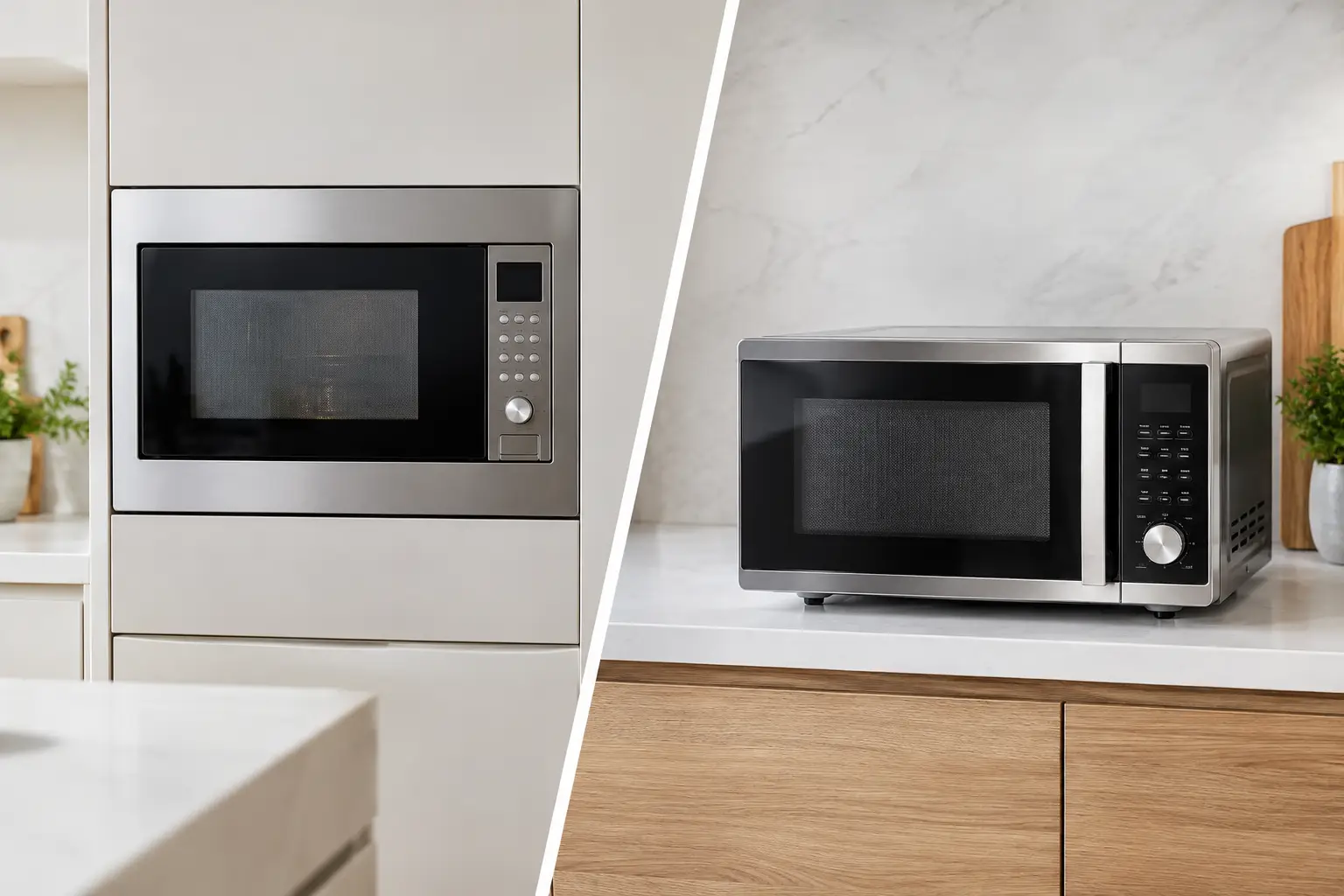
A microwave that quits during a busy week can make every meal feel harder. But when you are replacing one, the built in versus countertop microwave decision affects more than where you reheat leftovers. It changes your counter space, kitchen layout, installation cost, and how easily the appliance can be serviced later.
A countertop microwave is usually the faster, lower-cost answer. A built-in model can give your kitchen a cleaner, more finished look, but it requires planning and often a larger budget. The right choice depends on how you use your kitchen, how long you expect to stay in the home, and whether your existing cabinet space can safely support the microwave you want.
Not Sure You Need a Repair?
Before you pay for a service call, try FixDecision AI. Describe what's wrong with your appliance and get a safety-first assessment to help you decide whether to DIY or call a professional.
Built In Versus Countertop Microwave: The Main Difference
A countertop microwave sits on a stable, level counter and plugs into a standard grounded outlet. It is designed to release heat through specific vents, so it needs open space around the sides, back, or top as directed in the owner’s manual. Most homeowners can set one up in minutes.
A built-in microwave is installed into cabinetry, a wall opening, or a designated microwave shelf. Some models are made specifically for built-in use. Others are countertop units installed with a manufacturer-approved trim kit. The trim kit creates a finished appearance and, more importantly, preserves the ventilation space the microwave needs to operate safely.
Do not assume a countertop microwave can be enclosed in a cabinet just because it physically fits. Blocking its vents can cause overheating, shortened component life, repeated shutdowns, or a potential safety concern. A proper built-in installation must follow the appliance manufacturer’s clearance, electrical, and mounting requirements.
Cost: Purchase Price Is Only Part of the Equation
Countertop microwaves generally cost less upfront. Basic units are widely available, and even higher-capacity countertop models typically cost less than a built-in microwave plus professional installation. If your old unit fails unexpectedly, this can be the practical route to getting your kitchen back up and running quickly.
Built-in microwave costs vary much more. You may pay for the appliance, a trim kit, cabinet modifications, electrical work, and installation. Replacing an existing built-in microwave with the same dimensions is usually simpler than creating a new opening in cabinetry. However, exact replacement sizes can be difficult to find when an older model has been discontinued.
Homeowners sometimes choose a countertop model after a built-in failure to avoid a costly cabinet alteration. That can be a sensible short-term decision, especially if a kitchen renovation is planned later. If preserving an uncluttered counter matters more, paying for a properly sized built-in replacement may be worth it.
Space and Kitchen Layout
Countertop models take up usable prep space. In a small kitchen, that lost space can be frustrating every day, particularly when the microwave is large enough for dinner plates, casserole dishes, or family-size portions. On the other hand, a countertop unit can be moved, replaced, or relocated with very little effort.
A built-in microwave frees up the counter and gives the kitchen a more organized appearance. It can also place the controls at a more comfortable height, depending on the cabinet design. This is useful for homeowners who do not want to bend down to use a microwave placed below the counter.
Placement still matters. A built-in microwave installed too high can make it difficult to safely remove hot food. One installed too low may be inconvenient for adults or inaccessible for some household members. Before ordering, measure the opening, cabinet depth, door swing, nearby drawers, and the path needed to remove hot dishes.
What to Measure Before Buying
Before choosing either style, write down the microwave’s width, height, and depth, along with the available space around it. For a built-in installation, confirm the cabinet opening dimensions and required ventilation clearance from the installation instructions, not just the exterior appliance dimensions.
Also check these practical details:
- Whether the outlet is correctly located and accessible after installation
- Whether a cabinet door, pantry door, or refrigerator door will interfere with the microwave door
- Whether the shelf or cabinet structure can support the unit’s weight
- Whether the model’s venting requirements match the planned location
These checks can prevent an expensive return or an installation that looks finished but overheats during normal use.
Performance and Capacity
Built-in and countertop microwaves can both heat food effectively. Performance depends more on wattage, interior capacity, sensor cooking features, turntable design, and the condition of the appliance than on whether it is built into cabinetry.
Countertop microwaves offer the broadest selection. You can find compact units for apartments, medium-size models for everyday cooking, and larger options with sensor settings and higher wattage. This makes it easier to match the microwave to your actual cooking habits rather than to a fixed cabinet opening.
Built-in models may offer more premium finishes and a coordinated appearance with wall ovens or other kitchen appliances. Some are designed as microwave drawers, which open from the top and can be convenient for lifting food in and out. Those features can be helpful, but they also add mechanical parts and can increase the cost of future repairs.
If you use a microwave mainly for coffee, frozen meals, and quick reheating, a dependable countertop model may meet your needs without extra expense. If it is part of a long-term kitchen design and used several times a day, a built-in unit may offer better daily convenience.
Installation and Safety Considerations
A countertop microwave should sit on a solid, dry surface away from heat, water, and the edge of the counter. Avoid using an extension cord unless the manufacturer specifically permits it. The cord should not be pinched behind the appliance or stretched across a work area.
Built-in installation is less forgiving. Cabinet cutouts, trim kits, mounting brackets, and electrical connections must be correct. A microwave needs adequate airflow even when it is surrounded by finished cabinetry. If the opening is too tight or the power cord cannot reach the outlet safely, forcing the installation can lead to trouble.
An over-the-range microwave is a separate category worth mentioning. It may look built in, but it also functions as a range hood and requires proper mounting and ventilation planning. Replacing one involves more than swapping a countertop unit, especially if venting, mounting plates, or electrical connections need attention.
Repair and Replacement: Which Is Easier to Service?
Countertop microwaves are usually easier to remove for service or replacement. If the repair cost does not make sense compared with a new unit, homeowners can often replace the appliance the same day without affecting cabinets or trim.
Built-in microwaves can be repairable, but access takes more time. A technician may need to remove a trim kit, mounting hardware, or surrounding panels before diagnosing the problem. That added labor can affect the total repair estimate. It also means a simple microwave failure can leave a visible gap in the kitchen until the unit is repaired or replaced.
Common microwave problems include no heat, sparking, a non-turning turntable, unusual noise, error codes, a door that will not latch, or a display that goes dark. Do not remove the microwave cabinet yourself to investigate. Microwaves contain high-voltage components that can remain dangerous even after the unit is unplugged.
For a newer built-in model with a good cosmetic condition, repair may be a reasonable choice, especially when the alternative includes cabinet work. For an older countertop unit with a major heating or control-board failure, replacement is often more economical. A qualified technician can help identify the failed part and give you a clear repair-versus-replacement recommendation.
How to Choose With Fewer Regrets
Choose a countertop microwave when speed, flexibility, and a lower upfront cost matter most. It is also the practical choice for renters, homeowners planning a renovation, or anyone who wants the easiest future replacement.
Choose a built-in microwave when preserving counter space and maintaining a finished kitchen design are priorities. Just budget for proper installation and make sure the chosen model fits the opening, ventilation requirements, and electrical setup.
If your current microwave has stopped heating, trips the breaker, sparks, or will not close properly, focus on safety before appearance. A reliable local appliance technician can assess the issue and help you make a decision that gets your kitchen working again without paying for the wrong solution.