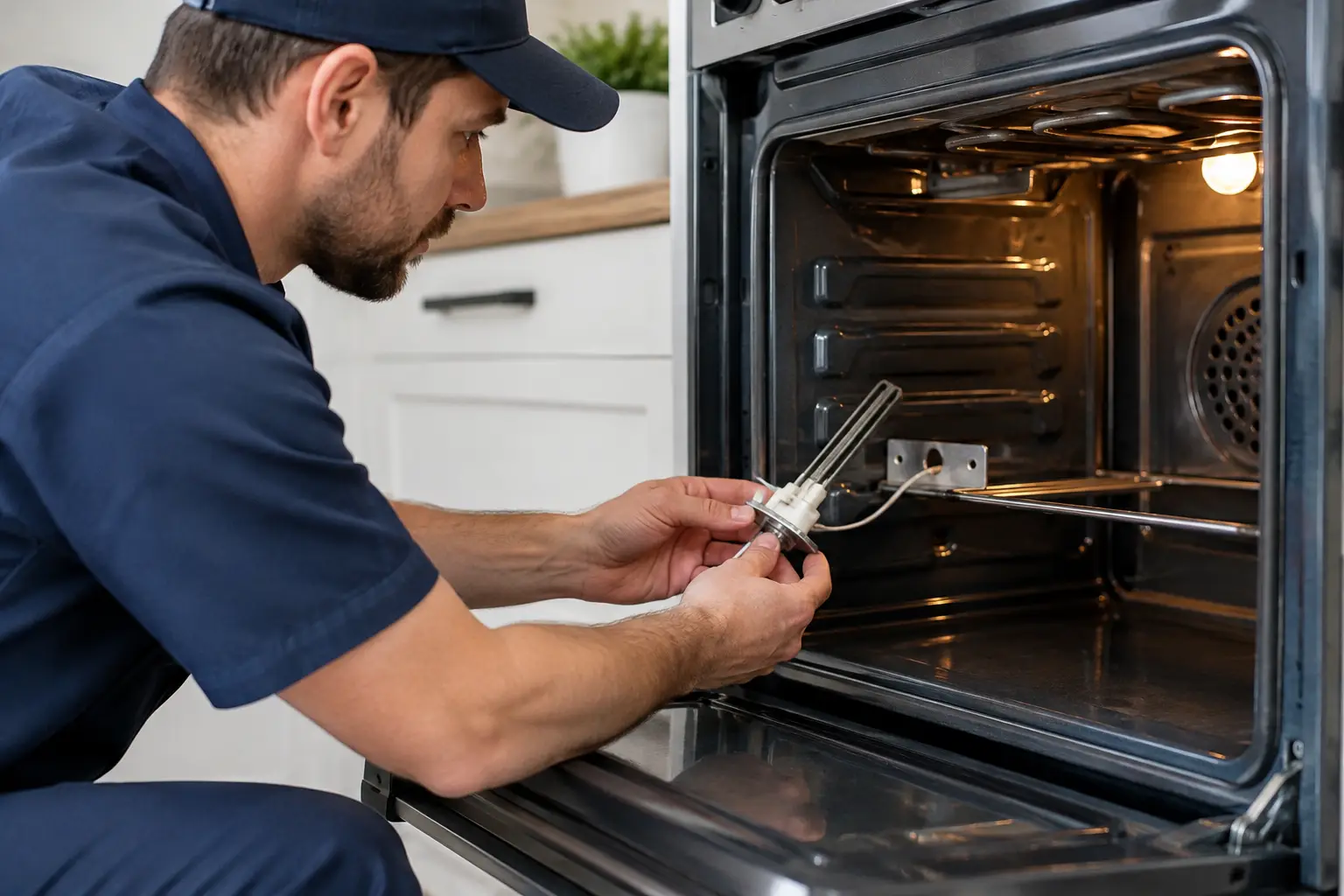
Your oven is preheated, dinner is planned, and the burner glows without ever lighting the gas. That is one of the most common calls for oven igniter replacement. A failing igniter can turn a dependable oven into a source of stress quickly, but the problem is usually repairable when it is diagnosed correctly.
For homeowners, the goal is not simply to get a flame. It is to make sure the oven lights reliably, heats to the selected temperature, and operates safely. Knowing the warning signs can help you decide whether to schedule service now, troubleshoot a simple issue, or consider whether an older range is worth repairing.
Not Sure You Need a Repair?
Before you pay for a service call, try FixDecision AI. Describe what's wrong with your appliance and get a safety-first assessment to help you decide whether to DIY or call a professional.
What an Oven Igniter Does
Most gas ovens use a hot-surface igniter to start the bake or broil burner. When you select a cooking temperature, electricity heats the igniter until it glows bright orange or yellow. As it draws the proper amount of electrical current, the oven safety valve opens and gas flows to the burner, where it ignites.
That sequence matters because an igniter can appear to work while still being too weak to open the gas valve. You may see a glow but get no flame, a delayed flame, or an oven that takes far too long to preheat. In many cases, the igniter is the failed part, but a technician should also rule out a faulty safety valve, wiring issue, control board problem, or gas-supply concern.
Electric ovens do not use gas igniters. If an electric oven will not heat, the cause may be a burned-out bake element, broil element, temperature sensor, wiring connection, or electronic control. The symptoms may look similar, but the repair is different.
Signs You May Need Oven Igniter Replacement
A weak igniter usually gives homeowners a few warnings before it fails completely. The clearest sign is a gas oven that will not ignite even though the igniter glows. You may also notice that the oven takes longer than usual to preheat, that the burner lights only after a long delay, or that the oven struggles to reach the temperature shown on the display.
Listen and watch carefully from a safe distance. When an oven starts normally, the igniter glows, the gas valve opens, and the burner lights within a reasonable time. If the igniter glows for 60 to 90 seconds without a flame, turn the oven off. Do not keep cycling it in hopes that it will eventually light.
Other signs deserve prompt attention. A gas smell, a popping sound before ignition, an uneven flame, repeated burner outages, or a breaker that trips can point to a problem beyond a worn igniter. Stop using the appliance if you smell gas. Avoid switches, flames, and electrical devices near the area, leave the home if the odor is strong, and contact your gas utility or emergency services as appropriate.
A Glowing Igniter Is Not Always a Good Igniter
Many homeowners assume a glowing igniter is functioning properly. Unfortunately, glow alone is not the test. Over time, the igniter can weaken and draw too little current to open the safety valve. It may still glow red or orange, but the burner will not receive enough gas to light.
This is why replacing parts based on appearance can be frustrating and costly. A qualified appliance technician can test the igniter and related components, confirm the actual failure, and install the correct replacement for your oven model.
Is Oven Igniter Replacement a DIY Job?
Some experienced homeowners replace an oven igniter themselves, particularly when the part is accessible inside the oven cavity. Even so, this is not a repair to approach casually. It involves electrical connections, delicate mounting hardware, sharp sheet-metal edges, and a gas appliance that must operate correctly once reassembled.
The right choice depends on your comfort level, the oven design, and the symptoms. A straightforward replacement can become more involved if screws are seized, the connector differs from the new part, the burner assembly has corrosion, or the real issue is a safety valve or control board. Using the wrong igniter can also create poor ignition performance or damage the appliance.
If you choose to inspect the oven, turn off power at the breaker or unplug the range first. For gas models, shut off the gas supply if the appliance must be moved or if you are working near gas connections. Never test for leaks with a flame, and do not bypass safety devices. When there is any uncertainty, professional service is the safer path and often the faster way to get dinner plans back on track.
What Does Oven Igniter Replacement Cost?
The total cost of oven igniter replacement typically includes a service-call or diagnostic fee, the part, and labor. Many homeowners can expect a repair in the general range of $150 to $400, though local labor rates, oven brand, part availability, and the complexity of access can move the final price higher or lower.
A basic igniter may be relatively inexpensive, but the service cost is about more than installing a part. A technician diagnoses the failure, confirms safe burner operation, checks the oven’s heating performance, and helps prevent a return visit for a related issue. Premium brands, wall ovens, double ovens, and models with hard-to-access components may require more labor.
Ask for a clear estimate before work begins. A reliable provider should explain whether the diagnostic charge is applied toward the repair, what part is being replaced, and whether the estimate includes labor and applicable service fees. If additional problems are found, you should know the options before authorizing more work.
When Repair Makes Sense and When It May Not
For a gas range or wall oven that is otherwise in good condition, replacing an igniter is often a sensible repair. It is a common wear-related failure, and restoring proper ignition can add useful years to the appliance. Repair is especially attractive when the oven is under 10 years old, has no recurring electronic issues, and meets your household’s cooking needs.
Replacement may deserve consideration when the oven has several expensive problems at once, such as a failing control board, damaged door hinges, unreliable burners, heavy rust, or repeated ignition failures. Age matters, but it is not the only factor. A well-maintained older range may be worth fixing, while a newer unit with costly recurring failures may not be.
A technician can help you compare the repair estimate with the likely value and remaining life of the appliance. That information gives you a practical decision instead of an expensive guess.
How to Reduce Future Igniter Problems
Igniters wear out over time, so no maintenance routine can guarantee they will last forever. Still, keeping the oven clean can prevent spills and grease from building up around the burner area. Use the self-clean cycle only according to your manufacturer’s guidance, since extreme heat can sometimes stress electronic components in older or already troubled ovens.
Avoid slamming the oven door, and do not cover the oven bottom or vents with foil unless your appliance manual specifically permits it. Restricted airflow and trapped heat can affect cooking performance. If preheating starts taking longer, schedule service before the igniter fails completely and leaves you without an oven at the worst possible time.
Get Reliable Help for a Gas Oven That Will Not Light
A gas oven that will not heat is more than an inconvenience when meals, holidays, and busy weeknights depend on it. Fast diagnosis matters because similar symptoms can come from very different parts. A certified technician can determine whether you need an igniter, a valve, an electrical repair, or a different solution entirely.
US Appliance Repairs can help homeowners connect with independent local appliance repair providers for oven problems and other urgent household repairs. The priority is getting clear answers, dependable service, and peace of mind that the job is handled safely.
If your igniter glows but the burner will not light, or your oven has begun taking much longer to preheat, do not wait for a complete failure. Arrange qualified service while the issue is still manageable, and you can get back to cooking with confidence.