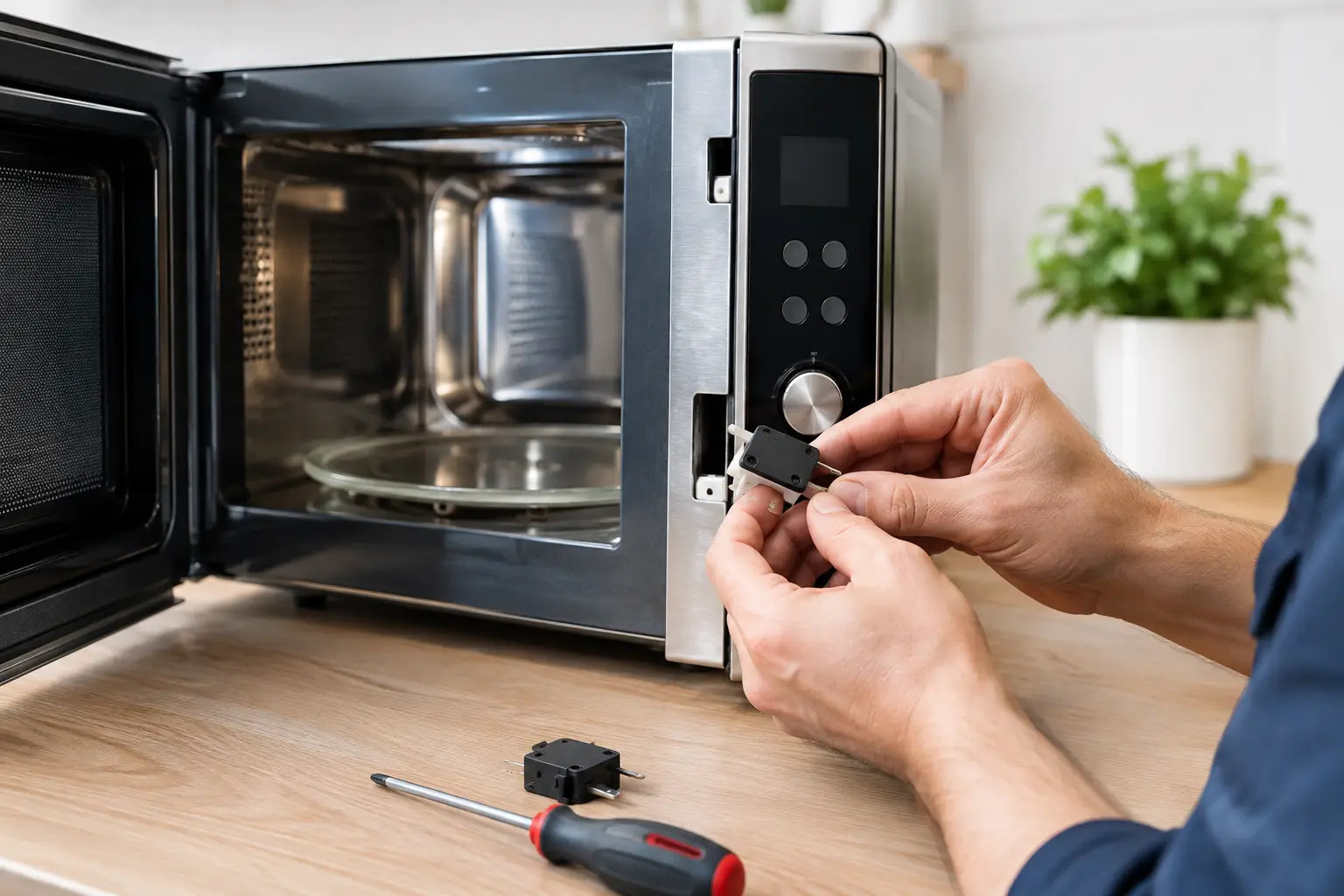
A microwave that runs only when you hold the door shut, refuses to start, or keeps running after the door opens is not a minor annoyance. This microwave door switch guide explains what may be happening, what you can safely check at home, and when fast professional repair is the right call. Because the door switch system is a safety feature, problems deserve prompt attention.
Not Sure You Need a Repair?
Before you pay for a service call, try FixDecision AI. Describe what's wrong with your appliance and get a safety-first assessment to help you decide whether to DIY or call a professional.
What a microwave door switch does
Your microwave has a set of small safety switches behind the control-panel side of the door opening. When the door closes, plastic door latches press these switches into position. The switches tell the microwave control system that the door is fully shut and that it is safe to operate.
Most microwaves use two or three switches, often called interlock switches. One allows the unit to run when the door is closed. Another acts as a backup safety switch. Some models use a monitor switch designed to prevent operation if the other switches do not engage in the correct order.
That arrangement is why a failed switch can create confusing symptoms. A microwave may have power and a working display but refuse to heat. It may blow a fuse when the door is opened or closed. In more concerning cases, it may continue to run after the door is opened. Do not keep testing a microwave with that last symptom. Unplug it and arrange service.
Microwave door switch guide: common warning signs
Door-switch problems can look like other microwave failures, including a bad fuse, latch bracket, control board, or door alignment issue. Still, certain patterns point toward the interlock system.
A common complaint is that the microwave works only if you lift, push, or hold the door in a particular position. That can mean the door is sagging slightly, a latch hook is worn, or a switch actuator is no longer lining up correctly.
Another sign is a microwave that does nothing when you press Start, even though the interior light, clock, and keypad work. If the unit recognizes the door as open, it will not allow a cooking cycle to begin. You may also hear a click as the door closes but get no response afterward.
A blown household breaker is less typical, but a microwave fuse that repeatedly fails when you open or shut the door can indicate an interlock-switch timing problem. Do not replace fuses repeatedly in hopes that the problem will disappear. The underlying fault needs to be identified.
Watch for these additional clues:
- The microwave stops running when the door is lightly moved.
- The display shows a door-related message or acts as if the door is open.
- The door feels loose, droops, sticks, or will not latch cleanly.
- The microwave runs with the door open, or the interior light behaves unexpectedly.
The final symptom is a stop-using-it-now situation. Disconnect power by unplugging the microwave if the plug is safely reachable. For an over-the-range model with no accessible plug, turn off the appropriate circuit breaker and contact a qualified appliance technician.
Safe checks homeowners can make first
You do not need to take the cabinet apart to gather useful information. Start by unplugging a countertop microwave or switching off power to a built-in or over-the-range unit. Inspect the door, handle area, and latch openings for food buildup, broken plastic, or an object preventing the door from closing evenly.
Wipe the latch area with a soft, damp cloth, then dry it thoroughly. Grease and hardened food can keep the latch hooks from moving freely. Avoid spraying cleaner into openings around the door or control panel.
Next, slowly close the door and notice whether it sits squarely in the frame. A door that visibly sags, rubs against the frame, or needs a hard push may have a worn latch assembly, hinge issue, or loose mounting component. Do not force it. Forcing the door can break a latch hook or move an already misaligned switch farther out of position.
If the microwave has simply become unresponsive, a basic power reset can rule out a temporary electronic glitch. Leave the unit disconnected from power for several minutes, restore power, and test one normal heating cycle with a cup of water. Stop immediately if you smell burning, hear loud buzzing, see sparks, or notice abnormal operation when opening the door.
Do not remove the outer microwave cover to inspect or replace a door switch yourself. Microwaves contain a high-voltage capacitor that can retain a dangerous electrical charge even after the appliance has been unplugged. Door-switch access also often requires removing panels and correctly reassembling safety components. This is a repair where doing the job right the first time matters more than saving a service call.
Why door switches fail
Normal wear is one reason. Every time a microwave door opens and closes, the latch hooks and switches move. A heavily used family microwave can accumulate thousands of cycles over time.
Slamming the door can speed up wear or knock the latch bracket out of alignment. So can opening the door by pulling the edge rather than using the handle, especially if the handle is loose. A damaged handle may seem cosmetic, but it can put extra strain on the latching system.
Steam, grease, and spills also matter. Kitchen residue can affect moving latch parts, while moisture and age can contribute to electrical switch failure. In some cases, the switch itself is fine and the real problem is a cracked plastic latch hook or a loose switch mount. Accurate diagnosis prevents paying for parts that do not solve the problem.
What professional microwave door switch repair involves
A qualified technician will first confirm that the appliance is disconnected and safely discharge the high-voltage system before working inside. They can inspect the door hooks, latch bracket, switch mounts, wiring connections, fuse, and the condition of each interlock switch.
Testing is more involved than checking whether a switch clicks. The switches must open and close in the intended sequence. A technician uses electrical testing equipment to verify continuity and assess whether the switch is sticking, shorted, or failing intermittently. They also check whether the door is aligned well enough for the replacement part to work reliably.
If a switch is replaced, the technician should test door operation and heating performance after reassembly. For over-the-range microwaves, access can take longer because the appliance is mounted above the cooktop. The unit may need to be supported or removed to reach components safely.
Typical repair cost and repair-versus-replacement choices
A microwave door switch is generally an affordable part, but the total repair price depends more on diagnosis, labor, service-call charges, and the microwave style. A straightforward switch or latch repair may cost less than replacing a quality over-the-range or built-in microwave. A mounted unit also adds installation considerations if replacement becomes necessary.
Repair is often the sensible choice when the microwave is under roughly eight to ten years old, has otherwise worked reliably, and only needs a switch, latch, or alignment correction. It can also be worthwhile when the microwave matches a kitchen trim kit, venting setup, or cabinet opening that would make replacement inconvenient.
Replacement may make more sense if the microwave has multiple major issues, such as a failing control board, damaged door, corroded cavity, recurring fuse failures, or poor heating in addition to the door problem. A technician can help separate a simple interlock repair from a larger electrical or mechanical failure.
Preventing future latch and switch trouble
Close the door using the handle rather than pushing on the glass or the corner of the door. Keep the latch area clean, and do not slam the door to stop a cooking cycle. If you need to interrupt heating, use Stop or Cancel when practical, then open the door normally.
Pay attention to a handle that loosens or a door that begins to require extra pressure. Addressing alignment early can help prevent a small latch problem from turning into a switch, fuse, or mounting repair.
A microwave is convenient, but its door safety system is not a place for guesswork. If the door will not latch, the unit will not start, or it behaves abnormally when opened, take it out of service and get experienced help. US Appliance Repairs can help homeowners connect with local independent appliance repair providers, so you can get clear answers and work toward having your kitchen back up and running with greater peace of mind.