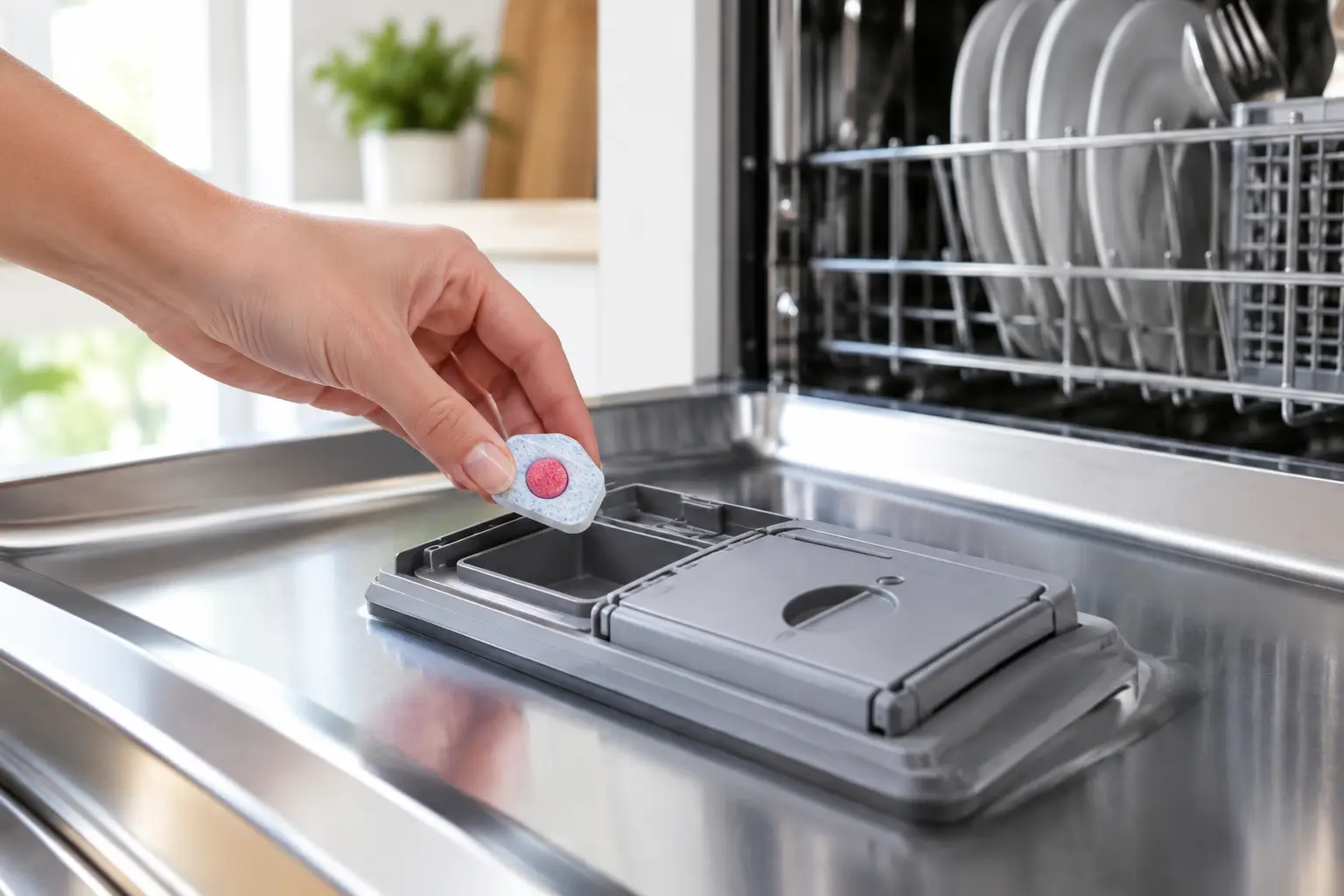
A dishwasher can fill, spray, drain, and still leave every plate looking cloudy if the detergent never reaches the wash water at the right time. This dishwasher detergent dispenser guide explains what the dispenser does, why it fails, and which simple checks are safe to make before you call for repair help.
The good news is that a dispenser problem is often visible and specific. A detergent pod sitting untouched in the cup, a door that stays closed, or gritty detergent streaks after a cycle can point you in the right direction. The harder part is separating a loading or detergent issue from a mechanical failure inside the dishwasher door.
Not Sure You Need a Repair?
Before you pay for a service call, try FixDecision AI. Describe what's wrong with your appliance and get a safety-first assessment to help you decide whether to DIY or call a professional.
How a Dishwasher Detergent Dispenser Works
The detergent dispenser is usually mounted on the inside of the dishwasher door. Its small spring-loaded lid holds detergent through the early part of the cycle, then opens during the main wash. Depending on the model, a timer, electronic control board, wax motor, or small actuator releases the latch.
Many dispensers also include a rinse-aid reservoir. These are separate functions, even though they sit in the same assembly. Detergent handles food soil during the wash cycle, while rinse aid helps water sheet off dishes during the final rinse to reduce spots and improve drying.
When the dispenser door opens properly but detergent remains inside, the issue may be water flow or an obstruction. When the door never opens, the latch, actuator, wiring, or control system may need attention. That distinction can save time and prevent unnecessary parts replacement.
Signs Your Detergent Dispenser Has a Problem
Start by looking at the dispenser immediately after the cycle ends. If the compartment is still shut and full of detergent, the dishwasher did not release it. If it is open but packed with wet detergent, the dispenser likely opened but the detergent did not dissolve or rinse away.
Common symptoms include:
- A detergent pod remains whole or partly whole after the cycle
- Powder or gel is caked inside the dispenser cup
- The dispenser lid will not latch or pops open before the cycle starts
- Dishes come out greasy, dull, or covered in food residue
- White detergent streaks appear on glasses or the dishwasher door
- The rinse-aid cap leaks, will not close, or the reservoir empties unusually fast
Poor cleaning does not always mean the dispenser is defective. A clogged spray arm, weak circulation pump, failed heating element, low water temperature, or overloaded racks can cause similar results. That is why a few basic checks matter before assuming the dispenser itself is the problem.
Common Causes of a Dishwasher Dispenser Failure
A Dish or Rack Is Blocking the Lid
This is one of the easiest problems to miss. A large cutting board, tall pan, utensil handle, or incorrectly positioned lower rack can block the dispenser door as it swings open. The latch releases, but the door cannot open far enough for detergent to enter the wash water.
Before starting a cycle, close the detergent lid and slowly slide the racks in. Look for anything that touches the dispenser area. Keep tall cookware and long-handled utensils away from the inside of the door.
Moisture Has Hardened the Detergent
Powder and gel detergent can clump in a damp dispenser cup. Pods can also stick to moisture or leave a film if they sit in the compartment too long before the cycle starts. Once detergent hardens, water may not dissolve it completely.
Wipe the cup dry before adding detergent, especially if the dishwasher has been sitting open or you are running a delayed-start cycle. Store detergent in a cool, dry location with the container sealed. If your household has hard water, detergent residue may be more noticeable even when the dispenser is operating normally.
The Latch or Spring Is Damaged
If the dispenser will not stay closed, a worn latch, broken catch, or damaged spring may be the cause. If it stays closed through the whole cycle, the release mechanism may be failing instead. Plastic components in the door are exposed to heat, steam, detergent, and repeated use, so they can eventually crack or lose tension.
A broken latch is not usually an emergency, but it can make every wash cycle less effective. Replacing a dispenser assembly is often more reliable than trying to repair a tiny internal spring or damaged plastic tab.
The Actuator, Wiring, or Control Has Failed
On many dishwashers, the dispenser is released by a small electrical actuator. If that actuator does not receive power, or if it has failed internally, the door may stay shut even though the rest of the cycle appears normal.
This type of repair calls for more than a visual inspection. Accessing the door wiring may require removing interior panels, and electrical testing should be done with proper safety procedures. A certified appliance technician can test the dispenser circuit, actuator, door wiring, and control response rather than replacing parts based on guesswork.
Low Water Temperature or Weak Water Flow
A dispenser can open correctly and still leave detergent behind. Water that is too cool may not dissolve detergent well, particularly pods and some powders. Most dishwashers perform best with incoming water around 120 degrees Fahrenheit. If the water at the kitchen sink never gets hot, the dishwasher may be starting at a disadvantage.
Weak spray pressure is another possibility. Check that spray arms can rotate freely and that their small holes are not clogged with mineral buildup or debris. If you hear the dishwasher filling but not washing with normal force, a circulation problem may be preventing detergent from reaching the dishes.
Safe Checks Before Scheduling Dishwasher Repair
Turn off the dishwasher and let it cool before inspecting the dispenser. Do not force the lid open with a knife or pry tool. A cracked dispenser door can turn a minor cleaning issue into a replacement-part repair.
Clean the dispenser with a soft cloth and warm water, then test the lid by opening and latching it several times. It should move freely and click securely into place. Remove any detergent buildup around the latch, but avoid soaking electrical components or spraying cleaner into the door seams.
Next, run a normal cycle with the dishwasher loaded correctly and no item positioned in front of the dispenser. Use fresh detergent and make sure the dishwasher has hot water at the start of the cycle. If possible, run the kitchen faucet until hot water arrives before pressing Start. This helps the dishwasher begin with warmer incoming water rather than a cold line full of water.
After the cycle, check whether the dispenser opened. Also check whether the dishes are wet, dirty, or coated in residue. Those details are useful when discussing the problem with a repair provider because they help narrow the likely cause.
When to Call a Dishwasher Repair Technician
Call for professional help when the dispenser will not latch, never opens, has visible cracks, or continues to hold detergent after you have ruled out blocked loading and damp detergent. Service is also a smart choice when poor cleaning comes with other symptoms, such as unusual noises, standing water, a dishwasher that is not heating, or error codes on the display.
A technician can determine whether the issue is limited to the dispenser assembly or connected to a larger problem with circulation, heating, wiring, or electronic controls. That matters because replacing a dispenser will not solve a dishwasher that lacks wash pressure or is failing to heat water.
For homeowners weighing repair costs, the age and overall condition of the dishwasher matter. A dispenser repair on an otherwise dependable machine can be a practical way to keep it running. But if the unit has repeated failures, leaks, poor cleaning, and expensive electronic issues, it may be time to compare the repair estimate with replacement options.
Preventing Future Detergent Dispenser Problems
Keep the dispenser dry, avoid overfilling it, and load dishes so the lid has a clear path to open. Use the detergent amount recommended for your water conditions rather than assuming more detergent means cleaner dishes. Too much can leave residue and contribute to buildup in the dispenser area.
Clean the dishwasher filter regularly and inspect the spray arms when cleaning performance starts to slip. These small maintenance steps support proper water circulation and make it easier to tell when the dispenser is truly the source of the problem.
A dishwasher should make cleanup easier, not leave you rewashing dishes by hand. If the dispenser still will not do its job after these checks, prompt professional diagnosis can help get the appliance back up and running with less stress and fewer wasted cycles.