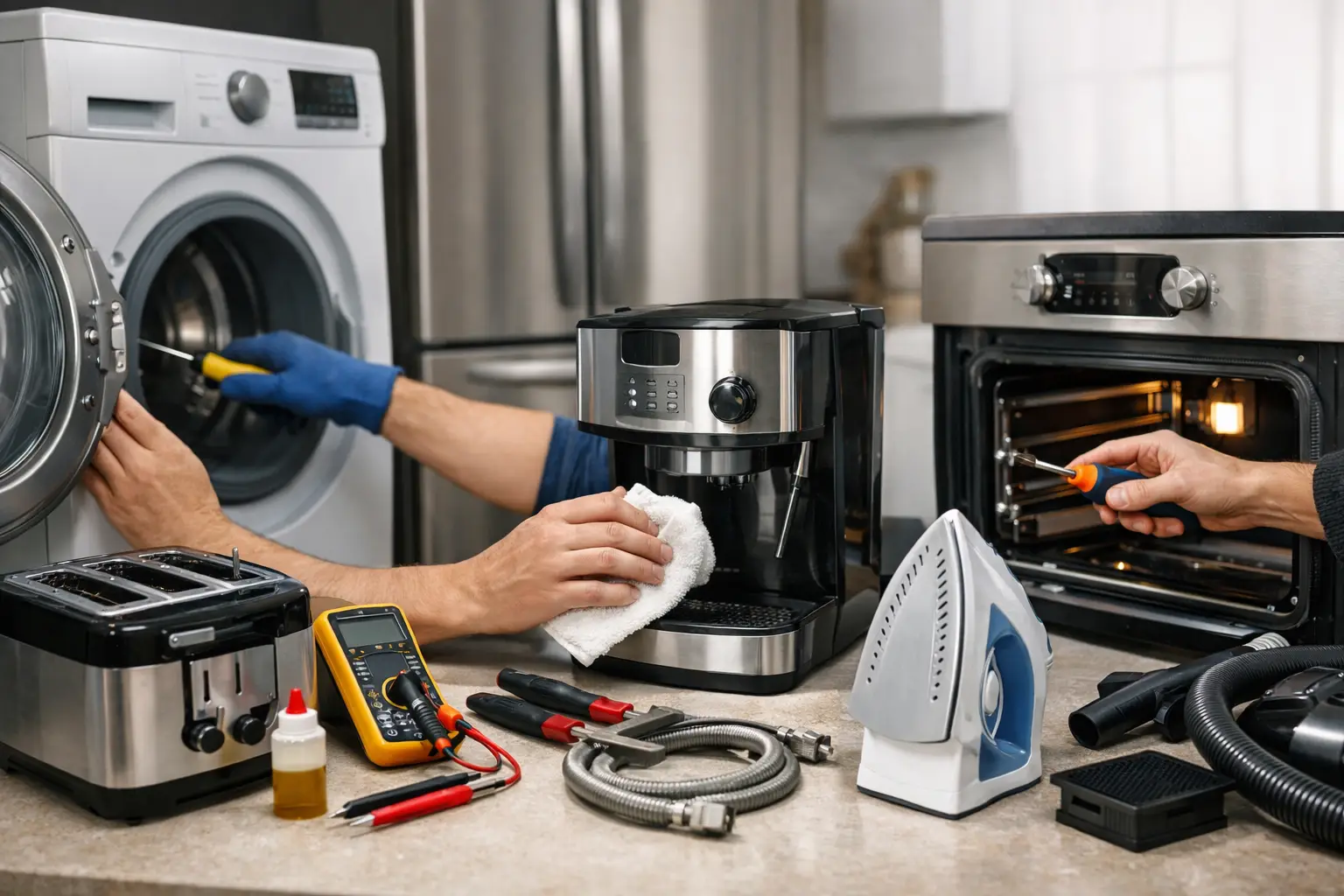
A refrigerator that stops cooling, a washer that will not drain, or a dryer that takes two cycles to finish a load can disrupt the whole household. Knowing how to maintain household appliances gives you a better chance of catching small issues before they become urgent repair calls. A few consistent habits can improve efficiency, extend appliance life, and help keep repair costs under control.
Maintenance does not mean taking apart a motor or working around live electrical components. For most homeowners, it means cleaning the areas you can safely reach, using each appliance correctly, and recognizing when a problem needs professional attention. The goal is simple: keep essential equipment reliable and get help quickly when something is not right.
Not Sure You Need a Repair?
Before you pay for a service call, try FixDecision AI. Describe what's wrong with your appliance and get a safety-first assessment to help you decide whether to DIY or call a professional.
Start With the Habits That Prevent Wear
Most appliances work harder when airflow is blocked, filters are dirty, seals are worn, or moving parts are overloaded. That extra strain can lead to higher utility bills and earlier component failure. A basic maintenance calendar is often more effective than waiting until something breaks.
Make a habit of wiping spills as they happen, checking hoses and power cords when you clean nearby, and listening for new sounds. Rattling, grinding, buzzing, repeated clicking, and unusual vibrations are not always emergencies, but they are worth investigating before they turn into a complete failure.
Always follow the care instructions for your specific model. Cleaning products, filter schedules, and recommended loading practices vary by appliance. Using more detergent than necessary, forcing an overloaded washer, or putting the wrong cookware on a glass cooktop can create problems that routine cleaning alone will not prevent.
Refrigerator and Freezer Maintenance
Your refrigerator runs all day, every day, so small maintenance issues can quickly affect food safety and energy use. Keep the interior temperature near 37 to 40 degrees Fahrenheit and the freezer at 0 degrees Fahrenheit. If food is freezing in the refrigerator section or milk is spoiling too soon, check the settings and make sure interior vents are not blocked by containers.
Clean up food spills promptly, especially around drawer tracks and door gaskets. Sticky residue can damage seals and make drawers harder to open. About every few months, wipe the door gaskets with mild soap and water, then dry them thoroughly. A loose or cracked gasket lets cold air escape, causing the compressor to run longer.
The condenser coils also need attention. Depending on the model, they may be behind the refrigerator or underneath it. Dust, pet hair, and lint can collect there and restrict heat release. Unplug the appliance before carefully vacuuming accessible debris with a brush attachment. If coils are difficult to access or you notice persistent overheating, call a qualified appliance technician rather than forcing panels or damaging wiring.
Do not pack the refrigerator or freezer so tightly that air cannot circulate. On the other hand, an almost empty freezer loses cold air quickly when opened, so keeping it reasonably stocked can help it maintain temperature more efficiently.
Keep Your Dishwasher Cleaning Effectively
A dishwasher that leaves grit on glasses or has standing water in the bottom is often dealing with a cleaning or drainage issue. Start by removing and rinsing the filter regularly. In many models, the filter sits under the lower spray arm and twists out by hand. Food particles trapped there can create odors, poor wash results, and drainage problems.
Check the spray arms for blocked holes. A wooden toothpick can gently remove visible debris, but avoid enlarging the openings. Run an empty cleaning cycle with a dishwasher cleaner recommended for your machine, particularly if you have hard water. Mineral buildup can affect spray performance and leave a cloudy film on dishes.
Use the right detergent amount for your water conditions. Too much detergent can leave residue, while too little may not clean properly. Make sure dishes do not block the spray arms or prevent the detergent dispenser from opening. If the dishwasher leaks, repeatedly fails to drain, or trips a breaker, stop using it and arrange professional service.
How to Maintain Household Appliances in the Laundry Room
Laundry appliances handle heavy loads, heat, water, and vibration. Their maintenance needs are straightforward, but skipping them can create fire risks, water damage, and expensive wear.
For the washing machine, inspect the supply hoses at least twice a year. Look for cracks, bulges, rusted fittings, or moisture around the connections. Rubber hoses can fail without much warning, especially as they age. Turn off the water supply valves if you will be away from home for an extended period, and consider replacing older hoses with high-quality braided versions.
Use the proper amount of high-efficiency detergent if your washer requires it. Excess suds can leave residue inside the drum, pump, and drain system. Run the washer’s cleaning cycle according to the owner’s manual. If your machine does not have one, use an approved washer-cleaning product periodically. Leave the door or lid slightly open after a load when practical, allowing moisture to evaporate and reducing musty odors.
Dryer maintenance deserves extra attention. Clean the lint screen before every load, not only when it looks full. Wash the screen occasionally with warm water and mild dish soap because fabric softener residue can reduce airflow. Most importantly, have the full dryer vent path inspected and cleaned regularly. Lint buildup in the vent is a serious fire hazard and can cause long drying times, excessive heat, and unnecessary strain on the dryer.
If the dryer smells hot, its exterior is unusually warm, or clothes take much longer to dry, stop using it until the venting and appliance can be checked.
Care for Ovens, Cooktops, and Microwaves
Kitchen cooking appliances tend to show their maintenance needs clearly. Burned-on spills, damaged heating elements, weak igniters, and faulty door seals can all affect performance and safety.
Clean oven spills after the appliance has cooled. Letting grease and food buildup remain through repeated cooking cycles can produce smoke and odors, and may eventually damage surfaces. Use the self-clean feature only as directed by the manufacturer. High-heat cleaning cycles can place stress on older ovens, so if the door lock, controls, or heating system already seem unreliable, a manual cleaning method may be the safer choice.
For gas cooktops, keep burner caps properly seated and clean food residue from the burner ports. An uneven flame, repeated clicking, or a burner that will not light can indicate a dirty component, but it can also point to an igniter or gas-supply issue. If you smell gas, leave the area, avoid switches or open flames, and contact your gas utility or emergency services as appropriate.
For electric and glass cooktops, use cookware with smooth, flat bottoms and clean spills with products made for the surface. Dragging heavy pans can scratch glass, while sugar spills should be addressed carefully and promptly because they can bond to the surface.
Microwaves need simple but regular cleaning. Wipe the interior after splatters and make sure the door closes firmly. Never use a microwave with a damaged door, bent hinges, broken latch, or damaged seal. Those problems require professional evaluation.
Know When Maintenance Should Become a Repair Call
There is a useful line between homeowner care and a repair that needs trained hands. Cleaning a filter, checking a gasket, or removing lint is reasonable. Replacing electrical parts, working with refrigerant, opening sealed systems, repairing gas components, or diagnosing recurring error codes is different.
Schedule service when an appliance leaks, sparks, smells like burning, fails to hold temperature, repeatedly trips a breaker, makes loud mechanical noises, or stops completing its normal cycle. Continuing to operate equipment under those conditions can increase damage and, in some cases, create a safety hazard.
Before booking service, write down the appliance brand, model number, approximate age, and the symptoms you noticed. Note whether the problem is constant or intermittent and whether an error code appears. This information helps a local repair provider arrive better prepared and may reduce delays. US Appliance Repairs can help homeowners connect with independent local technicians when routine maintenance is no longer enough to get an essential appliance back up and running.
A Simple Schedule That Works
Monthly, clean visible spills, inspect seals, clear refrigerator and dishwasher clutter, and clean the dryer lint screen. Every few months, clean dishwasher filters, inspect washer hoses, wipe refrigerator gaskets, and check for changes in noise or performance. Once or twice a year, clean accessible refrigerator coils, clean the washer, and arrange dryer vent service as needed based on household use.
The best maintenance routine is one you will actually keep. Put reminders on your calendar, handle small cleaning tasks while doing regular housekeeping, and do not ignore changes that persist after basic care. A little attention now can protect your appliances, your home, and your peace of mind when you need them most.