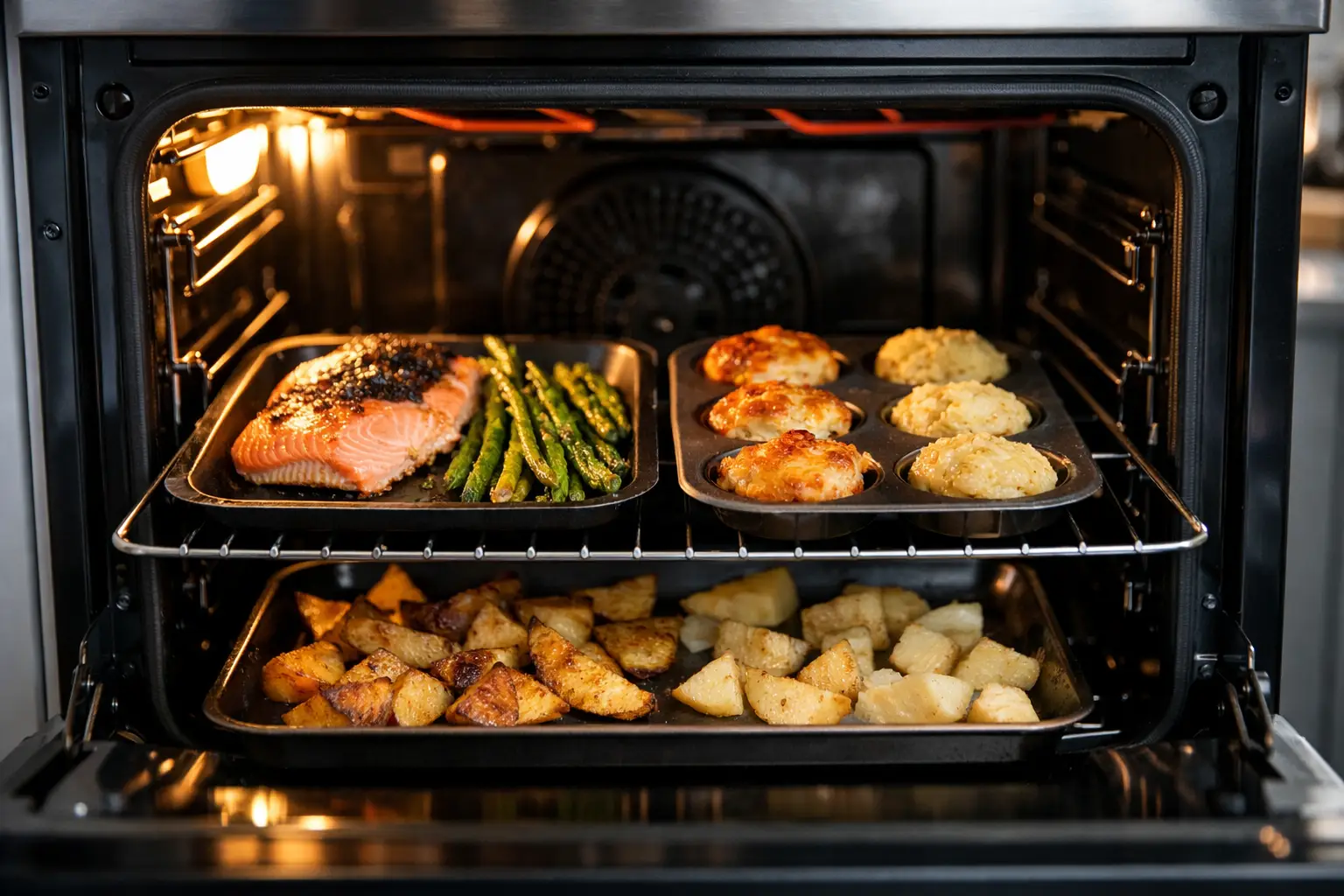
A batch of cookies burns on one side while the other side stays pale. A casserole is bubbling at the edges but cool in the middle. When an oven cooks food unevenly, dinner becomes a guessing game – and turning the pan every few minutes is only a temporary workaround.
Uneven cooking can come from something as simple as a crowded rack or a damaged baking sheet. It can also point to a failing heating element, temperature sensor, igniter, or convection fan. Knowing the difference helps you avoid wasted food, protect your appliance, and decide when fast repair help is the sensible next step.
Not Sure You Need a Repair?
Before you pay for a service call, try FixDecision AI. Describe what's wrong with your appliance and get a safety-first assessment to help you decide whether to DIY or call a professional.
Why an oven cooks food unevenly
Ovens are designed to cycle heat on and off to hold an average temperature. They do not stay at one exact temperature every second. A small amount of variation is normal, especially when the door opens or cold food goes inside. Consistent hot spots, undercooked centers, or food that takes much longer than expected are not.
The pattern you see often offers the first clue. If food is always darker in the back, heat may not be circulating properly. If the bottom burns before the top browns, the lower bake element may be overheating or staying on too long. If every dish needs extra time, the oven may be running cooler than the temperature shown on the control panel.
Rack position and airflow problems
Before assuming a major part has failed, look at how the oven is being used. Large roasting pans, foil placed over a rack, and multiple oversized baking sheets can block airflow. That matters even more in a convection oven, where a fan is supposed to move heated air around the cavity.
For most baking, use the center rack and leave space around the pan. Avoid lining the entire oven bottom or covering racks with foil unless the manufacturer specifically permits it. Foil can reflect heat, restrict circulation, and in some models create a fire risk or damage the oven surface.
Dark metal pans absorb more heat than shiny aluminum pans. Glass and ceramic dishes heat more slowly but retain heat longer. If one recipe works in a light-colored aluminum pan but overbrowns in a dark nonstick pan, the oven may not be the problem. Reduce the baking temperature slightly when a recipe or cookware manufacturer recommends it.
A weak or damaged heating element
Electric ovens commonly use a lower bake element and an upper broil element. During normal baking, the appliance may cycle both elements at different times. A bake element with a blister, crack, burn mark, or area that never glows can heat poorly and create cold zones.
A damaged element sometimes causes visible sparking, a burning smell, or a tripped breaker. Stop using the oven if this happens. Do not continue testing it or touch the element. Shut off power at the breaker and arrange for a qualified appliance technician to inspect the unit.
Not every failed element looks damaged. It may heat intermittently or fail only after it gets hot. A technician can test the element and its electrical connections safely and determine whether replacement is the right repair.
A temperature sensor or thermostat issue
If your oven reaches 350 degrees according to the display but food behaves as if it is cooking at 300 degrees, the temperature sensor may be inaccurate. In many modern ovens, this slim probe sits inside the oven cavity near the back wall. It tells the control board when to cycle the heat.
Grease buildup, a bent sensor, loose wiring, or an internal sensor failure can lead to inaccurate readings. Older ovens may use a mechanical thermostat instead. Either component can cause temperatures to swing too widely, resulting in uneven browning and inconsistent cook times.
You can check for a general temperature problem with an oven thermometer. Place it on the center rack, set the oven to a common baking temperature such as 350 degrees, and let it cycle for at least 20 to 30 minutes after preheating. Take several readings rather than relying on the first number you see. Ovens cycle by design, so the goal is to identify a consistent average that is noticeably too high or too low.
Some models allow temperature calibration through the control settings. Check the owner’s manual for the correct procedure and limit adjustments to the manufacturer’s recommended range. Calibration can help when the oven is only slightly off. It will not fix a failed sensor, failing element, or control-board problem.
A convection fan that is not doing its job
Convection ovens rely on a fan to distribute hot air. When the fan is operating correctly, food can cook more evenly across multiple racks. When it is weak, blocked, noisy, or not turning at all, the oven may develop obvious hot and cold spots.
Listen for the fan after the oven begins its convection cycle. A rattling, scraping, or humming sound without airflow may signal a worn motor or damaged fan blade. Because access to internal fan components can require removing panels and working near electrical wiring, this is usually a repair best left to a trained professional.
Keep in mind that convection settings are not ideal for every food. Delicate cakes, custards, and some quick breads can dry out or brown too fast under moving air. If uneven results happen only in convection mode, try the standard bake setting once before assuming the appliance has a defect.
A gas oven ignition or burner problem
Gas ovens heat differently from electric models, but uneven cooking is still a common complaint. A weak igniter may fail to open the gas valve fully or may take too long to do so. A dirty, damaged, or partially blocked burner can also create uneven flame distribution.
Signs of a gas oven problem include delayed ignition, repeated clicking, a weak flame, or a gas smell. If you smell gas, turn the oven off, avoid flames and electrical switches, leave the area if the odor is strong, and follow your gas utility’s safety instructions. Do not attempt to clean or adjust gas components yourself.
Safe checks before scheduling oven repair
A few simple checks can narrow down the problem without taking the appliance apart. First, make sure the oven door closes fully and that the door gasket is not torn, loose, or flattened. A leaking door lets heat escape and can make cooking slower and less predictable.
Next, compare results using one familiar recipe, one rack position, and one pan type. This removes variables that can make the issue harder to identify. If possible, test standard bake and convection bake separately. Note whether the problem is worse on the top, bottom, back, left, or right side of the oven.
Also consider the power supply. An electric range may appear to work while receiving only partial power, especially after a breaker issue or electrical fault. If the oven will not reach temperature, heats extremely slowly, or one element never gets hot, do not repeatedly reset breakers or continue using it. An appliance technician can evaluate the oven and recommend whether an electrician may also be needed.
When uneven oven cooking needs professional service
Schedule service when temperature differences are persistent, food is repeatedly undercooked or burned, the oven displays an error code, or you see damage to a heating element. Service is also the right choice if the fan has stopped, the door will not seal, the oven trips a breaker, or a gas unit has ignition concerns.
Professional diagnosis matters because several parts can produce nearly identical symptoms. Replacing a bake element when the real problem is a sensor or electronic control can add expense without restoring reliable performance. A qualified technician can test the appliance, identify the failed component, and explain the repair options before work begins.
For homeowners who need help finding local service, US Appliance Repairs can connect them with independent appliance repair providers for oven issues and other household equipment problems. Ask the provider about diagnostic charges, estimated repair costs, part availability, and whether the repair makes sense for your oven’s age and condition.
Help your repaired oven stay consistent
Once the oven is back up and running, a few habits can prevent false alarms and support more even results. Keep the oven cavity reasonably clean, especially around vents and the door seal. Use cookware sized for the recipe, avoid blocking airflow, and give the oven enough time to preheat before adding food.
If you notice a small change in cooking performance, test it early with a familiar dish rather than waiting until a holiday meal or a dinner party. Catching a weak element, worn gasket, or inaccurate sensor before it fails completely can mean less stress and a better chance of getting dinner on the table as planned.