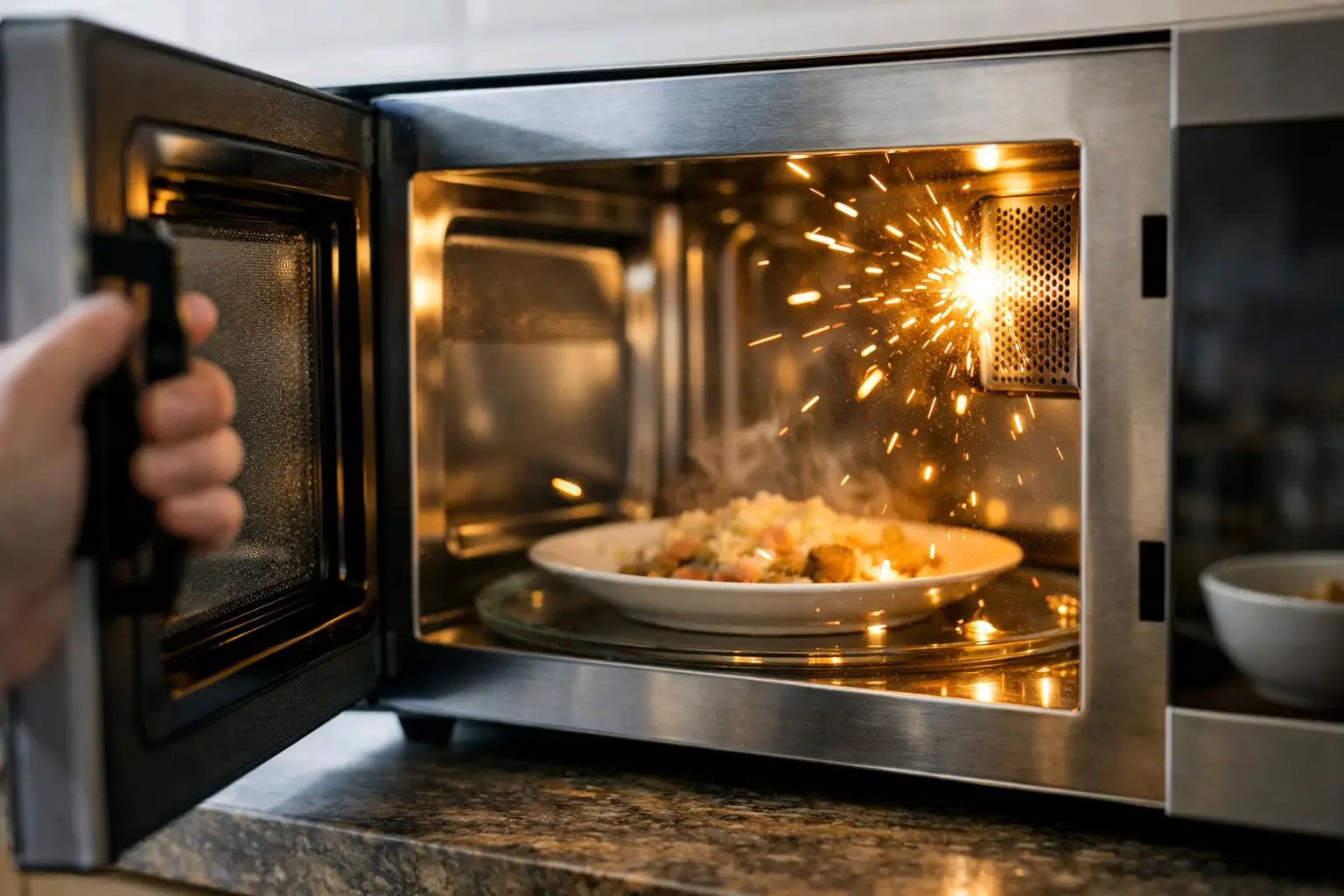
A bright flash inside the microwave is not a problem to watch for a few more seconds. If your microwave sparks when running, press Stop, unplug it after the cycle ends, and do not use it again until you know why it happened. Sparking, also called arcing, can damage the microwave cavity, burn internal components, and in some cases create a fire risk.
The good news is that the cause is sometimes simple, such as a forgotten piece of foil or a metal-trimmed dish. But repeated sparking with an empty cavity or microwave-safe container can point to a worn part that needs professional repair. Acting quickly gives you the best chance of getting the appliance back up and running safely.
Not Sure You Need a Repair?
Before you pay for a service call, try FixDecision AI. Describe what's wrong with your appliance and get a safety-first assessment to help you decide whether to DIY or call a professional.
What to Do the Moment You See Sparks
Stop the microwave immediately. If the door is still closed, use the Stop or Cancel button first. Once the unit has stopped, unplug it from the wall outlet. Keep the door closed if you see flames or heavy smoke, and use a fire extinguisher only if it is safe to do so. Never throw water into a microwave fire.
After the appliance has cooled, remove the food and look for an obvious source of metal. Check for aluminum foil, twist ties, utensils, dishes with metallic rims, disposable containers with a foil lining, or packaging with metallic ink. A small piece of metal can create dramatic sparks in seconds.
Do not take the microwave cabinet apart to investigate. Even when unplugged, a microwave contains high-voltage components that can store a dangerous electrical charge. Internal diagnosis and repair should be left to a qualified appliance technician.
Common Reasons a Microwave Sparks When Running
Metal or unsuitable cookware is inside
Metal is the first thing to rule out. Standard forks, spoons, foil, travel mugs, and many decorative plates are not microwave-safe. Even dishes labeled as ceramic or glass can have a thin metallic band around the rim that causes arcing.
Some microwaves include a metal rack designed for use with that specific model. The rack may be safe only in certain cooking modes and only when positioned correctly. If the sparks started while the rack was in place, remove it and check your owner’s manual before using it again. Never substitute another rack or place a rack from a different appliance in the microwave.
Food splatter has burned onto the waveguide cover
Many microwaves have a small flat panel inside the cooking cavity, often on a side wall or ceiling. This is usually the waveguide cover, commonly made from mica. It protects the area where microwave energy enters the oven.
Grease and food residue can collect on this cover. When the microwave runs, the buildup may overheat and spark. You may notice dark spots, a burning smell, or visible scorching. If the cover is lightly dirty but not damaged, gentle cleaning after unplugging the appliance may solve the problem. Use a soft damp cloth and mild dish soap, then let the cavity dry completely.
A cover that is charred, cracked, warped, or has a burned-through spot should be replaced. Continuing to use the microwave can damage the waveguide area and turn a relatively straightforward repair into a more expensive one.
The interior coating is chipped or damaged
The painted coating inside the microwave is more than cosmetic. It helps protect the metal cavity underneath. If the coating is deeply scratched, peeling, or chipped, exposed metal may arc while the appliance operates.
Small surface marks do not always mean the microwave is unsafe, but rust, bare metal, or burn marks deserve attention. Some minor cavity damage can be repaired using microwave-safe touch-up materials, but only after the cause of the damage is understood. Extensive rust, holes, or repeated arcing usually make professional evaluation the safer choice.
A damaged turntable support or internal part is arcing
A cracked turntable roller ring, damaged drive coupler, or loose piece of metal can sometimes cause sparking near the bottom of the microwave. Inspect the glass tray, roller ring, and center coupler for melted plastic, cracks, or debris. Clean away food buildup and make sure the tray is seated correctly.
If sparks appear behind a panel, near a vent, or from a spot you cannot reach, stop using the unit. The problem may involve an internal electrical component, the magnetron, a diode, wiring, or the waveguide system. Those repairs require specialized testing and should never be a homeowner project.
The microwave is empty or has very little food inside
Running a microwave empty can damage it because there is little or nothing to absorb the energy it produces. Very small amounts of dry food can also create unusual heating and, occasionally, scorching. While an empty microwave does not always spark immediately, it can contribute to component failure.
If the sparking began after the appliance ran empty, do not assume it is fine because the flashes stopped. Test it only if there is no visible damage and no burning smell, using a microwave-safe cup of water. If it sparks again, makes a loud buzzing sound, or fails to heat normally, unplug it and arrange service.
A Safe Check You Can Make Before Calling for Help
Once the microwave is unplugged and cool, clean the interior thoroughly. Pay close attention to the ceiling, corners, door area, turntable track, and waveguide cover. Remove crumbs and greasy residue with a soft cloth. Avoid abrasive pads or harsh cleaners that can scratch the cavity coating.
Then inspect the door and door seal. The door should close squarely without damage, bending, or loose hinges. Do not use a microwave with a damaged door, broken latch, or loose seal. Although door damage does not usually cause visible sparking inside the cavity, it is a safety issue that needs a technician’s attention.
If you found foil, a twist tie, or an unsuitable dish and there are no burn marks, you may be able to test the microwave with a cup of water. Stay beside it for the full test. Stop immediately if you see flashes, hear popping, smell burning, or notice the water is not heating.
When to Call a Microwave Repair Technician
Call for service if the microwave sparks with microwave-safe cookware and food inside, if the waveguide cover is burned, or if you see damaged paint, rust, or a hole in the cavity. You should also seek help for sparking that comes with a burning odor, loud humming, loss of heat, tripped breakers, or visible damage around the door.
A certified technician can determine whether the issue is limited to a replaceable cover or support part, or whether the microwave has a deeper high-voltage failure. That distinction matters. A basic service visit and minor part replacement may be worthwhile, especially for a newer built-in, over-the-range, or premium countertop model. A major magnetron or control-board repair can be harder to justify on an older, low-cost countertop microwave.
Repair pricing depends on the model, whether parts are available, and the type of failure. Ask for a diagnosis and written estimate before approving work. For built-in and over-the-range units, replacement also involves installation considerations, so a repair may offer better value than it would for a simple countertop model.
US Appliance Repairs can help homeowners connect with local independent appliance repair providers when a microwave problem needs fast, qualified attention. A technician can assess the safety concern, explain the repair options clearly, and help you make a practical repair-versus-replacement decision.
Preventing Future Arcing
Most microwave sparks are preventable with a few regular habits. Use containers specifically marked microwave-safe, keep foil and metal utensils away from the cavity, and wipe up splatters before they bake onto interior surfaces. Cover foods that tend to pop or splatter, such as sauces and greasy leftovers, with a microwave-safe lid or cover.
Before reheating takeout, transfer food from foil-lined containers or metal trays to a glass or microwave-safe ceramic dish. Check mugs and plates with decorative trim carefully, and remember that a dish that seemed fine once may still have metal decoration that eventually arcs.
A microwave that has sparked is asking for attention, not another trial run. Remove any obvious metal, inspect the cavity for damage, and get professional help when the cause is not clear. That quick decision can protect your kitchen, preserve your appliance, and restore the peace of mind of having a microwave you can use safely.