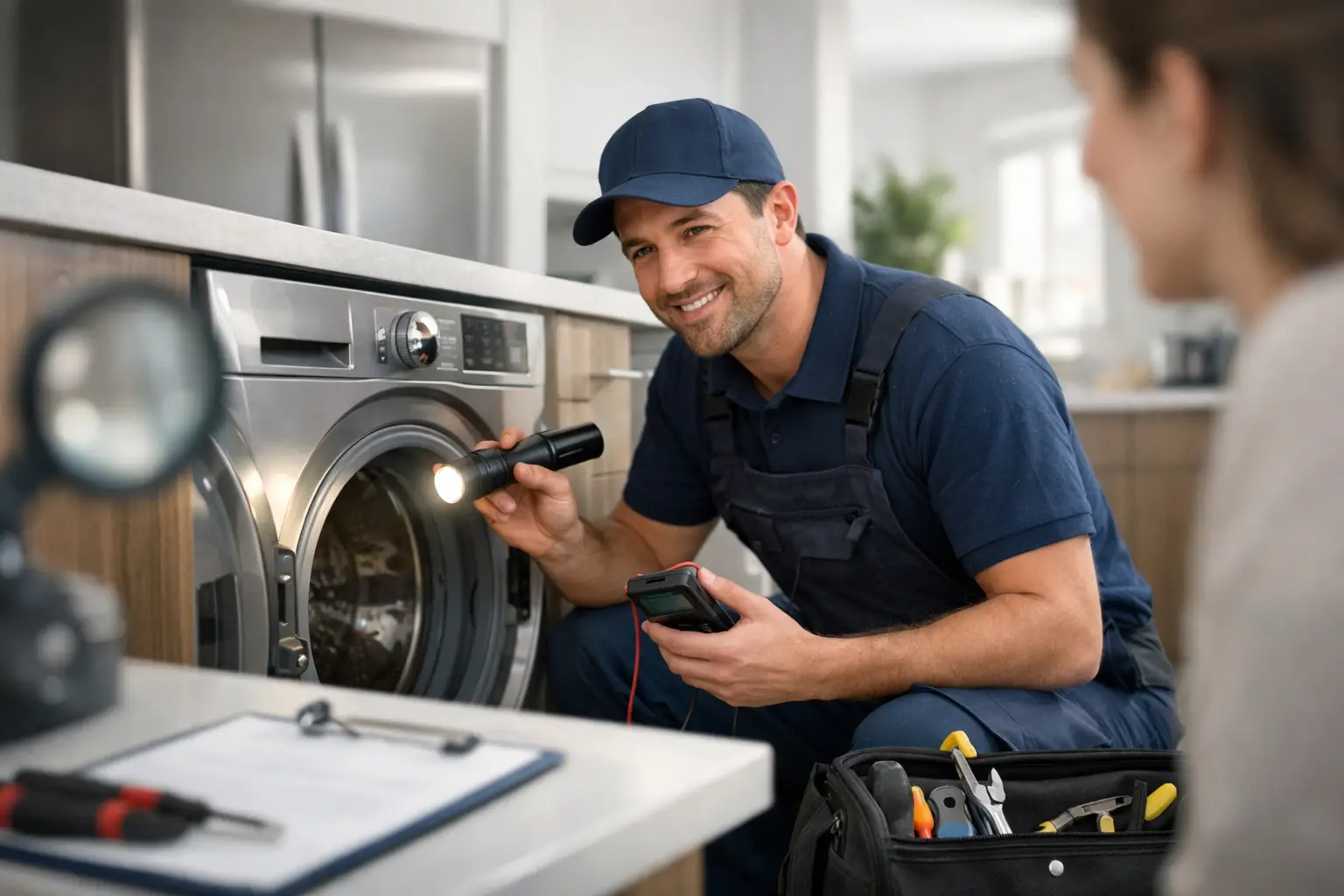
Your refrigerator is warm, the washer stopped mid-cycle, or the dryer is running but clothes are still damp. When a major appliance fails, you do not have time to sort through vague listings and hope the first available repair person is qualified. The goal is to find certified appliance technicians who can diagnose the problem accurately, explain your options clearly, and help get your home back up and running.
Certification is not just a reassuring word in an ad. Depending on the appliance and repair, it can mean factory training, technical coursework, refrigerant-handling credentials, or demonstrated experience with a particular brand. The right qualifications help reduce the risk of misdiagnosis, repeat visits, damaged parts, and repair bills that keep growing.
Not Sure You Need a Repair?
Before you pay for a service call, try FixDecision AI. Describe what's wrong with your appliance and get a safety-first assessment to help you decide whether to DIY or call a professional.
Start With the Appliance and the Problem
A technician does not need the same background for every call. A dishwasher that will not drain, for example, may require a straightforward pump, hose, or control diagnosis. A refrigerator that is not cooling can involve a compressor, sealed system, defrost components, electronic controls, or a refrigerant issue. The more specific the appliance problem, the easier it is to find a technician with relevant experience.
Before you call, write down the brand, model number, approximate age, and what the appliance is doing. Include error codes, unusual sounds, leaks, burning smells, or changes in performance. If the appliance has completely stopped working, note when it failed and whether there was a power outage, recent move, or installation change beforehand.
This information gives a repair provider a better chance of sending someone prepared for the job. It may also help you learn whether a same-day visit is realistic or whether a special-order part could be involved.
Know When the Problem Is Urgent
Some appliance failures can wait a day or two. Others should be handled quickly. A refrigerator or freezer that cannot maintain a safe temperature can lead to food loss. Water around a washer, dishwasher, or refrigerator can damage flooring and cabinets. A gas smell near an oven or cooktop calls for immediate caution: turn off the appliance if it is safe to do so, avoid flames or electrical switches, leave the area, and contact the appropriate emergency utility service.
For electrical burning smells, smoke, sparks, or a repeatedly tripped breaker, stop using the appliance. Fast help matters, but safety comes first.
What “Certified” Should Mean for Appliance Repair
When homeowners look for certified appliance technicians, they should ask what the credential applies to. There is no single national certification that covers every appliance, brand, and repair situation. A reliable provider should be comfortable explaining their training and experience in plain language.
For refrigeration repairs involving refrigerants, technicians who service sealed systems generally need EPA Section 608 certification. This is especially relevant when a refrigerator, freezer, or ice maker problem may involve the compressor, evaporator, condenser, or refrigerant lines. If the diagnosis points to a sealed-system repair, ask directly whether the technician is qualified to perform that work.
Factory or manufacturer training can also be valuable, particularly for newer appliances with advanced electronics, smart features, specialized parts, or brand-specific diagnostic systems. A technician may not be factory-authorized for every brand, and that is not automatically a reason to rule them out. What matters is whether they regularly service your appliance brand and model type and can obtain the correct parts.
Experience remains a major factor. A technician who has handled hundreds of common washer drain failures or oven ignition problems may be a better fit than someone with a broad credential but limited field experience on that appliance category.
Ask the Questions That Reveal Quality
You do not need to interview a repair professional like you are hiring a full-time employee. A few direct questions can quickly show whether the provider is organized, transparent, and equipped to help.
Ask whether they regularly repair your appliance brand and whether they work on the specific type of unit you own, such as a French-door refrigerator, front-load washer, gas range, built-in microwave, or stacked laundry center. Confirm whether there is a diagnostic or service-call fee and whether it is applied toward the repair if you approve the work.
You should also ask how estimates are handled. A dependable process usually includes a diagnosis first, followed by an explanation of the failed part, labor, expected total cost, and whether additional issues could change the estimate. For complicated repairs, a final price may depend on what the technician finds after opening the appliance. That is normal. The key is that you should be informed before extra work begins.
It is reasonable to ask about parts and labor warranties as well. Warranty terms vary among independent repair providers, so get the details in writing when possible. A warranty does not mean an appliance will never develop another issue, but it shows the provider has a defined process if a repaired component fails prematurely.
Look Beyond Star Ratings
Online reviews can be useful, but a high rating alone does not confirm that a provider is right for your repair. Read recent reviews for details: Did the technician arrive within the promised window? Did they explain the diagnosis? Was the price discussed before work began? Did the customer mention the same type of appliance you need repaired?
Be careful with both extremes. A few negative reviews do not necessarily mean poor service, especially for a business with many completed jobs. On the other hand, dozens of generic five-star comments without specifics tell you very little. Look for a consistent record of professionalism, responsiveness, clear communication, and completed repairs.
Local availability matters, too. The best-qualified technician is less helpful if they cannot see you for a week while your refrigerator is warming up or your laundry is piling up. A referral service can save time by helping homeowners connect with independent local repair providers instead of calling multiple companies one by one. US Appliance Repairs helps connect homeowners with local appliance repair assistance, while the independent provider performing the work should confirm the scope, credentials, cost, and warranty for your specific repair.
Compare Estimates the Right Way
Getting a second opinion can be smart, especially for an expensive repair. But do not compare estimates by the bottom-line number alone. A lower quote may exclude a needed part, use a different part source, or assume the diagnosis is simpler than it turns out to be.
Compare what each estimate includes: the diagnostic fee, labor, parts, taxes or trip charges, expected timing, and warranty coverage. Ask whether the part is original equipment manufacturer, manufacturer-approved, or aftermarket. There is not one right answer for every repair. OEM parts can be a sensible choice for critical or complex components, while a quality aftermarket part may be appropriate for some common repairs at a lower cost.
A technician should not pressure you to decide before you understand the recommendation. If the repair cost is high, ask why the part failed, whether another major component shows signs of wear, and how long the repair is expected to extend the appliance’s useful life.
Repair or Replace? Use the Numbers and the Age
Certification helps ensure the diagnosis is credible, but it does not automatically make repair the best financial choice. The decision often depends on appliance age, repair cost, energy use, condition, and replacement price.
For a relatively new appliance with a clear, repairable failure, repair is often the practical choice. A failed water inlet valve, drain pump, igniter, heating element, door latch, or sensor can be far less costly than buying and installing a replacement. Repair can also preserve a matching kitchen suite or avoid the added expense of changing cabinetry, venting, or electrical connections.
Replacement may make more sense when an appliance is near or beyond its typical service life and needs a costly compressor, control board, transmission, or multiple major parts. It can also be the better option if replacement parts are unavailable or if the appliance has had repeated service calls. Your technician can provide the diagnosis, but the final choice should account for your budget and how long you plan to stay in the home.
Red Flags to Avoid During Your Search
Fast service should not mean skipping basic checks. Be cautious if a provider gives a firm repair price without asking about the model or inspecting the appliance. Be equally cautious if someone cannot explain the diagnosis, refuses to discuss fees, pushes for cash-only payment without documentation, or uses fear to force an immediate decision.
Another red flag is a provider who claims to be certified but cannot say by whom or for what type of work. A legitimate professional does not need to overwhelm you with technical language, but they should be able to answer a simple question about their experience, training, and ability to repair your appliance.
Make the Service Visit More Productive
Once you choose a technician, clear the area around the appliance if possible and keep pets and children away from the work space. Have the model number ready and mention any previous repairs, warranties, or recurring symptoms. If you have a receipt for a recently replaced part, share it.
During the visit, ask for a plain-language explanation before authorizing work. A good technician should be able to tell you what failed, what repair is recommended, what it will cost, and what to expect afterward. That conversation is where credentials become real value: not just a label, but reliable work and greater peace of mind when your household depends on the appliance.
The right repair professional helps you move from disruption to a clear plan. Whether the problem is a leaking dishwasher or a refrigerator that will not cool, a careful search now can help you avoid wasted calls, protect your home, and get the job done right the first time.