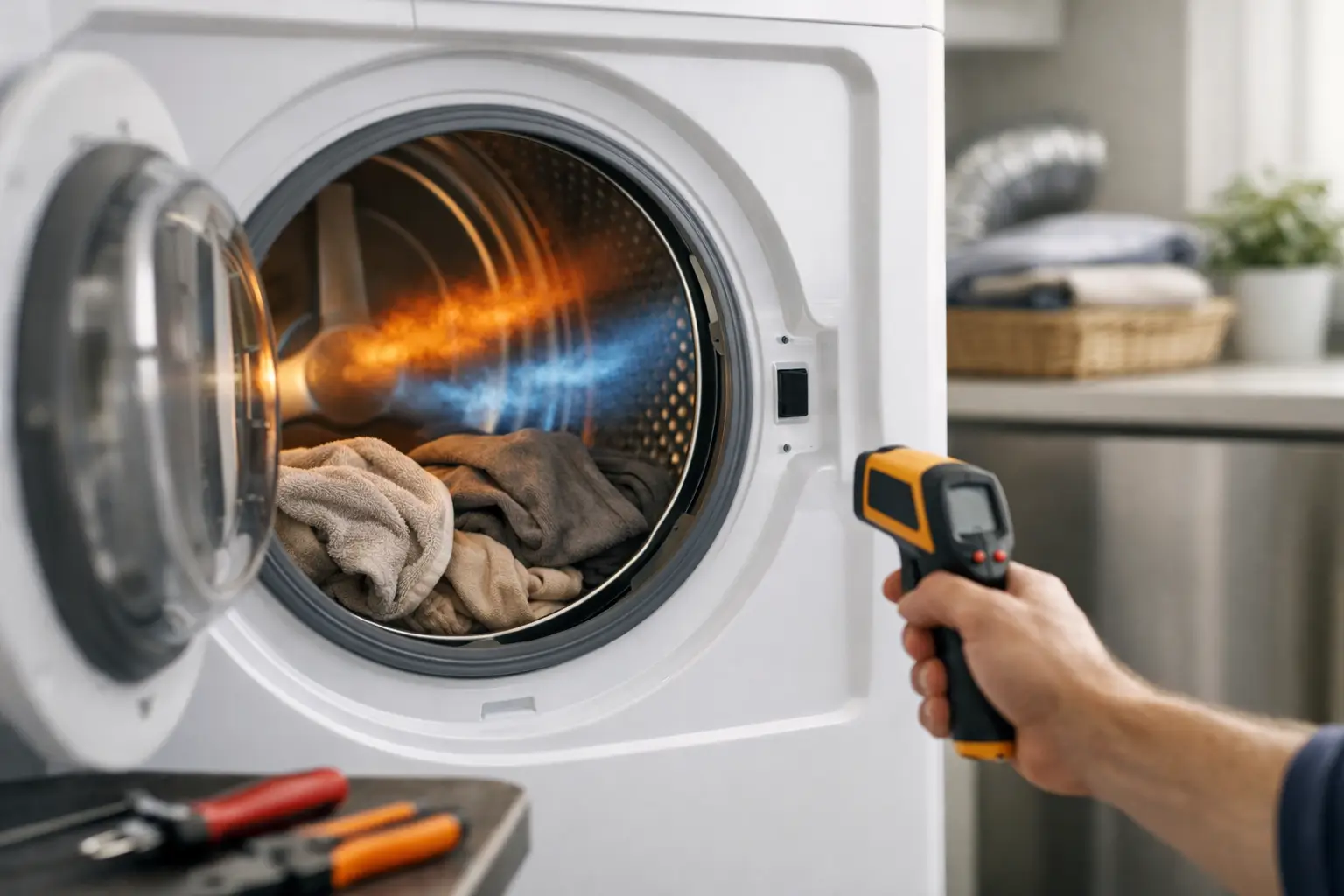
A dryer runs but no heat is more than a laundry-day inconvenience. The drum may turn normally, the control panel may look fine, and clothes may even tumble for an hour – yet they come out cold and damp. In most cases, the problem is tied to power supply, airflow, or a failed heating component. A few checks can narrow it down quickly, but electrical and gas dryer repairs often need a qualified technician to get the appliance back up and running safely.
Not Sure You Need a Repair?
Before you pay for a service call, try FixDecision AI. Describe what's wrong with your appliance and get a safety-first assessment to help you decide whether to DIY or call a professional.
Start with the simple checks
Before assuming a major part has failed, confirm the dryer is set to a heated cycle. Air Fluff, Air Dry, and similar settings intentionally run without heat. If the dryer heats on one setting but not another, the issue may be a control setting or sensor-related problem rather than the heating system itself.
Next, clean the lint screen and inspect the exhaust vent outside. A clogged vent does not always cause an immediate no-heat condition, but it can restrict airflow enough to overheat the dryer. Many dryers respond by opening a safety device that shuts off the heat. If clothes have been taking longer to dry, the dryer cabinet feels unusually hot, or the laundry room smells warm and dusty, poor venting is a strong possibility.
Also check the circuit breaker. Most electric dryers use 240-volt power supplied by a paired, double-pole breaker. The drum can keep turning if one side of that breaker trips, while the heating element receives too little power to produce heat. Turn the dryer breaker fully off, then back on once. If it trips again, stop using the dryer and arrange service. Repeated tripping can point to a wiring, outlet, cord, or appliance problem.
Why an electric dryer runs but has no heat
Electric dryers need the right voltage for the motor and the heating element. That is why a partially tripped breaker can create the confusing symptom of a dryer that runs normally but blows cold air. A damaged power cord or loose outlet connection can cause a similar issue, particularly if the plug or outlet appears discolored, warm, or scorched. Do not continue using the appliance in that situation.
If the power supply checks out, one of the internal heating components may have failed. The most common possibilities include the heating element, thermal fuse, high-limit thermostat, cycling thermostat, and temperature sensor. These parts work together to create and regulate heat while protecting the dryer from dangerous overheating.
A burned-out heating element is a frequent culprit. The element is a coiled wire that heats as electricity passes through it. Over time, it can break or short out. A failed thermal fuse is another common answer, especially after a vent blockage. The fuse is designed to stop the dryer from heating when temperatures rise beyond a safe limit. Replacing the fuse without correcting the airflow problem may lead to the same failure again.
Control boards and timers can also prevent heat, though they are less common causes. On modern dryers, a faulty relay on the electronic control board may fail to send power to the heating circuit. Accurate diagnosis matters because these repairs can vary significantly in cost.
Do not test live electrical components yourself
A continuity test with a multimeter can help a trained person identify a failed heating part, but dryers use high voltage and retain hazards even when a repair appears straightforward. Always unplug an electric dryer before removing panels. If the dryer is hardwired, has a damaged cord, shows burn marks, or trips the breaker, professional service is the safer choice.
Why a gas dryer runs but has no heat
Gas dryers use electricity to power the drum, blower, controls, and igniter, but heat comes from a gas burner. As a result, a gas dryer can tumble perfectly while the burner never lights.
First, make sure the gas supply valve is open and that other gas appliances in the home are working normally. If you smell gas, hear hissing near the appliance, or suspect a leak, leave the area and contact your gas utility or emergency services. Do not attempt to relight, disassemble, or troubleshoot the dryer.
When the gas supply is available and there is no gas odor, the problem may involve the igniter, gas valve coils, flame sensor, thermal fuse, or control board. An igniter may glow but fail to light the burner if the gas valve coils are weak. A flame sensor can also interrupt the ignition sequence if it does not detect the proper conditions. These components are best evaluated by a technician because gas connections must be handled carefully and checked for leaks after repair.
Airflow is part of the repair, not an afterthought
Homeowners sometimes replace a heating part only to have the dryer stop heating again months later. The reason is often hidden behind the machine or inside the vent run. Lint can accumulate in the flexible duct, the wall connection, long vent path, and exterior hood. Birds’ nests, crushed ducting, and stuck exterior flaps can restrict airflow as well.
A clear lint screen does not guarantee a clear vent. The screen catches only part of the lint, and fabric softener residue can reduce airflow through the mesh. Wash the screen periodically with warm water and mild dish soap, then let it dry completely before reinstalling it. Check that the outside vent flap opens strongly while the dryer is running.
For many homes, annual professional dryer vent cleaning is a sensible preventive service. Households that do frequent laundry, have pets, or use a long vent route may need it more often. Better airflow helps clothes dry faster, reduces strain on the appliance, and lowers the chance of overheating.
What a no-heat dryer repair may cost
Repair cost depends on the dryer type, brand, age, local labor rates, and the failed part. A simple thermostat, fuse, or sensor repair may cost less than a heating element or electronic control board repair. Gas ignition repairs can also range widely depending on whether the issue is an igniter, valve coils, or a more involved burner assembly problem.
As a general planning range, homeowners may see a total service cost of roughly $150 to $400 for many common dryer heating repairs. A heating element or control board repair can run higher, particularly on premium models or units requiring hard-to-source parts. A service visit typically includes diagnosis, so ask whether the diagnostic fee is applied to the completed repair.
The best repair decision is not based on age alone. A well-maintained dryer with a failed fuse, igniter, or element is often worth repairing. Replacement may make more sense when the dryer is near the end of its expected life, has repeated failures, needs an expensive control board, or has serious rust, drum, motor, or wiring issues at the same time.
When to call for dryer repair help
Call a qualified appliance technician promptly if resetting the breaker and clearing basic lint buildup does not restore heat. Service is also the right move when the dryer has a burning smell, sparks, visible wire damage, repeated breaker trips, a suspected gas issue, or an inaccessible vent system.
A technician can test the heating circuit, safety components, ignition system, and airflow path without guesswork. That helps avoid buying parts that do not solve the problem and supports a repair done right the first time. US Appliance Repairs can help homeowners connect with independent local repair providers when fast, reliable dryer service is needed.
Do not keep running a cold dryer for multiple cycles hoping it will correct itself. Addressing the issue early can protect your laundry routine, reduce wasted energy, and give you more peace of mind before a small heating failure becomes a bigger household disruption.