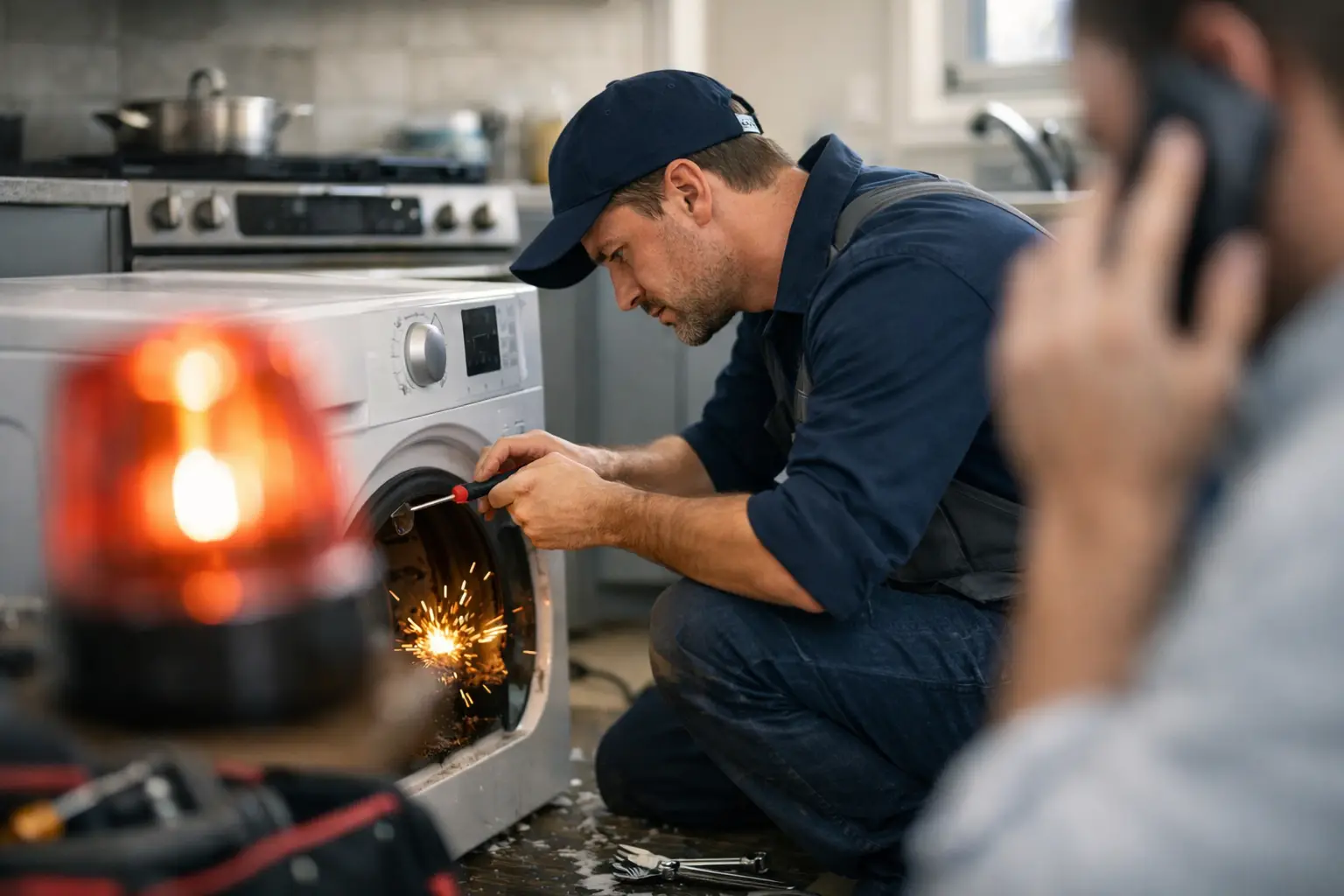
A refrigerator that suddenly stops cooling can put hundreds of dollars in groceries at risk. A dryer that smells like it is burning can be a fire concern. Water spreading from beneath a dishwasher or washing machine can damage flooring, cabinets, and the ceiling below. When the problem cannot wait, emergency appliance repair is about more than restoring convenience. It is about protecting your home, your family, and your budget.
The right first move is not always taking the appliance apart or restarting it repeatedly. In many cases, shutting it off safely, containing the immediate hazard, and getting fast help from a qualified technician is the best way to prevent a smaller failure from becoming a costly emergency.
Not Sure You Need a Repair?
Before you pay for a service call, try FixDecision AI. Describe what's wrong with your appliance and get a safety-first assessment to help you decide whether to DIY or call a professional.
What Counts as an Appliance Emergency?
Not every appliance problem requires same-day service. A dishwasher leaving spots on glasses or an oven light that has burned out is frustrating, but it can usually wait for a regular appointment. An emergency involves an immediate risk of food loss, water damage, electrical danger, fire, gas exposure, or the loss of an essential household function.
A refrigerator or freezer that will not hold a safe temperature is often urgent, especially when it is full of perishable food. The same is true for a washing machine that will not stop filling, a dishwasher that is leaking heavily, or a dryer producing smoke, sparks, or a strong burning odor.
Gas appliances deserve extra caution. If you smell gas near a range, cooktop, or oven, do not try to diagnose the appliance yourself. Avoid switches, flames, and anything that could create a spark. Leave the area and contact your gas utility or emergency services according to local safety guidance. Appliance repair can come after the immediate gas-safety issue has been addressed.
What to Do Before Emergency Appliance Repair Arrives
Start by protecting people and property. If it is safe to do so, turn off the appliance and unplug it. For a hardwired unit or an appliance near standing water, do not touch electrical connections. Shut off power at the breaker only if you can reach it without stepping into water or exposing yourself to danger.
For a leaking washer, dishwasher, refrigerator, or ice maker, close the appliance water supply valve if you know where it is. Put down towels to limit spread, but do not run the appliance again to see whether the leak has stopped. Repeated testing can send more water into floors, walls, or cabinetry.
If a refrigerator has failed, keep the doors closed as much as possible. An unopened refrigerator generally keeps food cold for about four hours, while a full freezer can maintain a safe temperature longer than a partially full one. Exact timing depends on room temperature, how often the door is opened, and how full the appliance is. Move food to coolers with ice when available, and discard perishable items that have been above 40 degrees Fahrenheit for too long.
A few details will help the repair visit go faster: the appliance brand and model number, when the issue began, any error code shown, and what you noticed before the failure. A quick photo of a leak, error display, or damaged area can also be useful. Do not remove panels, disconnect gas lines, or attempt electrical repairs while waiting for service.
Emergencies That Should Never Be Ignored
Some symptoms call for immediate action rather than a wait-and-see approach. Treat these as urgent:
- Smoke, sparks, scorch marks, or a burning smell from a dryer, range, microwave, dishwasher, or any other appliance
- A suspected gas leak near a gas oven, cooktop, or dryer
- Active water flow or major leaking that cannot be contained with a shutoff valve
- A refrigerator or freezer failure putting stored food at risk
- Electrical shocks, repeated breaker trips, or buzzing from an appliance outlet or control panel
- A dryer that is excessively hot, takes multiple cycles to dry, or has poor airflow with lint buildup
A tripped breaker alone does not always mean the appliance is the problem. It can indicate an overloaded circuit or an electrical issue in the home. Still, if the breaker trips again after one reset, leave it off and arrange for professional assessment. Continuing to reset it can create a greater hazard.
Common Emergency Appliance Problems and Likely Causes
The symptoms may be dramatic, but the underlying issue is sometimes repairable. A refrigerator may stop cooling because of a failed start relay, compressor problem, evaporator fan issue, control-board failure, or a sealed-system concern. Diagnosis matters because repair costs and repairability vary widely.
A washing machine leak may come from a loose supply hose, worn door seal, damaged drain hose, failed water inlet valve, or an internal pump problem. The location of the water can offer a clue, but it does not confirm the cause. Water at the front of a front-load washer may point to the door gasket, while water underneath could come from several components.
For dryers, poor heating or slow drying can result from a failed heating element, igniter, thermostat, vent obstruction, or blower issue. A restricted vent is especially important to address quickly because heat and lint are a dangerous combination. Cleaning a lint screen is necessary, but it does not replace inspection and cleaning of the full vent path.
Dishwashers that will not drain may have a blocked filter, drain hose issue, failed drain pump, or disposal connection problem. If the unit is overflowing, turn off the water supply and power before calling for help. Do not use chemical drain cleaner inside the dishwasher. It can damage components and create hazards for the technician.
How to Choose Fast, Reliable Repair Help
When an appliance fails, it is tempting to choose the first name that appears in a search result. A better approach is to look for clear communication about availability, service coverage, diagnostic fees, and technician qualifications. Ask whether the provider works on your appliance brand and whether they can address the specific symptom, such as a refrigerator not cooling or a gas oven that will not ignite.
A qualified technician should diagnose the failure before recommending a major repair. Be cautious of anyone who quotes a final price without inspecting the appliance or pressures you to replace it immediately. Some repairs are straightforward and worthwhile. Others involve expensive sealed-system work, a failing compressor, or multiple worn parts that can make replacement the more sensible choice.
For homeowners who need help locating an independent local provider, US Appliance Repairs offers a convenient way to connect with repair professionals for urgent and routine appliance problems. Ask the provider about expected arrival timing, parts availability, labor coverage, and the total estimate before authorizing work. Independent contractors set their own terms, so confirming those details directly helps avoid surprises.
Repair or Replace? Make the Decision After Diagnosis
An appliance emergency creates pressure, but replacement is not automatically the answer. The best choice depends on the appliance age, the repair estimate, the failure type, energy efficiency, and whether the unit has had repeated problems.
A simple rule of thumb is to compare the repair cost with the price of a comparable replacement and consider how much useful life the appliance likely has left. A relatively new washer with a failed pump may be worth repairing. An older refrigerator with a costly compressor repair may require a more careful calculation, particularly if it has already needed several service calls.
Availability also matters. If a needed part is backordered and the appliance is essential, replacement can become more practical. On the other hand, replacing an appliance because of a minor sensor, belt, valve, or latch issue can cost far more than a professional repair. A clear diagnosis gives you the information to decide with confidence.
Prevent the Next Urgent Call
Many appliance emergencies begin as small warning signs. A refrigerator running constantly, a dishwasher draining slowly, a washer vibrating harder than usual, or a dryer taking too long to dry deserves attention before it becomes a crisis. Routine maintenance is less disruptive and usually less expensive than an after-hours water leak or a refrigerator full of spoiled food.
Keep dryer vents clear, inspect appliance hoses periodically, clean refrigerator coils when accessible, and follow manufacturer guidance for filters and routine cleaning. Most of all, act early when an appliance changes how it sounds, smells, drains, heats, or cools. Fast, professional attention can bring it back up and running while protecting the peace of mind every home needs.