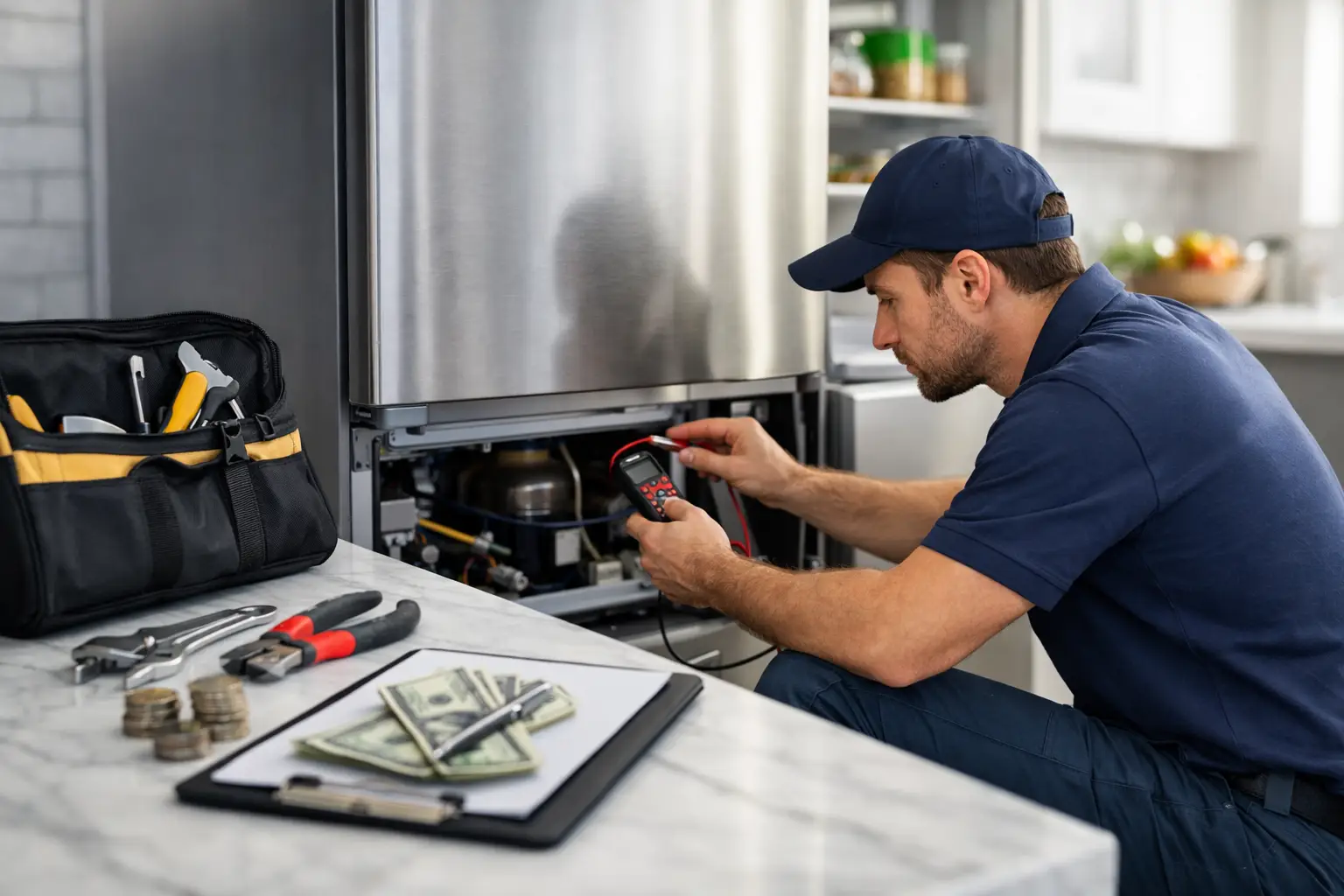
A refrigerator that stops cooling can turn into a costly problem fast. Before you replace a fridge full of groceries or agree to a repair, it helps to understand the likely refrigerator repair cost, what the technician is diagnosing, and whether the appliance is worth saving. Many refrigerator problems are repairable for far less than the price of a new unit, especially when the issue is caught early.
For most homeowners, refrigerator repairs commonly fall between $125 and $400, including parts and labor. However, a simple switch or fan repair may cost less, while a compressor or sealed-system failure can push the bill into the several-hundred-dollar range or higher. The right answer depends on the part that failed, your refrigerator’s age, its style, and local labor rates.
Not Sure You Need a Repair?
Before you pay for a service call, try FixDecision AI. Describe what's wrong with your appliance and get a safety-first assessment to help you decide whether to DIY or call a professional.
What Is the Average Refrigerator Repair Cost?
A service visit and diagnosis often cost about $75 to $150. Some independent repair providers apply that diagnostic fee toward the repair if you approve the work, but policies vary. Ask about the service-call charge before scheduling so there are no surprises.
Once the issue is identified, the total cost reflects labor, replacement parts, and, in some cases, special work involving refrigerant or a sealed cooling system. A common repair such as replacing a door gasket, thermostat, start relay, or defrost component may stay in a manageable range. Repairs involving the compressor, evaporator, condenser, or a refrigerant leak are usually more expensive because they require specialized equipment and more time.
Location matters, too. Labor rates are often higher in large metro areas, while same-day, weekend, or emergency service can add to the price. Built-in refrigerators and premium brands may also require model-specific parts that cost more and take longer to obtain.
Refrigerator Repair Cost by Failed Part
The following ranges are general homeowner benchmarks, not fixed quotes. A certified technician needs to inspect the appliance before confirming the cause and the final price.
Thermostat, sensor, or control issue
A thermostat or temperature sensor problem may cost roughly $150 to $350 to diagnose and repair. Symptoms can include food freezing in the refrigerator compartment, inconsistent temperatures, or a fridge that runs longer than usual. Electronic control boards can cost more, often around $250 to $600, depending on the model and availability of the part.
Defrost system repair
If the freezer develops a heavy frost buildup while the refrigerator section becomes warm, the defrost system may be the problem. If the fridge feels warm while the freezer stays cold, read about a refrigerator that is warm with a cold freezer. A failed defrost heater, thermostat, or timer commonly costs about $150 to $400 to repair. Leaving this problem alone can eventually restrict airflow enough to affect cooling throughout the appliance.
Evaporator or condenser fan motor
Fan motors move air through the refrigerator and help the cooling system do its job. A failed evaporator fan can cause a warm refrigerator compartment even when the freezer is still cold. A condenser fan issue can make the unit run hot or run constantly. Typical fan-motor repairs often range from $200 to $450.
Door seal or gasket replacement
A torn, loose, or hardened door gasket allows cold air to escape. The refrigerator may run too often, collect moisture, or struggle to hold temperature. Replacing a gasket typically costs around $150 to $350, depending on the door design and part price. This is usually a repair worth making because it can reduce strain on the cooling system.
Ice maker or water dispenser repair
Ice makers and water dispensers add convenience, but they introduce extra valves, switches, filters, and water lines. Repairs often range from $200 to $500. A clogged filter or a kinked water line may be a simple fix, but a failed ice maker assembly or control board can cost more. If you see water around the fridge, turn off the water supply if possible and arrange service promptly to avoid floor damage.
Compressor or sealed-system repair
A compressor is the heart of the cooling system. Compressor and sealed-system repairs can cost roughly $500 to $1,200 or more, especially if there is a refrigerant leak or an expensive part is needed. These repairs require trained professionals because the system must be properly tested, repaired, evacuated, and recharged.
This is where repair-versus-replacement deserves careful thought. A newer refrigerator with a high original purchase price may justify a major repair. For an older basic model, putting a large amount of money into a compressor may not be the best value.
Why Refrigerator Repair Prices Vary So Much
Two refrigerators can show the same symptom and have very different repair bills. A refrigerator that is not cold enough could have dirty condenser coils, a failed fan, a bad control board, a defrost issue, or a sealed-system failure. The visible symptom is only the starting point. Before scheduling a technician, work through how to fix a refrigerator that is not cooling.
The refrigerator’s configuration also affects the job. A standard top-freezer model is generally simpler to service than a French-door, side-by-side, smart, or built-in unit. Premium appliances may use specialized electronic components, multiple evaporators, or parts with limited availability. Those features can improve convenience, but they can also increase repair time and part costs.
Age is another factor. Parts may be readily available for a five-year-old refrigerator but harder to find for a model approaching 15 years old. Even when a replacement part exists, the cost and delay may change the decision.
When Is Refrigerator Repair Worth It?
A useful rule of thumb is to consider repair when the estimate is less than about half the cost of a comparable new refrigerator and the appliance is not near the end of its expected life. For a broader framework on the decision, see should you repair appliances or replace them. Many refrigerators last around 10 to 15 years, though maintenance, usage, and model quality all make a difference.
Repair is often the sensible choice for a fridge under eight years old with a failed fan, gasket, defrost part, switch, sensor, or ice maker component. It can also make sense to repair a high-end or built-in refrigerator because replacement may involve cabinet modifications, delivery challenges, and a much higher purchase price.
Replacement may be more practical when an older refrigerator needs a compressor or sealed-system repair, has repeated breakdowns, or no longer holds temperature reliably. Energy use can matter as well. An inefficient older unit may cost more to run, although a technician can help distinguish a temporary performance issue from a failing appliance.
What to Do Before You Schedule Service
A few safe checks can help you describe the problem clearly and may prevent an unnecessary service call. Confirm that the refrigerator has power, the temperature controls were not changed accidentally, and the doors are closing fully. Check for crowded shelves blocking interior vents, and look behind or beneath the unit for heavy dust on accessible condenser coils.
Do not try to puncture ice buildup, take apart sealed cooling components, or handle damaged electrical wiring. If the refrigerator is warm, move perishable food to a cooler with ice or another working refrigerator as soon as possible. If you notice a burning smell, repeated tripping, or a sparking outlet, unplug the appliance if it is safe to do so and seek prompt professional help.
When you call, have the refrigerator brand, model number, approximate age, and symptoms ready. Mention whether the freezer is cold, whether you hear clicking or buzzing, whether there is frost or water leakage, and when the problem began. Details like these help the service provider prepare for the visit and improve the chances of getting your refrigerator back up and running quickly.
Getting a Clear Repair Estimate
A reliable estimate should separate the diagnostic fee, labor, parts, and any additional charges that could apply. Ask whether the provider will contact you for approval if the diagnosis changes after the appliance is opened or tested. You should also ask about the expected timeline for parts and any warranty offered by the independent repair provider on labor or replacement parts.
US Appliance Repairs can help homeowners connect with local independent appliance repair providers when a refrigerator problem cannot wait. The platform is designed to make finding repair help less stressful, while the technician can assess the appliance in person and explain the available options.
A repair decision does not have to be rushed blindly. Protect the food, get a professional diagnosis, and compare the estimate with the age and value of your refrigerator. A clear answer from an experienced technician can give you the peace of mind to repair with confidence or move on before the next breakdown catches you off guard.