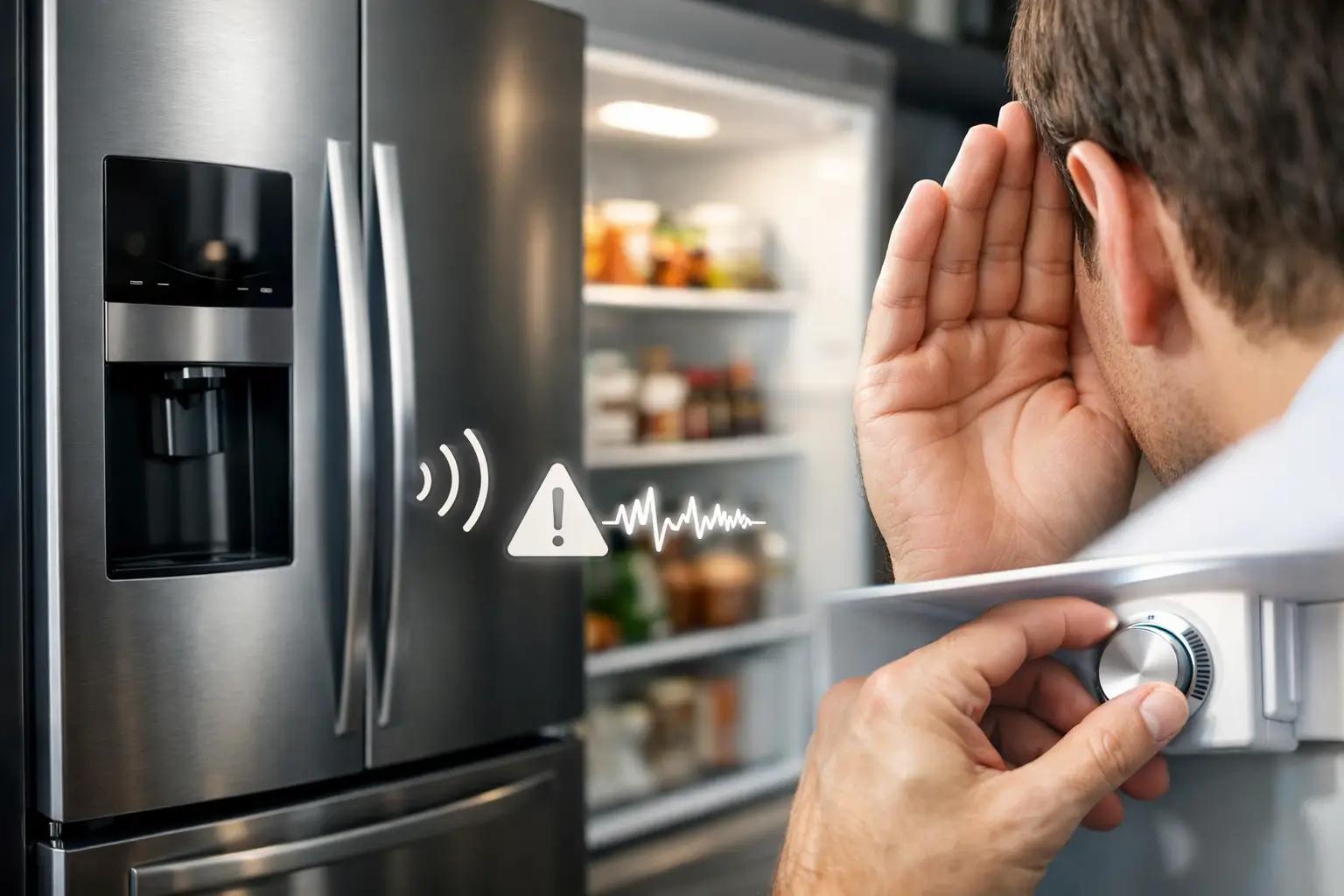
A click from the kitchen once in a while is easy to ignore. A refrigerator that clicks every few minutes, especially when the interior feels warmer than usual, deserves a closer look. If you are asking why refrigerator clicks, the answer may be completely normal – or it may be an early warning that a cooling component is struggling.
The key is not the click alone. Pay attention to when it happens, how often it repeats, whether the refrigerator is cooling properly, and whether you hear a hum, buzz, or silence afterward. Those details can help you decide whether to monitor the appliance or arrange fast professional help before food spoils.
Not Sure You Need a Repair?
Before you pay for a service call, try FixDecision AI. Describe what's wrong with your appliance and get a safety-first assessment to help you decide whether to DIY or call a professional.
Why Refrigerator Clicks During Normal Operation
Refrigerators use switches, controls, fans, and a compressor to maintain a steady temperature. Several of those parts can make a brief clicking sound during ordinary operation.
A thermostat or electronic temperature control may click when it tells the cooling system to turn on or off. Modern refrigerators also use automatic defrost systems. During a defrost cycle, a control board or relay can click as it changes functions. Ice makers can make clicking noises while they cycle, fill with water, or move ice toward the bin.
These sounds are usually short and occasional. The refrigerator should still cool normally, the freezer should keep food frozen, and there should be no burning odor, repeated buzzing, or noticeable heat around the appliance. If that describes your refrigerator, there is usually no immediate reason to worry.
When Refrigerator Clicking May Signal a Problem
Repeated clicking is different from a single control click. If the sound occurs every few minutes and the refrigerator is not cooling, the compressor may be trying and failing to start. This is one of the most common scenarios behind a refrigerator that clicks, pauses, and clicks again.
The compressor is the component that circulates refrigerant through the sealed cooling system. It normally starts with a low hum. When it cannot start, a protective device may shut it down with a click. After it cools briefly, it may try again. That repeating cycle can leave the refrigerator warm while putting additional strain on important components.
A failing start relay or overload protector is often involved. On many models, these smaller electrical parts attach near the compressor and help it start. They can wear out over time, particularly on an older refrigerator. A technician can test these components and determine whether replacing the relay solves the problem or whether the compressor itself is failing.
Other possible causes include a faulty electronic control board, a damaged compressor, loose electrical connections, or voltage issues at the outlet. The right repair depends on the model, the refrigerator’s age, and the results of a proper diagnosis. Replacing parts based on sound alone can waste money and may not address the actual failure.
Clicking Near the Ice Maker
If the clicking is coming from the freezer compartment, the ice maker is a likely source. An ice maker may click when it harvests a batch of ice. That is normal. But clicking can also occur when the ice maker attempts to cycle without enough water entering the tray.
Check whether the household water supply valve is open and whether the refrigerator has had a recent water-line interruption. A frozen or clogged water line can also prevent proper filling. If the ice maker is empty, repeatedly clicking, or leaking, turn it off if your model allows it and schedule service rather than forcing the mechanism.
Clicking With a Buzz or Humming Sound
A click followed by a brief buzz is more concerning when cooling has stopped. This pattern commonly points to a compressor-start issue. The refrigerator may be receiving power, but the compressor is unable to run long enough to cool the cabinet.
Do not keep opening the doors to check temperatures. Each opening lets in warm air and makes the appliance work harder. Keep the doors closed as much as possible, move perishable food to another refrigerator or a cooler with ice if temperatures are rising, and seek repair help promptly.
Clicking After a Power Outage or Move
A refrigerator may act differently after a power outage, surge, or move. If the unit was unplugged and immediately plugged back in, the compressor may need several minutes before it can restart. Give it a little time before assuming a failure.
If the refrigerator was transported on its side, follow the manufacturer’s guidance before powering it on. In many cases, allowing the appliance to stand upright for several hours helps compressor oil settle properly. If clicking persists after that period and the unit will not cool, it is time for a qualified technician to inspect it.
What Homeowners Can Safely Check First
Before arranging a repair, there are a few simple checks that do not involve disassembling the refrigerator. Confirm the power cord is firmly connected and inspect the outlet by testing it with another small device. Avoid using an extension cord, since refrigerators need a properly grounded outlet with dependable power.
Next, make sure the refrigerator is not packed tightly against the wall. Air needs room to circulate around the condenser area. Dusty condenser coils can also make the system work harder, although dirty coils alone do not usually create repeated clicking. If your model has accessible coils and you can safely reach them, gently vacuum dust with the refrigerator unplugged.
Listen for the location of the sound. A click at the rear bottom of the refrigerator is more likely related to the compressor area. A click inside the freezer may point to the ice maker, fan, or defrost system. Also check whether the interior lights are working and whether the display panel shows an error message.
Do not remove compressor covers, touch wiring, or attempt to bypass a relay or safety device. Refrigerators contain electrical components and a sealed refrigerant system. A wrong repair can create a larger problem and may put your safety at risk.
When to Call for Refrigerator Repair
Call for service soon if clicking is repeated and the refrigerator or freezer is warming up. A repair visit is also worthwhile if the appliance trips a breaker, gives off a burning smell, makes loud buzzing noises, leaks water, or clicks continuously after basic power checks.
Fast attention matters because food safety can become an issue before the refrigerator feels completely warm. Perishable items should not remain above 40°F for more than two hours. If the refrigerator has been without reliable cooling, use a thermometer when possible and follow food-safety guidance rather than relying only on how food looks or smells.
A qualified appliance technician can test the start relay, overload protector, compressor windings, control board, electrical supply, and related components. That diagnosis is especially valuable for a refrigerator that is several years old. A relatively affordable relay repair may make sense, while a failed compressor on an aging unit may lead to a repair-versus-replacement conversation.
Repair or Replace? It Depends on the Diagnosis
There is no single answer for every clicking refrigerator. A newer, otherwise reliable model with a bad relay, sensor, or ice-maker component is often worth repairing. On the other hand, a major compressor or sealed-system failure can be expensive, particularly if the refrigerator is near the end of its expected service life.
Consider the appliance’s age, repair estimate, condition of the door seals and shelves, recent repair history, and the cost of a comparable replacement. A technician can identify the failed part and give you the information needed to make a practical decision without guesswork.
US Appliance Repairs can help homeowners connect with independent local appliance repair providers when a refrigerator needs prompt attention. The goal is simple: get clear answers, protect your food, and get the appliance back up and running with greater peace of mind.
A refrigerator click may be just part of its normal routine, but a repeating click paired with poor cooling is not a sound to wait out. Trust what you are seeing and hearing, keep food protected, and arrange qualified help before a small starting problem becomes a full refrigerator failure.