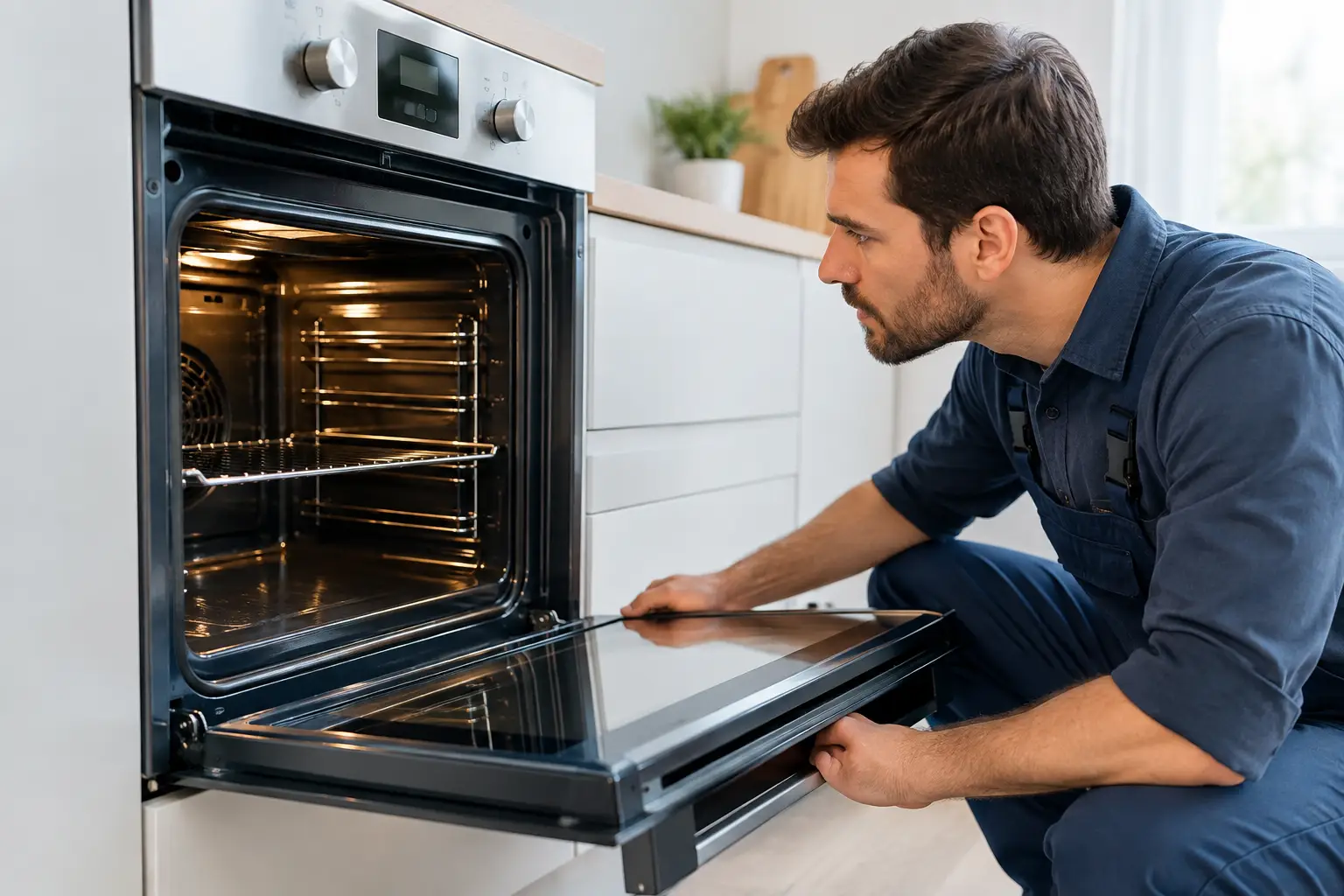
A weeknight dinner should not turn into a guessing game about whether the oven will heat, burn the food, or shut off halfway through cooking. Knowing the best oven repair warning signs helps you act before a small performance problem becomes a safety concern, a ruined holiday meal, or a complete breakdown. Some issues can wait for a scheduled visit. Others call for immediate action and a qualified appliance technician.
Not Sure You Need a Repair?
Before you pay for a service call, try FixDecision AI. Describe what's wrong with your appliance and get a safety-first assessment to help you decide whether to DIY or call a professional.
1. Your Oven Takes Too Long to Preheat
Most ovens need roughly 10 to 20 minutes to reach 350°F, depending on the model, size, and starting temperature. If yours suddenly takes much longer, struggles to reach the selected temperature, or never finishes preheating, something is not working as it should.
On an electric oven, a weakened bake element, faulty temperature sensor, damaged wiring, or failing control board may be responsible. In a gas oven, the issue may involve the igniter, gas valve, or burner assembly. A slow preheat cycle might seem manageable at first, but it often gets worse and can lead to undercooked food, unpredictable baking, and added energy use.
Before assuming the oven has failed, check that the door closes fully and that the control settings are correct. If the delay continues over several uses, it is time to arrange a diagnosis rather than keep adjusting cooking times.
2. Food Cooks Unevenly or Burns on One Side
Cookies that brown on one edge while staying pale on the other are more than a baking annoyance. Uneven heat is one of the most common oven repair warning signs because it can point to an element, burner, fan, sensor, or airflow problem.
Convection ovens rely on a fan to circulate heat. If that fan is weak, noisy, or not running, hot and cool spots can develop. Conventional ovens may cook unevenly when one heating element is failing or the temperature sensor sends inaccurate readings to the control system.
A simple oven thermometer can help confirm the problem. Place it near the center of the oven, let the appliance preheat, and compare the thermometer reading with the set temperature. A small variation is normal. Large swings, repeated overheating, or temperatures that stay far above or below the setting deserve professional attention. Do not rely only on the display panel, since the display may show the target temperature rather than the true temperature inside the oven.
3. You Smell Gas, Burning Plastic, or Electrical Smoke
This is not a wait-and-see situation. If you smell gas near a gas range or oven, turn off the appliance if you can do so safely, avoid flames and electrical switches, leave the area, and contact your gas utility or emergency services from outside the home. Do not attempt to relight the oven or investigate the source yourself.
A burning-plastic odor, visible smoke from the control panel, sparking, or a hot electrical smell also requires immediate attention. Stop using the appliance and turn off power at the breaker if it is safe to reach. Electrical problems can involve damaged wiring, a failing control board, a shorted element, or an overheated connection.
A brief odor from food residue during the first use after cleaning is different from a sharp, persistent burning smell. When the odor repeats, appears without food spills, or comes with smoke, popping, or flickering lights, treat it as a safety issue. A certified technician can identify the failed part and check for damage that is not visible from the outside.
4. The Oven Will Not Turn On or Shuts Off Mid-Cycle
An oven that goes completely dead may have a tripped breaker, a loose power connection, a failed thermal fuse, or a control problem. Start with the basics: confirm the range is plugged in, check the breaker, and make sure the clock or control lock has not been reset after a power outage.
If power is available but the oven still will not heat, or it turns off while cooking, service is usually needed. Intermittent failures are especially frustrating because the appliance may appear normal during one meal and fail during the next. Common causes include an overheating control board, faulty door latch, worn relay, or wiring issue.
Repeatedly resetting the breaker is not a repair. If the oven trips the breaker more than once, stop using it. That pattern can indicate an electrical fault that should be inspected before the appliance is put back into service.
5. Heating Elements Are Damaged, Blistered, or Not Glowing
Electric oven elements should heat evenly. A visible break, blister, burn mark, sagging section, or area that never glows is a clear sign that the element may be failing. You may also hear a pop when it burns out, sometimes followed by a flash or a tripped breaker.
A bake or broil element can occasionally be replaced as a straightforward repair, but the correct part and safe installation matter. The oven must be disconnected from power, and damaged terminals or wiring may need attention too. If the new element is installed without identifying the reason for the failure, the problem can return.
Gas oven burners have their own warning signs. Delayed ignition, weak flames, flames that lift away from the burner, or flames that are mostly yellow instead of steady blue should be evaluated. Burner issues can affect cooking performance and may involve the igniter, gas flow, or burner ports.
6. The Door Will Not Close, Lock, or Stay Cool Enough
A loose or damaged oven door can waste heat and make cooking results unreliable. Worn hinges, broken springs, cracked gaskets, and misaligned doors all allow heat to escape. You may notice that the outside of the door becomes unusually hot, the kitchen feels warmer than usual, or the oven takes longer to cook food.
Door problems become more urgent when the door will not lock after a self-cleaning cycle. Do not force it open with tools. High-heat cleaning cycles can trigger failures in the latch assembly, control board, thermal fuse, or door sensor. Let the oven cool completely, then arrange service if the lock remains stuck or the appliance shows an error code.
It is also wise to avoid using the self-clean cycle if the oven already has temperature, door, or control issues. The extreme heat can place added stress on aging components.
7. Error Codes, Beeping, or Unresponsive Controls Keep Returning
Modern ovens often display error codes when a sensor, control board, fan, latch, or communication circuit detects a problem. A one-time code after a power interruption may clear after a reset. A code that returns, persistent beeping, buttons that do not respond, or settings that change on their own usually point to a real fault.
Write down the exact code and when it appears. That information helps a technician narrow down the likely cause and can reduce diagnostic time. Avoid repeatedly clearing an error code and continuing to cook, particularly if the oven overheats, shuts down, or behaves unpredictably.
8. Your Oven Makes New or Loud Noises
A gentle fan sound during convection cooking or cooling is normal. Grinding, scraping, buzzing, clicking that continues without ignition, or loud rattling is not. The source may be a failing fan motor, a loose fan blade, a relay, an igniter, or a component vibrating behind the control panel.
The trade-off is simple: a minor fan repair may be less disruptive and less expensive when handled early. Waiting until the fan stops entirely can lead to uneven cooking, overheating, or a larger repair. If the noise comes with a burning smell, smoke, or a loss of heat, stop using the oven until it has been inspected.
9. Repairs Are Repeating or the Oven Is Nearing the End of Its Useful Life
One repair does not automatically mean replacement is the better choice. Many ovens deliver years of reliable service after an element, igniter, sensor, or latch repair. The decision depends on the appliance’s age, condition, repair history, and the cost of the specific fix.
If the oven is relatively new, has been dependable, and needs a common replacement part, repair is often sensible. If it has multiple failures, corrosion, major control-board issues, or a repair estimate that approaches a significant share of replacement cost, compare both options carefully. A qualified local technician can explain what failed, whether related parts are at risk, and what it will take to get the appliance back up and running.
When to Call for Oven Repair Help
Call for service promptly when your oven cannot maintain temperature, cooks unevenly, displays recurring errors, makes unusual noises, or has a damaged element or door. Stop using it immediately for gas odors, smoke, sparks, repeated breaker trips, or signs of overheating.
The safest next step is not guessing at a repair behind a hot control panel or gas connection. US Appliance Repairs can help homeowners locate independent local appliance repair providers for routine oven problems and urgent concerns, giving you a clearer path to reliable cooking and greater peace of mind.