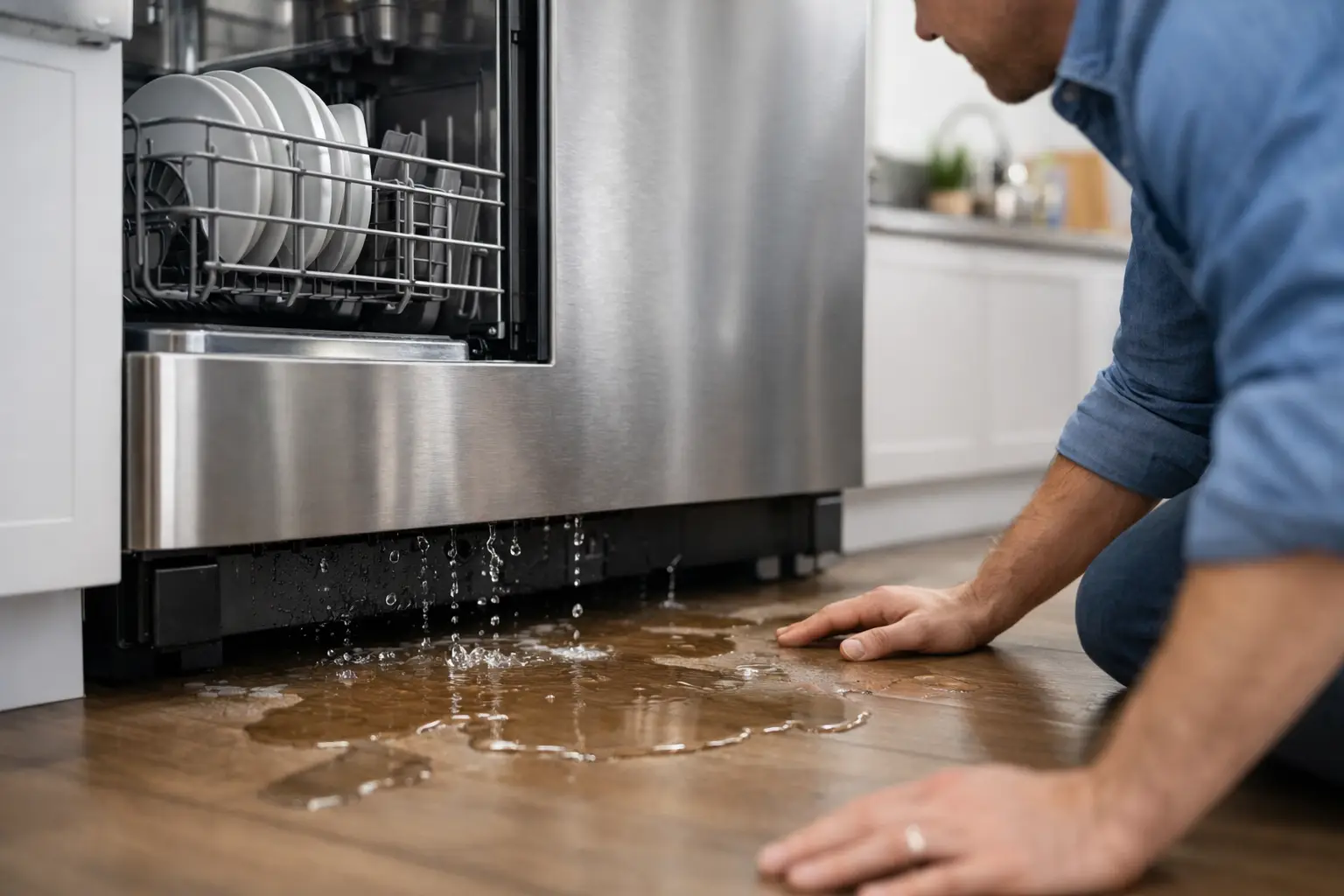
A dishwasher leaking underneath can turn a normal cleanup cycle into a flooring emergency. Water may collect beneath the front edge, run out from under a cabinet, or show up in the room below. Acting quickly protects your kitchen floor, subfloor, cabinets, and peace of mind. Stop the cycle, turn off the dishwasher’s water supply if you can reach it safely, and avoid using the appliance until you know where the water is coming from.
The difficult part is that water does not always exit at the same point as the failure. A loose hose connection at the back can travel along the base of the machine and appear at the front. A door leak can also drip down the inner panel and look like an under-dishwasher problem. A few careful checks can narrow down the cause, but an active, repeated, or hard-to-find leak is usually a job for a qualified appliance technician.
Not Sure You Need a Repair?
Before you pay for a service call, try FixDecision AI. Describe what's wrong with your appliance and get a safety-first assessment to help you decide whether to DIY or call a professional.
First, control the water and protect the area
If water is still flowing, cancel the cycle and press the dishwasher’s power button. If that does not stop the water, turn off power at the circuit breaker before touching any wiring or removing panels. Then shut off the water valve under the kitchen sink, which commonly supplies the dishwasher through a separate branch line.
Place towels around the dishwasher and remove any standing water from the floor. Pull out the lower rack and check the bottom of the tub for dishes, labels, food debris, or broken glass that could block the spray arm or interfere with the door. Do not pull a built-in dishwasher out of its opening unless you are comfortable working around water lines, drain hoses, and electrical connections. The unit can be heavy, and moving it can make a small leak worse.
If the leak reached a basement ceiling, an adjoining room, or an electrical outlet, leave the appliance off and arrange professional help promptly. Wood and particleboard cabinets can swell after surprisingly little exposure to water.
Why is my dishwasher leaking underneath?
The cause often depends on when the leak appears. Water on the floor immediately after a cycle begins points toward the incoming water supply, inlet valve, or a connection beneath the unit. A leak during washing may involve the door seal, spray arm, pump, or sump. Water that appears only while the dishwasher drains is more likely related to the drain hose, hose clamp, drain pump, garbage disposal connection, or air gap.
A worn door gasket or a door that does not close properly
The rubber gasket around the dishwasher opening keeps wash water inside. Over time, it can become brittle, flattened, torn, or coated with grease and detergent residue. A damaged gasket normally leaks near the front corners, but water can run underneath the appliance before you notice it.
Inspect the gasket for visible splits, missing sections, or areas that no longer sit evenly against the door. Wipe it with a damp cloth and mild soap. Also look for a utensil, pan handle, or rack that prevents the door from closing fully. If the gasket is damaged, replacing it is usually a straightforward repair, though the correct part and installation matter for a reliable seal.
A loose or cracked water supply line
Dishwashers use a water line connected to a shutoff valve under the sink and an inlet valve near the bottom of the appliance. Fittings can loosen, supply lines can corrode or crack, and older rubber hoses can fail without much warning. Because this line is pressurized, it can leak even when the dishwasher is not running.
Dry the area, then check under the sink for moisture around the supply valve and line. If safe to do so, look beneath the dishwasher with a flashlight for drips or mineral buildup. White or greenish residue around a fitting can signal a slow, long-term leak. Do not overtighten a connection blindly. A damaged fitting, cross-threaded connection, or worn valve may need replacement rather than another turn with a wrench.
A failing water inlet valve
The inlet valve opens to let water into the dishwasher at the start of a cycle. Its housing, seal, or connection can fail, creating a leak beneath the unit. In some cases, a defective valve may not close completely, allowing water to continue entering after the cycle should have stopped.
A dishwasher that keeps filling, leaks while it is off, or has water pooling shortly after the fill stage needs prompt attention. Turn off the water supply. This is not a repair to postpone, since an inlet valve problem can cause significant water damage if the dishwasher is left connected.
Drain hose, drain pump, or sump leaks
A dishwasher drains through a hose that runs to a garbage disposal, sink drain, or air gap. A loose clamp, split hose, or failed connection may only leak when the drain pump turns on. If you hear the dishwasher draining and then see water under the cabinet or machine, this area becomes a leading suspect.
The drain pump and sump assembly are located at the bottom of the dishwasher. Their seals can wear out, and pump housings can crack. These repairs often require removing panels or pulling the dishwasher from the cabinet opening, so professional diagnosis is often the safer choice. A technician can identify whether a hose, seal, pump, or full sump assembly is responsible before replacing parts.
A damaged spray arm or excessive suds
A cracked or blocked spray arm can shoot water in an unusual direction, sometimes forcing it past the door seal. Check that both spray arms spin freely and are not split along the seam. Food particles or mineral deposits can clog the holes and change the spray pattern.
Too much detergent can create another misleading leak. Using dish soap instead of automatic dishwasher detergent creates heavy suds that can push water out through the door. Even the right detergent can foam excessively if too much is used or if rinse aid spills into the tub. If suds are visible, stop the cycle, remove as much foam as possible, and run a short rinse-only cycle after the issue is cleared. Never add more soap to solve it.
Safe checks before scheduling dishwasher leak repair
You do not need to disassemble the appliance to collect useful information. After drying the floor and turning the water back on, you may be able to run a short monitored cycle if there is no electrical hazard and the leak was minor. Watch closely with a flashlight, and stop the cycle immediately if water returns.
Pay attention to the timing. Does the leak begin during filling, spraying, or draining? Is the water coming from the front, under the sink cabinet, or directly beneath the center of the dishwasher? Is it clean water, soapy water, or dirty drain water? These details help a repair professional diagnose the issue faster and may prevent unnecessary parts replacement.
Avoid removing the lower access panel while power is on. Also avoid using caulk, tape, or a temporary patch on pressurized lines or pump components. Those fixes rarely hold and can hide a worsening problem until it damages cabinets or flooring.
What does it cost to fix a dishwasher leaking underneath?
Repair cost depends on the leak source, the dishwasher brand and model, local labor rates, and whether the appliance must be pulled out from a tight cabinet installation. A simple door gasket, hose clamp, or drain hose repair is generally less expensive than replacing a drain pump, inlet valve, circulation pump, or sump assembly.
As a broad planning range, homeowners may pay roughly $150 to $450 for many common dishwasher leak repairs, including a service visit and parts. More involved pump, motor, or major assembly repairs can reach $500 or more. Costs vary by market and appliance design, so ask for a clear diagnosis and estimate before approving work.
Repair is often worthwhile when the dishwasher is under about 8 to 10 years old, has otherwise been dependable, and needs a seal, valve, hose, or pump repair. Replacement may make more financial sense if an older unit has multiple problems, recurring leaks, rusted internal components, or a repair estimate approaching a substantial portion of the cost of a comparable new model. A qualified technician can explain the trade-off based on the specific failure, not just the appliance’s age.
When to call a professional for a dishwasher leak
Call for dishwasher repair promptly if the leak is active, you cannot identify its source, the dishwasher leaks when it is off, or water has reached cabinets, flooring, or nearby electrical components. You should also schedule service when the machine does not drain, overfills, makes grinding noises, or displays an error code along with the leak.
US Appliance Repairs can help homeowners connect with independent local appliance repair providers for urgent and routine dishwasher issues. An experienced technician can inspect the water line, inlet valve, pumps, hoses, door seal, and internal components, then recommend a practical path to get the dishwasher back up and running.
A dry floor after one cycle does not always mean the problem is gone. Keep an eye on the area for the next few uses, and treat any return of moisture as a reason to act before a manageable repair becomes a damaged-floor project.