A microwave that stops heating in the middle of a busy week can throw off more than dinner. Before you shop for a replacement, knowing when to replace a microwave can help you avoid spending money on a repair that will not last – or replacing an appliance that only needs a simple fix.
Microwaves are relatively affordable compared with major kitchen appliances, but the right decision still depends on the unit’s age, the problem, repair cost, and safety. A reliable repair technician can identify the cause and give you a clear estimate, so you can make the choice with less stress and more peace of mind.
Not Sure You Need a Repair?
Before you pay for a service call, try FixDecision AI. Describe what's wrong with your appliance and get a safety-first assessment to help you decide whether to DIY or call a professional.
When to Replace a Microwave Instead of Repairing It
A countertop microwave typically lasts about seven to 10 years. Built-in and over-the-range models may last longer, especially when they receive regular cleaning and are used carefully. Age alone does not mean replacement is necessary. A four-year-old microwave with a worn door switch is often worth fixing, while a nine-year-old unit with a failed magnetron may not be.
A practical rule is to compare the repair estimate with the cost of a similar new microwave. If the repair is more than about half the price of replacement, buying a new unit is often the smarter long-term choice. This is particularly true for older models that may soon need another part.
Replacement is usually the better call when the microwave has a serious heating-system failure, repeated breakdowns, visible damage, or a repair cost that does not make financial sense. For an over-the-range microwave, you should also consider installation requirements. Replacing it with the wrong size or venting configuration can create an unexpected expense.
7 Signs Your Microwave May Need Replacing
Some microwave problems are minor. Others point to an appliance that is no longer dependable or safe to use. Watch for these signs before deciding whether to schedule repair or start shopping.
- It runs but does not heat food. This can involve the magnetron, high-voltage diode, capacitor, or transformer. These components can be expensive to replace, especially in an older microwave.
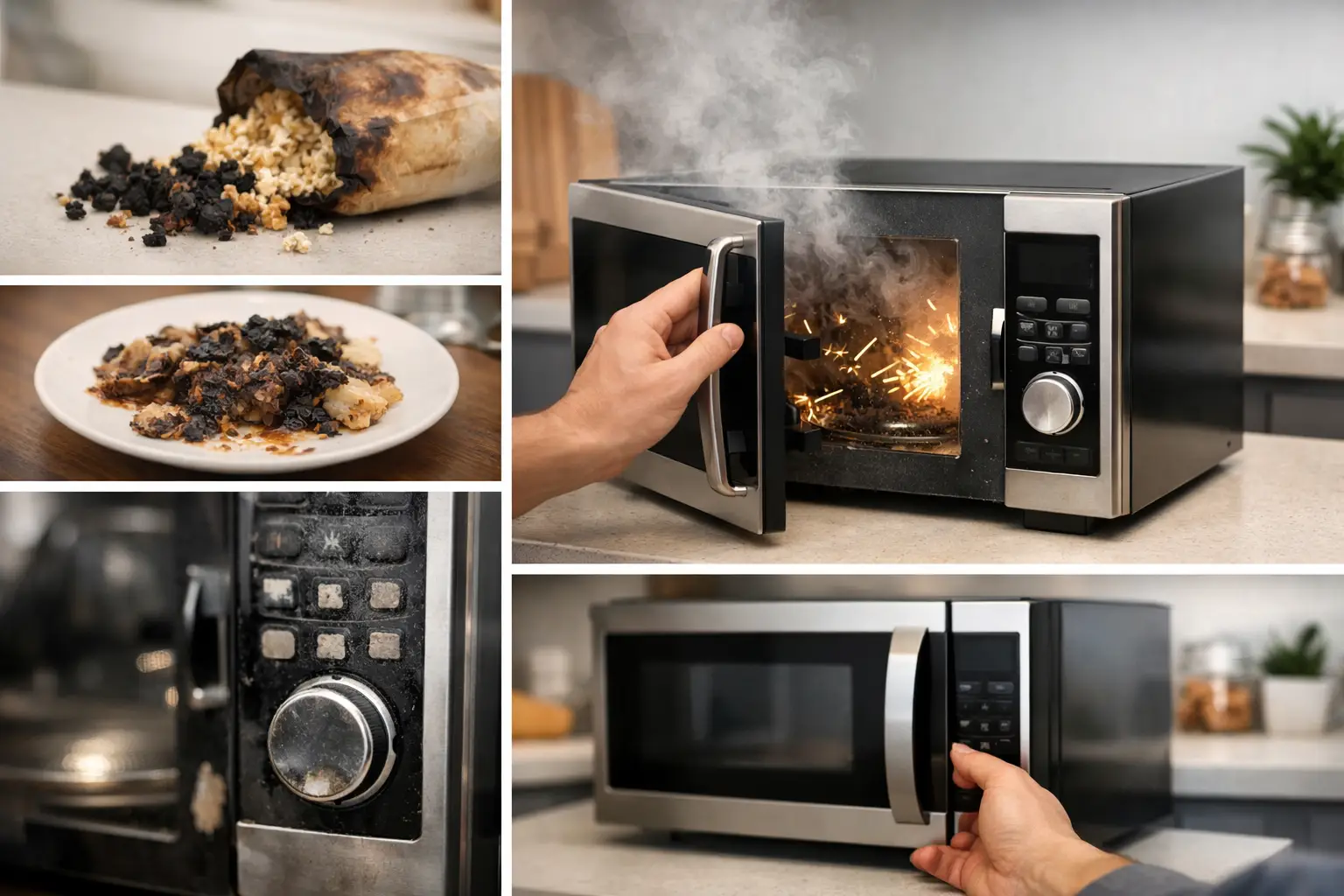
- You see sparks, burning, smoke, or a burning smell. Stop using the microwave immediately. Sparks may come from metal inside the cavity, damaged waveguide covers, food buildup, or failing electrical parts. Do not continue testing it.
- The door does not close, latch, or stay shut properly. A damaged door, loose hinges, or failed safety switches can keep a microwave from operating correctly. Door switch repairs can be reasonable, but a cracked door or severely damaged frame may justify replacement.
- The control panel works intermittently or displays errors. A failing touchpad, control board, or display can make the appliance frustrating to use. On older models, the needed part may be costly or unavailable.
- It is unusually loud. Humming, grinding, rattling, or buzzing can indicate a fan motor issue, turntable problem, or trouble in the high-voltage system. A new sound is worth checking before it becomes a complete failure.
- It trips the breaker or causes electrical issues. Do not ignore this. The problem could be the microwave, outlet, circuit, or wiring. Disconnect the appliance and have the issue evaluated by a qualified professional.
- It has needed more than one repair recently. Repeated service calls are a strong signal that replacement may offer better value and reliability.
Problems That Are Often Worth Repairing
Not every microwave failure calls for a new appliance. If the unit is fairly new, a technician may be able to get it back up and running for much less than the cost of replacement.
Common repairable issues include a broken turntable motor, damaged roller guide, burned-out interior light, worn door switch, faulty fan, loose handle, or a replacement waveguide cover. Food splatters and grease can also cause odors, arcing, and poor performance. In some cases, thorough cleaning and a low-cost part solve the issue.
Start with the easy checks before assuming the microwave has failed. Make sure the outlet has power, inspect the power cord for visible damage, confirm the door closes completely, and remove any metal or foil that may have been left inside. If the microwave is plugged into a power strip or extension cord, move it to a properly grounded wall outlet. Microwaves draw significant power and should not share an overloaded circuit.
Do not remove the microwave cabinet to inspect internal parts. Even after the appliance is unplugged, microwave capacitors can store a dangerous electrical charge. Internal repair is not a safe do-it-yourself project.
Repair Cost Versus Replacement Cost
Microwave repair costs vary by location, model, labor rates, and part availability. A straightforward repair such as a door switch, turntable motor, or light may be relatively affordable. Control boards, magnetrons, transformers, and high-voltage components can cost considerably more.
Countertop microwaves are often inexpensive enough that a major repair does not make sense once they are several years old. On the other hand, built-in and over-the-range microwaves cost more to replace and install, which can make a moderate repair worthwhile. A technician’s diagnosis is valuable because two appliances with the same symptom can have very different underlying problems.
Ask for an estimate that separates the service call, labor, and parts when possible. You should also ask whether the repair comes with a workmanship or parts warranty through the service provider. Clear information lets you compare options without guessing.
Safety Issues That Mean Stop Using It Now
A microwave should be removed from service immediately if you notice smoke, flames, a persistent burning odor, a damaged power cord, a broken door, exposed interior metal, or repeated breaker trips. Unplug it if it is safe to do so, and do not attempt to run it again to see whether the problem goes away.
Small chips in the interior coating do not always mean the appliance is unsafe, but rust, peeling surfaces, or damage around the door and latch need professional attention. The door is part of the microwave’s safety system. Never use tape, makeshift repairs, or a damaged latch to keep it closed.
Choosing the Right Replacement Microwave
If replacement is the best option, measure before you buy. For a countertop model, check the available counter space and allow room for ventilation. For an over-the-range unit, measure width, height, depth, mounting location, and cabinet clearance. Most are 30 inches wide, but capacity, depth, and venting details vary.
Also consider how your household uses the appliance. A larger family may value more interior capacity and sensor cooking. If you rely on the microwave vent fan while cooking, choose a model with the right ventilation setup for your kitchen. Recirculating, exterior venting, and compatible duct placement are not interchangeable details.
For built-in or over-the-range replacement, professional installation can prevent mounting, electrical, and venting problems. It is especially helpful when the old unit is heavy, the cabinet opening is tight, or the replacement requires changes to the existing setup.
Get a Clear Answer Before You Spend
A microwave failure is inconvenient, but the decision does not have to be complicated. If the appliance is newer and the repair is straightforward, fixing it may restore reliable service at a reasonable cost. If it is older, unsafe, or facing an expensive heating-system repair, replacement can protect your budget and eliminate repeat breakdowns.
When you need fast help, US Appliance Repairs can help connect you with an independent local appliance repair provider who can diagnose the problem and explain your options. The best next step is the one that gets your kitchen functioning again safely, reliably, and without paying for more than you need.